
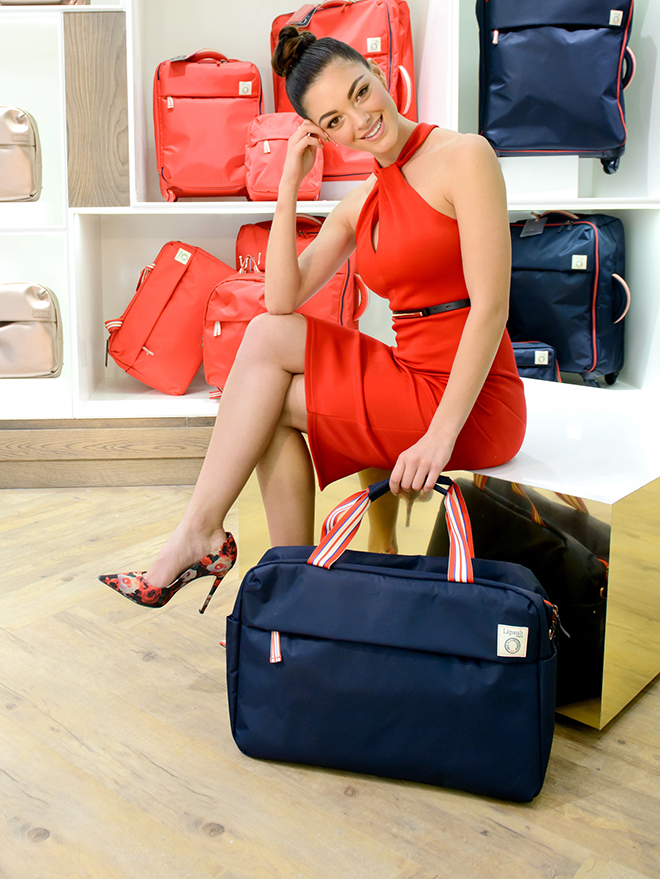
It’s no mean feat packing for an ordinary holiday but when you’re headed off to a tropical paradise or a snowy escape for your honeymoon (or even your destination wedding), things can get a little trickier. And because we want you to have the time of your life without having to worry about that extra sundress or the snow shoes you didn’t pack, Wedding Album consulted with luggage experts House of Samsonite for all the tips you need to pack like a professional.
1 Plan before you pack
• Check your destination for weather conditions, special clothing requirements for religious purposes and laundry facilities. If your husband-to-be is planning a surprise honeymoon and you’re unsure of the climate, make sure you cover all your bases with transitional-wear
• if you’re planning on doing any activities or attending a special event, make sure you have the correct clothing and equipment
• Ensure you’ve checked the luggage restrictions (weight, number of suitcases and size for hand luggage) for your airline as bulky items are often subject to special regulations while there are strict safety regulations for hand luggage.
2 Choose the right luggage
• Size is important – too big can lead to crumpled clothing while too small will leave you with creases!
• Hard cases are durable, and scratch and shock resistant, while soft cases are best if you’re pushed for space as they expand and have lots of extra pockets
• If your luggage is quite heavy, opt for a suitcase with sturdy wheels. If you’re only doing a short trip, leave the baggage behind and take a lightweight carry-on case instead.

3 It’s about what you need
• Before you throw your entire closet in your suitcase, compile a list of items you’d like to take or think you will need – then remove those that aren’t necessary
• Create a capsule wardrobe for your trip that you can mix and match. Choose one or two colour palettes and non-crease items that you can dress both up and down to enable you to create a variety of outfits from a few items
• You can also cut down the number of clothing items you pack by taking along a small container of handwash detergent
• Downsize your toiletries by only taking the essentials and decanting them into smaller containers. Most hotels provide soaps and shower gels so you can leave those behind if you’re staying at one
• Check with your hotel whether towels are supplied and which electrical appliances will be on hand.
4 Pack smartly
• Pack heavier items in the bottom of your suitcase and ensure you have flat, level surfaces to avoid creasing
• Place your shoes in shoe or plastic bags so they don’t dirty your clothing. Smaller items, such as socks and underwear, can be pushed inside your shoes to save space or used to fill gaps in the suitcase
• Use sarongs or beach towels to create layers and section your suitcase – you’ll be able to find things easily when you’re in a hurry
• A divider pad or cross ribbons will help you organise your suitcase as well as keep your clothing in place when your suitcase is not filled
• Wrap your electrical products in non-crease items to protect them
• Rolling your clothing is best if you’re using smaller luggage like a backpack, holdall or small duffel. Rolling works well for trousers, skirts, shorts and jerseys while items like shirts are better folded
• Invest in a packing kit or frame to fold clothes and avoid creases. You can also insert a sheet of tissue paper between individual layers of clothing to reduce creasing
• Use the top section of your suitcase to store delicate items or separate dirty laundry
• Interweave tailored items like skirts, trousers, coats and jackets to prevent creases: drape the item inside the suitcase with the ends hanging over the sides and put soft items, like T-shirts and jerseys, on top. Then fold over the ends hanging off the side and smooth them out
• Lay out your leather items, such as belts, along the inside walls of the suitcase to avoid damage
• Place toiletries that could leak or electrical goods that need to stay dry in plastic bags or vanity cases.
 5 Safety first
• Always place your valuables, fragile items and important documents in your hand luggage
• Ensure you have two identity tags – one on the inside of your suitcase and one on the outside – in case one gets ripped off
• Write your name, number and the place you will be staying on the label. Using your home address can draw attention to the fact that you will be away
• Choose a sturdy lock and make sure it works.
Information courtesy of House of Samsonite. The new Lipault Inés de La Fressange range (pictured above) is available in a Spinner (R2 999 for 55 cm, R3 599 for 65 cm and R3 999 for 72 cm), a Duffle Bag (R1 999), a Backpack (R999 for extra-small, R1 199 for medium) and a toiletry kit (R699).
Photography Erol Ahmed/Unsplash and courtesy images
Having a winter wedding? Give your guests a warm gift to take home with these cute – and totally easy to make! – hot cocoa favours. Plus, we’ve…
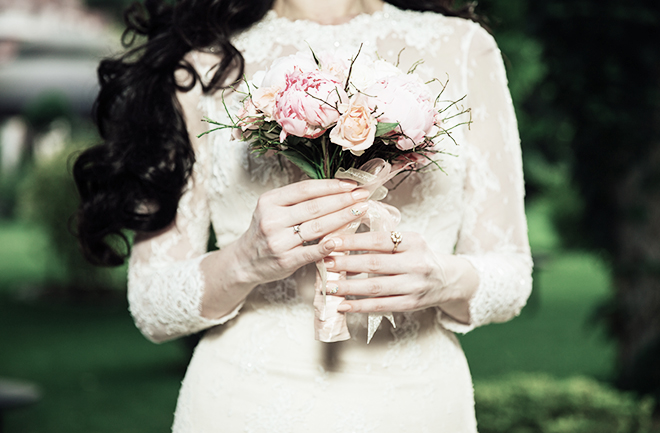
People have been tying the knot for centuries. And, over the years, ceremonies and the attire worn to them have undergone a lot of changes – but some still remain as ‘tradition’. Why though? We’ve gone back in time to find out exactly why wearing white is so significant, amongst other clothing practices we take for granted.
1 Say ‘yes’ to the dress
In the Middle Ages, weddings were more a matter of politics than love; unions occurred between families, businesses and even countries. As a result, brides dressed in a manner that cast their families in the most favourable light. Rich colours and exclusive fabrics that represented their social status were important hence the dramatic and often excessive use of material in bridal garments of that time.
2 White wedding
Most people know that wearing white symbolises the bride’s virtue but that’s not the only reason. Wearing this hue was also a representation of wealth, sometimes more than purity, as not all families could afford white clothing. The white dress was also popularised by Queen Victoria’s marriage to Prince Albert in 1840 when she ditched the traditional silver gown for one in white satin. The impact of this can still be felt today as, even now, white is the most popular choice for brides.
3 Behind the veil
Not only is a veil a stunning addition to your dress but it also represents a layer of protection. In previous centuries where the belief in witchcraft was rife, veils were worn to guard the bride against demons and other spirits. The veil covered the bride’s entire face with the idea that if unholy spirits couldn’t see her, they couldn’t curse her.
4 With the band
The custom of the groom removing the garter from the bride’s leg and tossing it to the single men in attendance wasn’t always a ‘thing’. In the past, the garter was prized as a token of love that also held magical properties. As such, men who attended the wedding would attempt to remove the garter and attach it to their hats for good luck.
What are some of the other clothing traditions you’ve heard of? Let us know on Facebook and Twitter.
Photography Alvin Mahmudov/Unsplash
We may think of it as out of date but there’s a reason the older generation enjoyed a macramé piece or two – they’re decorative without being overwhelming.…

If you’re not one for lavish affairs, the thought of escaping to a far-off land to secretly tie the knot with your Prince Charming, sounds like an utterly surreal and thrilling adventure. However, eloping isn’t just about running off into the sunset without a care in the world. There are a few factors to consider and we’ve sussed out all of them to help you decide if this is really the route you and your man want to take.

1 The legal schtick
As a South African couple looking to get married abroad, you need to find out whether your country of choice allows South Africans, if any foreigners at all, to wed on their turf. In certain cases, you may need to have physical tests (such as a blood test) done or fill in specialised forms. The embassy of the country you want to get hitched in will be able to tell you the exact requirements for your nuptials.
Regardless of where you take the plunge, a certain matrimonial property regime will govern your marriage. Read more about South Africa’s regimes here. The country’s common law stipulates that the regime in the husband’s country of permanent residence, also called a domicile, at the time of marriage, will apply. The default regime in South Africa is ‘in community of property’. So, if your groom permanently lives in Port Elizabeth, you’ll be married in community of property. If you prefer to be married out of community of property, you need to sign an antenuptial contract in South Africa before you jet off.
To register your marriage when you get back home, you won’t have to pay a fee. Nevertheless, you’ll need to write a letter to the Department of Home Affairs containing your contact details, including your address, mobile numbers and email addresses. The Department also requires a certified copy of your passport, ID or birth certificate and a copy of your foreign marriage certificate. If the certificate is not in English, it must be submitted with an English translation by a sworn translator.

2 Money matters
A major plus of eloping is that you spare yourself a substantial amount of dough. Without a group of guests attending, you’ll place drastically less strain on your bank account because of the reduced cost of your venue, catering and transport, amongst other items.
Even so, that doesn’t mean there are no expenses involved. No matter where you decide to tie the knot, you will require a roof over your head. There are plenty of wedding venues that offer elopement packages that include lodging, a space to hold your ceremony and a tasteful meal at one of their eateries. If you’re lucky, they may even throw in a wedding cake and bottle of bubbly!
To bask in that wedding day feeling, treat yourself to a gorgeous gown, even if it’s not the usual wedding fare, and have your hair and makeup done. Your man deserves to be decked out in a dashing suit too, and you can even indulge in some pre-wedding couples’ pampering at a spa.
Regardless of who’ll be – or not be – at your ceremony, you’ll want the day to be etched in your memory forever, so don’t forget to hire a photographer. Chat to them about possibly reducing their rates as there’ll be less activity to document.
If you really want to pull out all the stops to make your wedding as opulent as possible – minus the guest list drama, of course – consider a ‘luxury elopement’. This typically entails having exquisite decor, an elaborate wedding dress and a videographer, in addition to anything else that may be on your dream wedding wishlist.

3 Elopement etiquette
Some of your family and friends may suffer bruised egos when they discover that your nuptials didn’t include them. It’s best to let them know about your plans to elope before or immediately after your marriage has been made official. When it comes to announcing your nuptials to the rest of the world (i.e. your friends, colleagues and everyone on Facebook), first make a list of the people you’re most close to then give them a call to share the good news before updating your ‘Relationship Status’ on social media. If your extended family and friends would still like to celebrate with you, why not invite them over for a small celebratory gathering?
Keep in mind that since you’ll be eloping, it would be unfair to ask family and friends to purchase a gift. Also, consider your relationship with certain family members and friends who may want to be witness to your big day, and the cultural or religious traditions that they may want you to honour.
Photography freestocks.org, Zivile & Arunas /Unsplash, Pixabay
Weddings are expensive. We don’t really need to say it, but if you were ever unsure, then we’ll happily remind you. That being said, these ideas will hopefully…

When the stars came out to play on the Oscars 2017 red carpet, a selection of them donned exquisite frocks that are definitely fitting for your walk down the aisle. Gather some wedding dress inspo by admiring our pick of the best Oscars 2017 ensembles below.
Photography Instagram