• Category

    Planning

    Category

    The digital age is upon us. Hard print copy is slowly leaving our fingertips as we migrate online. Most people have access to the internet and a variety of digital devices. As lovely as physical wedding invites are it may be a great idea to consider a digital approach. To help you along we have put together a few notes on how to achieve a successful site. Here are a few nifty tips to consider when starting your own wed-site. 

    1. Know your limits

    If you’re not great with computers don’t opt for a website where you have to create everything from scratch. Rather go with platforms that provide existing templates. You can still customise it and make it look great! Make sure to choose a website that will showcase what you want and make you happy. Look around and decide after viewing a few options.

    2. Don’t forget the basics

    It’s so much fun choosing various designs and pictures so try to remember the basics. Be informative and ensure your wed-site goes beyond just aesthetics. Remember to include the what, where, when, who and how. Provide your guests with the 411 on dress code, the program, accommodation, location, registry, and local attractions if you are planning a destination wedding.

    3. Representation

    Be sure to create a wed-site that is a great reflection of you as a couple and of your wedding theme. Personalize the display to give guests a sneak peek of your big day – stick to a specific font, incorporate your colour scheme, or include a small photo timeline. To add extra flair, something to consider is creating a unique logo.

    4. Boast yourselves

    It’s your big day and you’re allowed to make things about yourselves. Tell your guests about your love story, how you met, funny anecdotes and how things led to this point. With that being said don’t write essays – keep things short and sweet.

    5. Registries and hashtags

    Hashtags are a great way to create an online photo album that all your guests can take part in. Perhaps the most beneficial feature of a hashtag is its ability to pull all of your wedding photos, from any source, into one place. Don’t forget to add your wedding registry link. 

    6. Protect your big day

    Be sure to use a password for your wed-site. You don’t need any wedding crashers. Any special invite-only events shouldn’t be mentioned on the wed-site like rehearsal dinner and bachelor parties.

    7. Consideration

    As mentioned before, digital is taking over but consider the fact that elderly people may not keep up with the times. If your elderly guests still sit waiting for the postman, try creating a special physical copy just for them. Also, consider having a FAQ section. Things may not always be clear and that’ll help a lot.

    Don’t think of a bland email that just consists of details and lack of creativity and representation of your love. Creating a wedding website or wed-site can be fun and exciting.

    You’re able to put your own twist on things and can play it up or down as much as you’d like. You don’t have to be tech-savvy as many websites offer existing templates that you can customise. With just one click, your guests can check out all the details and be informed of any changes.

    ALSO SEE: How to decide who gets an invite to your wedding

    How to decide who gets an invite to your wedding

    Image: Pixabay

    Technology is undoubtedly a massive part of our lives in this day and age. Our phones are practically extensions of our arms and we can’t go without checking in to our social media once a day. Most of our memories are made by captured moments on our digital devices and not by living in those moments. This can frustrate people who would rather be doing the latter, especially when it comes to significant occasions such as weddings.

    As part of the wedding prep, the perfect rehearsal dinner will make for an evening of fun, love, and a chance to mingle before the big day. Lately, they’ve become known as extravagant evenings of dining, decor and preparations right before the wedding. But if you plan it right, you’ll be able to have a stress-free evening of celebration before your big day.

    STEP 1

    Make sure it’s clear who will be hosting and organising the event. It may be the groom’s side or the bride’s, or a combination. Make sure everyone is aware of their role to avoid any conflict or miscommunication on the night.

    STEP 2

    Decide on the kind of event you want to have. Do you prefer keeping it light and casual, or making it a big party? Let this set the precedent for the decor, the setting and the guest list.

    STEP 3

    Draw up the guest list. Aside from your bridal party, family and close friends, you may want to have certain people. This will depend heavily on the size of the event, the location and your personal preferences.

    STEP 4

    Whether you go big or small, creating a fun theme for the night will only add to the festivities. This can involve fun games and even some sneaky hints for the big day.

    STEP 5

    While it’s important to have a set schedule in place for how the evening will run, make room for surprises and deviations in the evening. For instance, you may have a set list of speakers, but if your other guests would like to say a few words then allow room for some extra time.

    You can also use your rehearsal dinner to spoil your guests with gifts for your bridal party and special thank yous to everyone who contributed to the planning of your special day.

    ALSO SEE: How to decide who gets an invite to your wedding

    How to decide who gets an invite to your wedding

    Image: Unsplash

    If your wedding falls during Ramadan and you have Muslim guests, you might wonder how to make the experience a respectful one for them during this time. With a little thought, you can ensure everyone feels included while you enjoy your day. These simple tips help you plan a wedding during Ramadan that works for all your guests.

    Time it right
    Avoid food-focused moments like canapés, cocktail hour or dinner before sunset if you can. Ramadan shifts each year, so sunset (iftar) times change daily and by city. Check a local timetable online. Even noting sunset on your programme helps guests plan.

    Offer simple iftar
    A small iftar table at sunset is thoughtful. Dates, water, juice or light snacks — enough to break the fast comfortably.

    Talk to your caterer
    Let your caterer know in advance about fasting guests and halal meal requests. Keep meals warm or plated later if needed. Small adjustments go a long way.

    Cocktail hour before sunset?

    If you have a cocktail hour before sunset, provide comfortable seating and social spaces so fasting guests can enjoy themselves without focusing only on food.

    Provide quiet spaces
    Some guests may want to pray after sunset. A small, private room is helpful. Not mandatory, just considerate.

    Share information in advance
    Mention that your wedding falls during Ramadan on your website or invitations. Let guests know you’ve considered fasting and halal options. It helps them plan and shows respect.

    Don’t assume everyone is fasting
    Children and those with health reasons may not fast. Flexibility is key, so focus on consideration, not assumptions.

    Small gestures count
    A quick check-in with Muslim guests before the day — asking if there’s anything that would make it easier — is often appreciated more than any big arrangement.

    ALSO SEE: 7 quirky wedding ideas perfect for summer

    7 quirky wedding ideas perfect for summer

    Feature image: Pexels

    You’ve had the big engagement and decided on a date – now it’s time to get down to the planning but your partner doesn’t seem keen on contributing. Wedding planning can be stressful enough without having a partner who is not interested in helping out, so we’ve put together these five tips to get your partner involved in planning your big day together.

    1. FROM THE GET-GO

    Make sure you are both discussing wedding options from the start. You don’t want to get ahead without your partner and leave them behind, only to want their input later on.

    2. BE OPEN MINDED

    Your partner may have some strange ideas, but try not to brush them off harshly, as you want them to continue making contributions. If you don’t like something, be gentle and explain why.

    3. GET HANDS-ON

    If there are certain areas that you know your partner will be interested in, such as the music, food or transport, then hand over those tasks, making sure you are both on the same page when it comes to what you want.

    4. ASK FOR HELP

    If you’re struggling to juggle all of the invitations, nagging family members and bookings, ask your partner if they can take on some of the tasks, or that you work on them together to ease the pressure.

    5. JUST BE HONEST

    Tell your partner that you want their input, after all, you both decided to have a wedding. Having open communication will help you to express how you feel as well as finding out what your partner wants.

    ALSO SEE: 5 ways to avoid a family takeover at your wedding

    5 ways to avoid a family takeover at your wedding

    Feature image: Priscilla du Preez/Unsplash

    Growing up, I remember watching old wedding videos of my parents, uncles and aunts. Recorded on bulky video tapes that required patience and a steady hand to rewind. While fashion, cakes and decor have clearly evolved, one thing remained constant across every recording. The traditional vows.

    Decades later, vows are still the emotional anchor of a wedding day. Yet how couples choose to share them has changed. While traditional wording remains popular, many modern couples are embracing personal vows.

    There is something deeply romantic about that choice.

    For some, speaking deeply personal words in front of a room full of people feels daunting. Private personal vows remove that pressure, allowing couples to speak honestly, emotionally and without restraint.

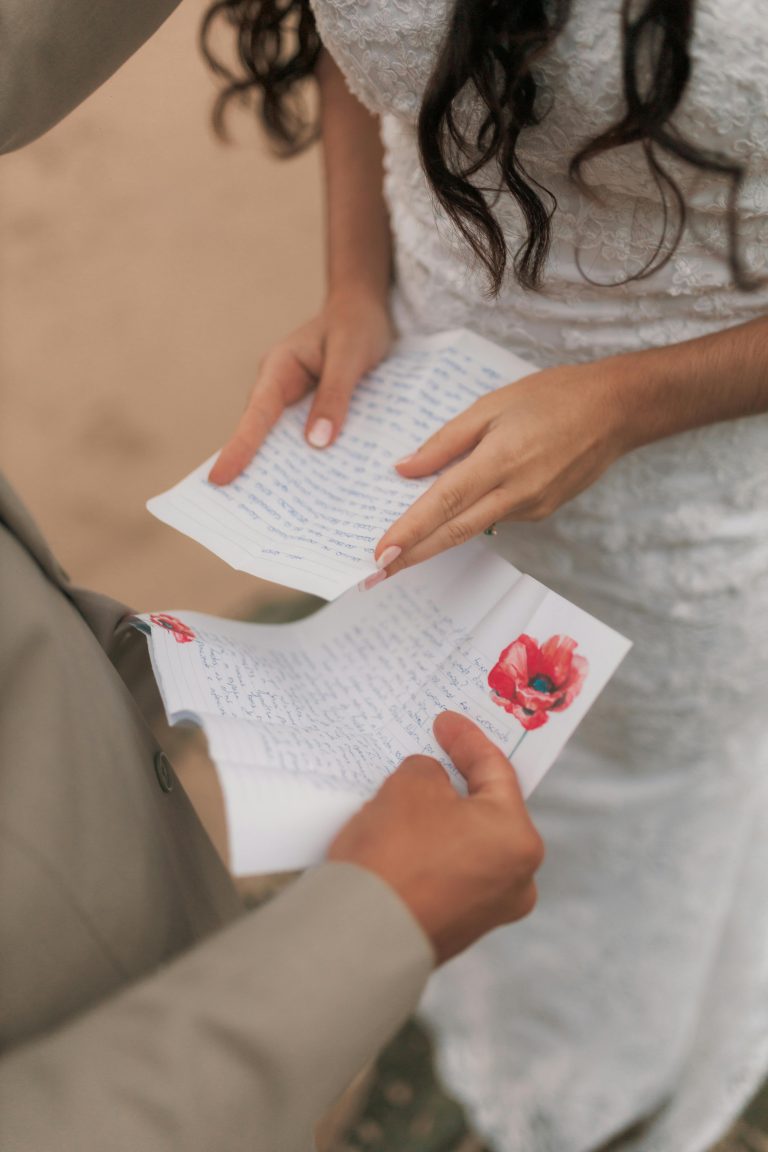
    Personal vows can take many forms. Some couples choose to exchange them during a first look, before the ceremony begins. Others prefer to write their vows in letters, read quietly on the morning of the wedding or the day before. Choosing to keep personal vows private does not mean excluding guests from the meaning of the ceremony. Many couples still choose to exchange traditional vows in front of loved ones, allowing their commitment to be witnessed, while saving their most personal words for a moment shared only between the two of them.

    This shift also reflects a broader change in how couples approach their weddings. Less about tradition for tradition’s sake, and more about intention. Personal vows, whether shared publicly or privately, become less of a performance and more of a genuine exchange.

    What makes personal vows so compelling is not when or where they are shared, but the freedom they offer. There are no rules, no required wording and no audience to consider.

    Whether spoken aloud, written down or quietly exchanged, personal vows remind us that at the heart of every wedding is a promise. And sometimes, the most powerful promises are the ones shared in private.

    ALSO SEE: Looking for wedding hairstyle inspo for all hair lengths? We’ve got you covered

    Looking for wedding hairstyle inspo for all hair lengths? We’ve got you covered

    Feature image: Pexels


    A wedding day is a time for celebration. Chances are, however, some might celebrate a bit too hard. Wedding hangovers can be pretty harsh for your guests, so why not help them recover?

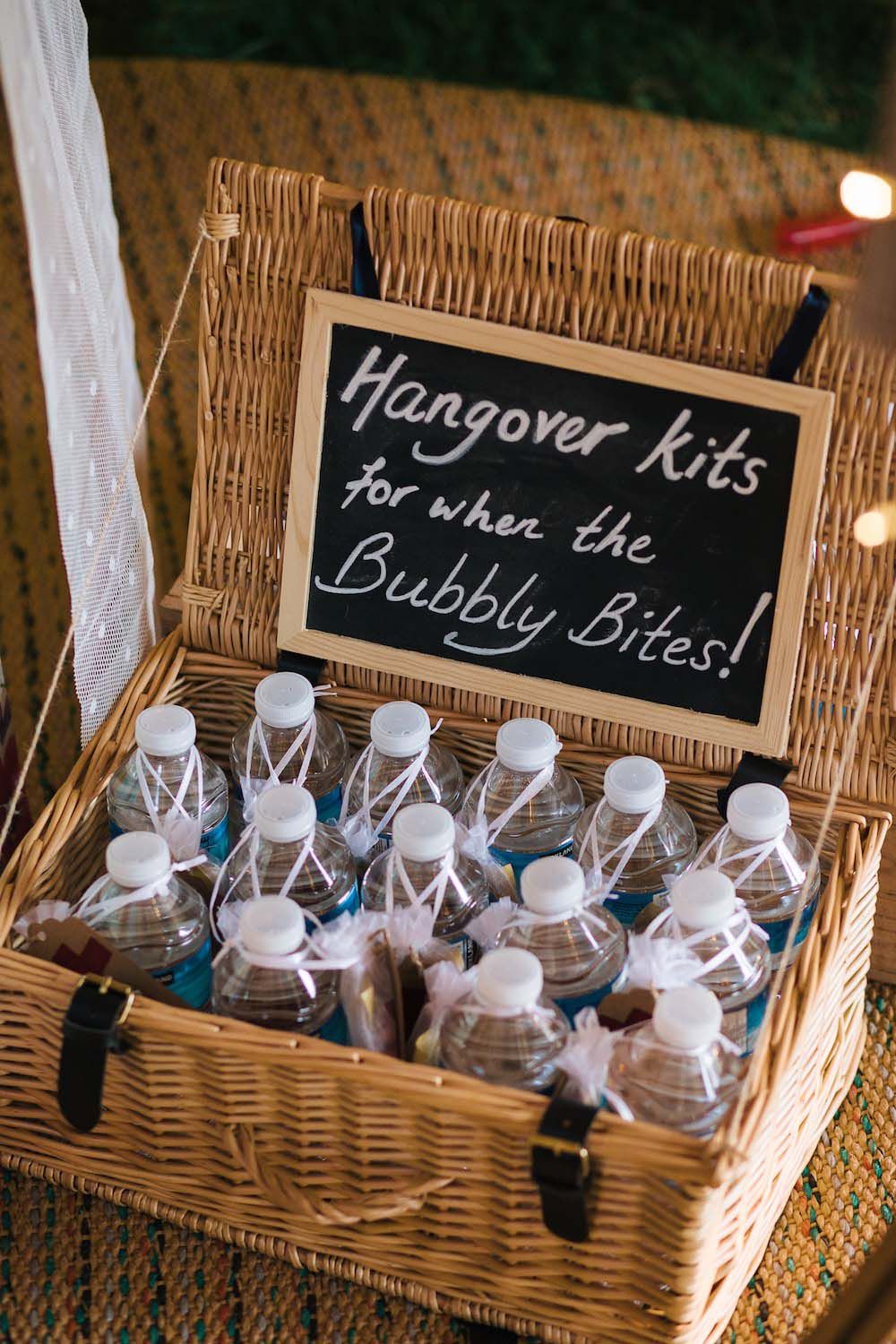
    Wedding hangover kits have become popular wedding favours in recent years. What’s great about this favour is that it’s easily DIY’ed, and couples can add whatever they want.

    Credit: Pinterest
    If you plan on making your own kit, consider adding some of these items:

    – A bottle of water to prevent a dry throat

    –  An eye mask to reduce puffiness

    – Plasters for those blisters after dancing all night long

    – A granola bar for energy

    – Sunglasses to hide those bloodshot eyes

    – Gum or mouth wash

    – A mini bottle of alcohol because… you know, hair of the dog

    Credit: Pinterest

    Feature image: Unsplash

    Wedding trends rarely land the same way across borders, and in South Africa, couples tend to favour celebrations that feel grounded, expressive and connected to place. Weddings are becoming less about spectacle and more about intention, with design choices that balance beauty, meaning and practicality.

    These 2026 wedding trends reflect how South African couples are redefining their wedding days in ways that feel considered, personal and distinctly local.

    A richer approach to colour

    Neutral palettes remain popular, but in 2026 they are being layered with deeper, earth-led tones. Shades such as olive, terracotta, chocolate brown and warm caramel are appearing across florals, stationery and table styling, often lifted with a subtle accent colour rather than bold contrast.

    This approach works particularly well in natural settings, whether in the Winelands, along the coast or in the bush, where colour can enhance the environment rather than compete with it.

    Bridal fashion with individuality

    wedding trends
    Photo: Hasan Hasanzadeh/Unsplash

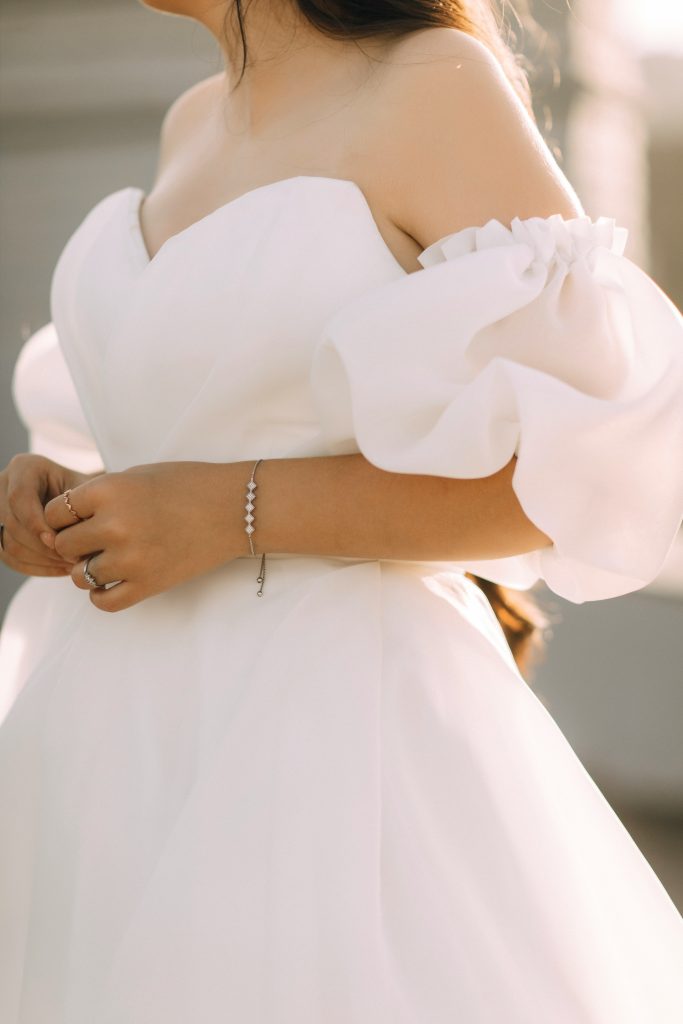
    South African brides are increasingly confident in their choices. Structured bodices, detachable skirts, statement sleeves and refined detailing are replacing overly embellished gowns. While white remains dominant, softer tones and textural fabrics are becoming more visible, especially for second looks or smaller celebrations.

    Dress codes are also loosening, allowing guests to interpret the aesthetic while still respecting the formality of the day.

    Food that reflects place and season

    Dining continues to move away from lengthy, formal sit-down meals. In 2026, couples are favouring seasonal menus, shared-style dining and relaxed pacing that allows guests to move, mingle and enjoy the atmosphere.

    Locally sourced ingredients, open-fire cooking, curated wine pairings and thoughtful late-night offerings reflect a growing appreciation for food as part of the overall experience, without becoming overly performative.

    Tablescapes that feel natural, not overstyled

    Long tables, considered linen choices and layered textures remain central to reception styling. Rather than highly theatrical setups, South African weddings lean towards tablescapes that feel refined yet effortless.

    Ceramic tableware, glassware with character and floral arrangements that echo the surrounding landscape create settings that photograph beautifully while remaining functional and welcoming.

    Florals with purpose

    Floral design in 2026 is less about abundance for its own sake and more about placement and impact. Grounded installations, sculptural arrangements and aisle meadows are favoured over towering structures.

    Florals are increasingly used to guide guests through a space, frame key moments or highlight architectural features, particularly at venues where the natural backdrop already does much of the work.

    Private vows gain popularity

    vows
    Photo: Micah & Sammie Chaffin/Unsplash

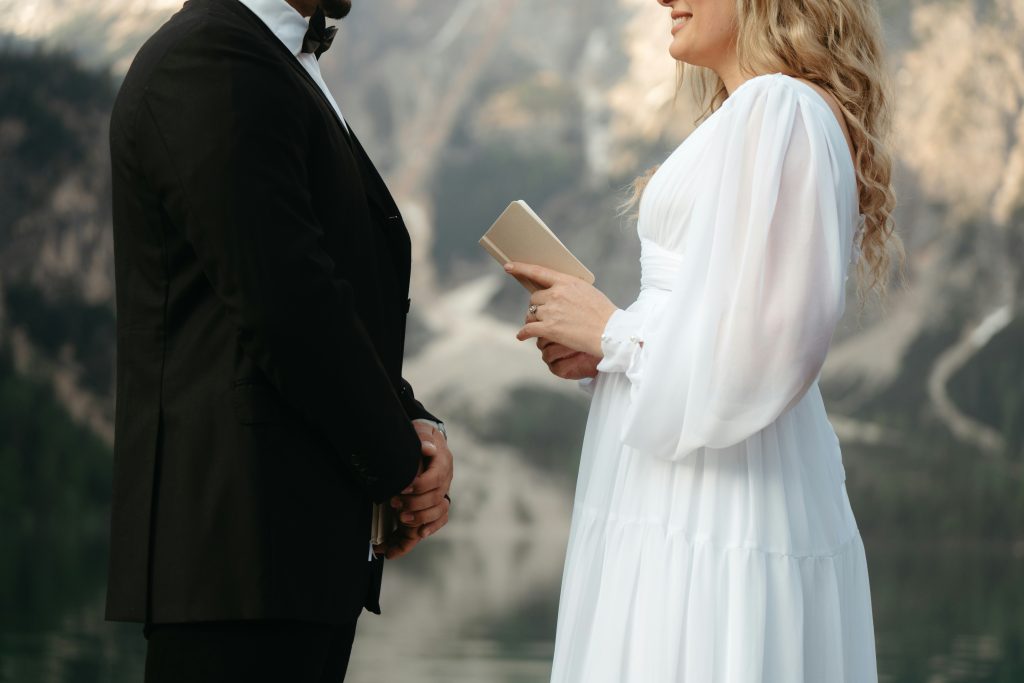
    Private vow exchanges are becoming one of the most meaningful 2026 wedding trends. Many couples are choosing to share their vows quietly before the ceremony, allowing for an intimate moment away from guests and cameras.

    Personalisation without excess

    Rather than personalised everything, couples are choosing a few meaningful details and doing them well. Handwritten notes, subtle monograms, custom menus or a carefully chosen ceremony reading often replace multiple decorative elements.

    Photography with an editorial eye

    South African photographers continue to lead the shift towards a documentary, editorial style. Natural light, movement and unposed moments are prioritised, resulting in imagery that feels timeless and emotive rather than overly styled.

    Smaller guest lists, stronger experiences

    While large weddings still have their place, many 2026 celebrations are becoming more intimate. Smaller guest lists allow couples to invest in quality, detail and time with their guests, particularly at destination venues.

    What’s quietly fading

    Highly coordinated bridal parties, rigid timelines and overly formal traditions are becoming less common. Couples are choosing flexibility, comfort and authenticity, shaping days that feel reflective of who they are rather than what’s expected.

    ALSO SEE: The wedding colour trend that quietly won us over in 2025

    The wedding colour trend that quietly won us over in 2025

    Feature image: Unsplash