• Author

    Leandri de Kock

    Browsing

    So you’re engaged, and although it’s an exciting and thrilling time for both you and your significant other, conflict is bound to arise, often in the form of your soon-to-be family-in-law. Some cases may be worse than others, but we’d like to help you lessen the load. Read on for some practical tips and thoughts on how to keep them happy, and, appropriately involved.

    Acceptance

    First of all, you need to make peace with the fact that your wedding planning journey will come with a fair share of stress, drama and mishaps, but all of this could be managed easily by not stressing about the things you cannot change. That goes for the family you’re marrying into as well. If you’ve known the person you’re marrying for a good amount of time, you probably know their family too – including their habits and preferences. Just because you’re getting married doesn’t mean those things will change, so make it easier for yourself by making peace with it – you’d want your S.O to do the same for you.

    You marry the family, too.

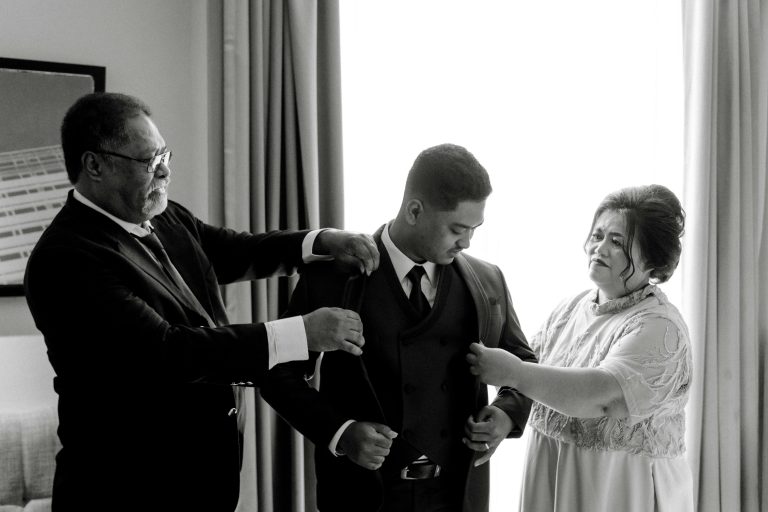
    That said, your new spouse’s family is accepting a new member into theirs, as your family is too, so be mindful about including them in the planning process. Your wedding is a celebration of not only two people coming together, but two families uniting, so they need to feel that their opinions matter too. This doesn’t mean that you have to take every suggestion they make to heart, but they’ll feel much more included if you make an effort to hear them out and make some compromises.

    Take a stand

    Sometimes, keeping the peace means taking a stand. It’s extremely difficult to avoid hurting the feelings of someone who simply wants to help, but sometimes their need to help is greater than your need for it. Don’t allow yourself to get into a situation too deep before realising that you’re allowing things to happen that will ultimately make you unhappy. Say no when you need to, but explain your feelings and reasoning behind it so that a mutual understanding can be reached.

    Same page

    You and your S.O absolutely need to be on the same page when it comes to making the decisions in your planning process. This will allow you to adequately explain your reasoning to your families, without throwing anyone under the bus. However, if your parents are paying for some parts of the wedding, you need to be on the same page with them too. Be open about what you want, your visions and expectations to avoid unnecessary conflict, especially if you’re not the one paying for it.

    Lessen the load

    Just because it’s your wedding doesn’t mean you have to plan, take care of and do everything. Make your vision clear and allow your mother-in-law, father-in-law or whoever-in-law to help you out with making calls, DIY projects, collections or whatever it is you may need. This will allow them to feel involved, but not in an overwhelming way where they have the ability to make decisions for you. However, looking at the other side of the spectrum could be just as tricky. Maybe your father-in-law is great at building things with his hands, but up until now you haven’t been getting along that well. Take the plunge and ask him for help with your DIY projects – it might be the starting point for the relationship you’ve been looking for.

    ALSO SEE: 8 guidelines for father of the groom

    8 guidelines for father of the groom

    Feature image: Pexels

    Planning the perfect proposal is nerve-wracking, exciting and maybe even a little overwhelming, all bundled up neatly into one big knot in your stomach. Throw in an unfamiliar destination, and that knot gets a little bigger. But don’t fear, we’ve got the fool-proof guide to making it go as smoothly as possible:

    Do your research beforehand

    By planning ahead, you’ll take a little pressure off yourself as well as have more peace of mind about how it’s all going to play out. Have a plan of where, how and when you’d like to pop the question, but don’t expect it to work out exactly as you see it in your head. When the moment is right, you’ll know, but also don’t be too stressed about changing it up in case of unforeseenable elements, like the weather.

    That said, make sure you’re aware of what’s happeing in the area you’re planning to propose in, especially if you’ve never been there. Do a little internet search beforhand to see if any events are happening, if the area is a sacred place perhaps, or if  any of the areas are restricted. It will also be handy to look at popular scenic locations, or romantic spots that other people have popped the question at for some inspiration.

    Communicate with your hotel

    …or resort, B&B, or wherever you’re planning on staying. Even if you’re not planning to propose at the place you’re staying at, they’ll most likely make some extra effort to make it romantic for you if they know what your plans are. Some places even organise some complimentary champagne, a romantic dinner, or some rose petals in your room for after you’ve popped the question.

    Insure the ring

    Before you even leave for your getaway, make sure the ring is insured. Things happen, but if you’re planning to propose while away, it’s the last thing you’d want to worry about. Get the ring insured for in case a stone pops out, or heaven forbid, it gets misplaced or stolen. It’s the responsible thing to do anyway, plus it will put your mind at ease.

    Hide the ring, safely

    Packing is stressful enough as it is, or at least for some. But making sure the ring stays safely hidden from your fiance-to-be’s eyes is extra daunting. If you don’t want to worry about it falling out of your pocket, or your partner accidentally seeing it in your bag, pack it in your check-in luggage. However, if you’re scared of your luggage getting lost or delayed (because yes, these things happen), keep it safely stashed in your carry-on. Rather safe than sorry, right?

    Furthermore, if you’re worried about it being discovered at customs, it’s a good idea to place the ring box inside a bigger, nondescript box with a note inside to give the inspector or security guard a quick heads up in case they have to take a closer look.

    Don’t wait until the last minute to propose

    You want to wait for that perfect moment, but don’t wait until the last day of the trip. Nerves might not be your best friend, so your partner might notice that you’re acting a little differently. A little anticipation is good, especially if your partner is kind of expecting it, but if you propose earlier on, you’ll have more time to celebrate it in a special place.

    Don’t overthink it

    Sometimes it’s best to just go with your gut. If the moment feels right, go for it, even if it doesn’t go with your plans. Being spontaneous and it being unexpected sometimes makes the moment that much more special.

    ALSO SEE: Alternative engagement ring stones

    Alternative engagement ring stones

    Feature image: Unsplash

    Changing your surname to your partner’s last name is often a custom that is expected and not discussed until someone questions why. In a shift away from tradition, it is becoming more common for partners to keep their own surnames and ditch the admin that comes with changing your name.

    Where the tradition stems from

    Historically, it all started in medieval England where people were known by their Christian names – just a first name. It started to go pear-shaped when names were recycled and there were more than one person with the same name. To distinguish between individuals as well as families, a second name, or surname rather, was chosen for the familial ‘group’ according to occupation or location. It was only later that women who got married had to take on the surname of the man purely based on superiority and patriarchy. This meant the woman had no legal identity apart from the man, and of course the same went for a newborn baby girl who automatically took her father’s surname. Women couldn’t vote, sign a contract, be independently recognised or even start a business if they did not take their husband’s surname.

    Changing your name

    Our identity is intimately linked to our names. Letting go of that name is hard – it feels like you’re letting go of a part of yourself, even though it won’t change who you are. For example, you could have an Indian surname but marrying a German might make you feel like you can’t identify with your heritage anymore.

    Let’s be honest, it’s a shlep. In most cases it’s the woman who will change her maiden name or opt for a hyphenated version of her surname and her husband’s surname. In same-sex marriages it’s the same situation, but it all comes down to the legal aspect of changing every single account or legal document of your entire existence. In South Africa, as of 1992 it is legal for a woman to use her maiden surname, her husband’s surname or, as of 1977, a double-barreled surname after she is married. It’s a lengthy process but it’s not impossible, just be prepared to stand in a few queues.

    Keeping your maiden name

    For women who have a professional career or a namesake business, it will make things much easier should you wish to keep your maiden name. If you are also the last female family member in line holding onto your specific surname, you might want to keep it.

    With that said, changing your surname to match you husband’s means you will pass it on to your children, so that everyone in your immediate family shares the the same surname. This traveling easier for everyone and it creates a feeling of unity.

    The bottomline is…

    It is totally up to you. It is no longer a law that a wife absolutely has to take her husband’s surname, you have to consider what it means to you. More often than not the decision will be purely emotional, rather than practical.

    ALSO SEE: Get creative with your wedding dress after the big day

    Get creative with your wedding dress after the big day

    Feature image: Unsplash

    Feeling your absolute best on your wedding day is non-negotiable. We asked Loredana Loots, an integrative nutrition and holistic health coach, for her advice on what to eat before and on your wedding day:

    “With only a few days to go and a whirlwind of emotions, arrangements and final prep, you may (understandably) not give much thought about what you are eating and drinking. What you consume actually has a major impact on how feel – physically, mentally and emotionally. Every couple deserves to look and feel like a million bucks on their special day. These handy food secrets are a must!

    It’s most likely that we all went through a little phase where we neglected our hair this past summer. Read on to find out how you can undo the damage.

    1. Get a trim

    If your hair is splitting and breaking off, or even shedding more than it usually would, it’s time for a decent trim. Broken, extremely fragile hair is often a result of irreversible damage and cannot be repaired, no matter how many treatments you do! There’s no point in holding on to dead ends, so take the plunge and snip off as much of the damage as possible to give your hair the best chance of repairing and growing out even stronger.

    2. Avoid chemicals

    As tempting as it may be to dive in to a fresh batch of bleach, there’s a much easier way to recharge blonde tones until your next salon visit. The Wella Invigo Blonde Recharge Shampoo uses cool tones of violet to brighten and add vibrancy to coloured blonde hair. It helps to eliminate the all-familiar yellow, brassy tones blondes experience after one too many pool dips and not enough moisture.

    3. Boost your colour

    Going darker is often the solution to help hair look a little healthier and to revive its overall glossy appearance. By adding darker and warmer tones to your hair, it will help to neutralise brassy tones without compromising on shine. Aftercare is important too, to keep the colour from fading and to help replenish your stands with every wash. At-home treatments that mimic those used in salons can extend your colour for weeks on end and maintain than just-came-from-the-salon look. Wella’s Invigo Color Brilliance range does just that, consisting of a shampoo, conditioner, mask and BB spray, completing your entire routine with one fell swoop.

    4. Avoid unnecessary damage

    Whether it’s a tight undo, an everyday ponytail or extra brushing and untangling of windswept hair, there’s no denying that our hair goes through more mechanical damage in summer than in winter. Try to only brush hair on wash days, with the help of a wide-toothed comb, a detangling product or some extra conditioner. You can also wrap your hair in a silk or satin scarf to help avoid hair knotting while sleeping, and making use of scrunchies or anti-snag hair ties.

    5. Restore

    You’ll know your hair is damaged when it feels rough and has a lacklustre appearance, especially if it’s longer and has been exposed to more wear and tear with every summer. A deeply hydrating, reparative treatment will help to plump up the follicles and restore some elasticity to brittle and dehydrated hair. The Wella Invigo Nutri-Enrich range is a trusted solution and a go-to for all hair types that suffer from post-summer damage. Rich in vitamins and minerals, it replenishes stressed locks by using the nourishing powers of Oleic Acid and Panthenol, along with strengthening peptides found in Goji Berry.

    Find a participating salon near you HERE or shop the ranges online HERE.

    Picture: Unsplash

    It’s all fun and games until your hair starts paying for it. To help whip summer-stressed hair back into a healthier shape and prevent any further damage from occurring, we need to take a more gentle approach. Here’s how:

    Recovery mode

    One of the first, most effective treatments to repair sun-damaged hair, is with a hot oil treatment. And better yet, you can do it at home without spending a cent. Mix half a cup of olive oil with two vitamin E capsules and heat up in the microwave for no more than 10 seconds. Then, work the mixture through from the ends upward and leave for about an hour, then shampoo and condition as normal. However, if the damage is particularly bad, it might be time to schedule a trim to get rid of dead ends, prevent split ends from progressing, and stimulate new, healthy growth.

    Repair damage

    While a long dip on a hot day is total bliss, your hair won’t agree. Chlorinated water in swimming pools exposes your hair to harmful chemicals, sea water contributes to dryness, along with the sun being a constant, too. After a swim, always rinse hair thoroughly to keep damage to a minimum, then follow up with a replenishing hair routine. The Wella Fusion range offers exactly that –  a hair recovery range that instantly helps to repair damaged hair and make it more resilient. Not only does it remove impurities, it also penetrates the hair follicle to leave it smoother and more elastic. Did we mention it’s suitable for colour-treated hair, too? Check.
    Shop online or find a salon nearest to you: linktr.ee/wellaprofessionals_sa

    Prevent and protect

    Avoid overwashing and, with that, stripping precious oils from your hair by choosing your products carefully. We know that amped up heat means extra sweat, sunscreen and product build-up, which inevitably feeds the need for extra shampoos on top of your normal routine. When hair is already in a compromised state, focus on putting back, rather than stripping away. Opt for light moisture mists with UV and pollution filters, deep treatment masks once a week combined with lighter conditioners for in-between, and shampoos specifically for your hair type to avoid weighing your locks down or having to wash too often. Oh, and a hat too, for good measure!

    Rethink styling

    With extra humidity in the air, it’s pointless to try and boost volume or force hair into a perfect style if it’s just going to fall flat anyway. Instead, embrace your natural texture and work with that instead. Reach for a curl cream if you want to tone down frizz on naturally curly hair, a salt spray to add effortless texture to straighter styles, or a finishing oil to boost shine and add extra moisture. This will also avoid unnecessary heat and styling damage, preventing further wear and tear.

    Picture: Unsplash