Weddings have evolved in countless ways over the years, but one thing remains unchanged: your guests matter. They’re not just names on a seating chart. They’re the people who’ve shown up for your love story, often going out of their way (and budget) to celebrate with you.
I was recently at a wedding where we played a game during the reception, something I’ve never experienced before, having always been used to more traditional weddings. And honestly? It turned out to be such a fun icebreaker.
Finalising your guest list is where wedding planning starts to feel very real (and very personal). Between budgets, venue limits and family expectations, deciding who gets a plus-one can quickly become one of the trickiest parts of the process.
The good news? There’s no one-size-fits-all rule. With a clear approach (and a little confidence), you can make decisions that feel fair, thoughtful and aligned with your vision for the day.
What is a wedding plus-one, really?
A “plus-one” simply means a guest is invited to bring someone along — usually a partner, but sometimes a date or companion. It’s a lovely gesture, but not a requirement for every guest.
Start with your non-negotiables
Before diving into individual decisions, get clear on your limitations:
- Budget: Every extra guest affects catering, seating and rentals
- Venue capacity: Space will naturally cap your numbers
- Wedding style: A large, lively celebration vs an intimate gathering
Once you know your boundaries, it becomes much easier to make consistent calls.
Who should get a plus-one?
While every wedding is different, there are a few widely accepted guidelines that help keep things fair and respectful.
Couples in committed relationships
If a guest is married, engaged or in a long-term relationship, it’s generally expected to include their partner, even if you’ve never met them. It acknowledges their relationship as a meaningful part of their life.
Your bridal party
Your inner circle has likely shown up for every fitting, plan and pre-wedding moment. Offering them a plus-one is a simple but meaningful way to say thank you.
Guests travelling or coming solo
If someone is travelling far or won’t know many people at your wedding, allowing them to bring a guest can make the experience far more comfortable and enjoyable.
Close friends and immediate family
For your nearest and dearest, a plus-one can feel like a natural extension of their invite, even if they’re not in a serious relationship.
Who doesn’t necessarily need one?
This is where it gets a little more flexible and where your discretion comes in.
Guests in casual or new relationships
If someone has only recently started dating, you’re not obligated to extend a plus-one. You can always reassess closer to the wedding if things become more serious.
Singles who know plenty of guests
If your friend group overlaps or your family is tight-knit, solo guests are unlikely to feel alone — meaning a plus-one isn’t essential.
Coworkers or distant connections
If you’re inviting colleagues or acquaintances, it’s perfectly acceptable to keep the invite limited. Just make sure you’re consistent across the group.
The golden rule: be consistent
If there’s one thing that avoids awkward conversations, it’s consistency.
For example:
- All married and cohabiting couples get a plus-one
- Only the bridal party receives one regardless of relationship status
- Or, no plus-ones beyond serious relationships
Whatever you decide, apply it across the board. It makes your choices easier to explain and easier for guests to accept.
How to make it clear on your invitations
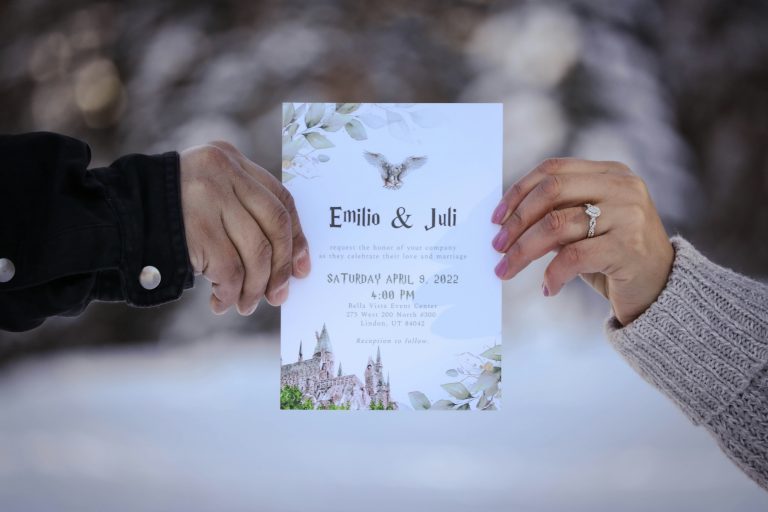
Your invitation should do the talking for you.
- Named guest only? That person is invited solo
- “And Guest”? They have a plus-one
- Both names listed? You’re inviting a specific couple
You can also clarify your policy on your wedding website to avoid any confusion (or last-minute requests).
When you can’t offer everyone a plus-one
If your guest list is tight, don’t feel guilty. It’s completely acceptable to limit plus-ones, especially if you’re prioritising intimacy or working within a strict budget.
If guests ask, a kind and honest response goes a long way: “We would have loved to include everyone, but due to venue limitations, we’ve had to keep things quite intimate.”
ALSO SEE: Wedding guest dress code explained
Feature image: Pexels
It’s your nearest and dearests’ wedding coming up and you’ve been given a plus one. With no partner, you have to pick a lucky someone to accompany you to the big bash.
It’s important to remember that it’s not just a plus one, but rather someone you know you can have fun with. The wedding is an important day for your loved ones as it sees the union of two people ready to tie the knot.
So how do you choose the perfect partner to bring along?
In terms of wedding decisions, choosing who will – and won’t – be getting an invite to your big day is right up there with the date and the dress. Unless you’re in a position to cater for 500 of your closest acquaintances, you’re going to have to be selective. So … who makes the cut?
START WITH WHAT YOU KNOW
Ultimately, the maximum number of invitations you send out depends on your budget and the size of your venue. Once you know how many guests you can afford or accommodate, you can start tailoring the guest list to match.
DON’T PLAY A NUMBERS GAME
A 50-50 split between you and your fiancé sounds logical, but don’t be constrained by ratios. You’ll definitely have some friendships that overlap. Plus, if one of you has a smaller family, there’s no point filling that ‘side’ with nice-to-have acquaintances while the other person has to tell a beloved uncle that there’s just no more room.
BUSINESS AND PLEASURE
It’s a reality that you spend as much time with your colleagues as you do with your fiancé. But do you want them at your wedding? Do you ever socialise with them other than after-work drinks? Do your topics of conversation start and end with bashing that annoying client? Have they met your husband- or wife-to-be? Do you see them still being in your life if you changed jobs? Be tactful in inviting those who do pass muster by keeping wedding office chatter to a minimum.
‘YOU REMEMBER AUNT SANDRA…’
Family is where you’re likely to run into trouble; it’s a mire of obligation and potential for someone to take offence. This is where blanket rules become handy. For example, not inviting family members you haven’t seen in years, or who haven’t met your fiancé. Sticking to rules leaves little room for those who don’t make the list to complain.
IT’S MY PARTY
Your parents and future in-laws may expect to have a say in the guest list, especially if they’re helping to pay for it. They may want to invite friends who watched you grow up – or maybe just want to show off to the Joneses across the street. Allocate the parents an equal number of guest suggestions, but let them know the final decision rests with you. And stick to your guns – the only people you should invite are those you couldn’t imagine celebrating it without.
A LESSON IN BEING RUTHLESS
1. ‘My number-one rule was that I wouldn’t meet anyone for the first time on my wedding day,’ says Storm Wilkinson, who put a ring on it in 2013. ‘I’m sorry if you’ve been dating for “like a million years” – I don’t know them, they’re not coming. Budgets are a harsh reality.’
2. Once you’ve worked out a per-head cost, apply it to any guests you’re on the fence about. If spending that figure on that person makes you go: ‘Pffft,’ take their name off the list.
3. Avoid fake-smiling on your wedding day. ‘You don’t want to have anyone at your wedding that you have to pretend to be happy to see,’ says Aleisha McCormack, host of The Bridechilla podcast. ‘Ditch them.’
ALSO SEE: 5 tips to get your partner involved in the wedding planning
Image: Unsplash
If your wedding falls during Ramadan and you have Muslim guests, you might wonder how to make the experience a respectful one for them during this time. With a little thought, you can ensure everyone feels included while you enjoy your day. These simple tips help you plan a wedding during Ramadan that works for all your guests.
Time it right
Avoid food-focused moments like canapés, cocktail hour or dinner before sunset if you can. Ramadan shifts each year, so sunset (iftar) times change daily and by city. Check a local timetable online. Even noting sunset on your programme helps guests plan.
Offer simple iftar
A small iftar table at sunset is thoughtful. Dates, water, juice or light snacks — enough to break the fast comfortably.
Talk to your caterer
Let your caterer know in advance about fasting guests and halal meal requests. Keep meals warm or plated later if needed. Small adjustments go a long way.
Cocktail hour before sunset?
If you have a cocktail hour before sunset, provide comfortable seating and social spaces so fasting guests can enjoy themselves without focusing only on food.
Provide quiet spaces
Some guests may want to pray after sunset. A small, private room is helpful. Not mandatory, just considerate.
Share information in advance
Mention that your wedding falls during Ramadan on your website or invitations. Let guests know you’ve considered fasting and halal options. It helps them plan and shows respect.
Don’t assume everyone is fasting
Children and those with health reasons may not fast. Flexibility is key, so focus on consideration, not assumptions.
Small gestures count
A quick check-in with Muslim guests before the day — asking if there’s anything that would make it easier — is often appreciated more than any big arrangement.
ALSO SEE: 7 quirky wedding ideas perfect for summer
Feature image: Pexels
There are many aspects of a destination wedding you should consider when planning one. Yes, it is your big day. You should be allowed the final say in what goes down over this period. Just remember, though, that the celebratory atmosphere of your wedding does depend, in part, on your guests having a good experience. They have given up part of their time, travelled a few miles, and spent quite a bit of money, to be there for you. So here’s some advice on how to make your destination wedding easier and more enjoyable for your guests.
Firstly, long before you do anything else, tell everyone about your plans to tie the knot overseas. Those you wish to invite need time to schedule the trip, and some might not be able to make it due to financial issues or prior engagements. It would be better if they declined long before you did the seating arrangements or decided who will be in the bridal party.
Now, once you know who’s definitely coming, don’t leave them hanging with regard to transport, directions and accommodation. Research what group rates are available for flights as well as hotel rooms. Definitely send them directions to the main venue, and in case transport might be difficult for them, organising a shuttle service would be a great favour.
Once your guests have arrived, make them feel welcome. A lovely little note left in plain sight on the bedspread or dressing table is always a good idea. A tiny gift, perhaps a small confection particular to the country you’re getting married in, would also go down well. In addition, you should probably give them products essential in dealing with that country’s climate and natural surroundings. Bug spray and sunscreen are good ideas if you’re tying the knot outdoors in the baking heat of a tropical paradise.
Lastly, while the wedding is the reason they came, it should not be the only activity on the weekend schedule. Organise something special for your guests, maybe a fun brunch or dinner at a nearby venue. This will be a good chance for your friends and family to touch base and catch up. After all, you do want all the special people in your life to get to know each other, and to get along, don’t you?
ALSO SEE: How to pack for your honeymoon
Feature image: Pexels
Shoes are possibly one of the most crucial features of an ensemble, especially when stepping out and revelling in the affair that is your bestie’s wedding.
If you’ve been raking your brain and scrolling through online catalogues to figure out what shoe you’ll be sporting to bring together the perfect wedding ensemble, here are the top three shoes that are a must, as told by stylist, Rojaun Devos!
Knee-high boot
A knee-high is one of the shoes that simply make every and any outfit look better. Make sure it is a good length and that you give enough room for your legs to breathe. An investment is definitly a leather or suede pair as these are timeless and will never go out of style, and it also offers the perfect option for a winter wedding.

A nude heel
Nude is a classic colour, timeless and definitely a must-have when it comes to heels. Sometimes we have to go to work events or even dinner parties which doesn’t always call for pops of colour or anything that is too much of a statement, so it’s the perfect purchase if you’re looking to splurge but still get your money’s worth outside of being a guest at your friend’s wedding.

The pump
This is the perfect shoe for gals that absolutely hate wearing heels… but, desperate times, call for desperate measures, and pumps are the perfect balance between both words. What we love about this style is that it can go from day to night in a second. Simply swap your jeans for an elegant slip dress, and voila!

Feature Image: