• Tag

    wedding advice

    Browsing

    An autumn wedding comes with a built-in sense of atmosphere with the help of softer light, richer textures and a natural depth of colour that does a lot of the work for you.

    Here are 20 autumn wedding colours that we love:

    1. Forest green

    Forest green is a strong foundational colour for autumn weddings, especially in outdoor or garden settings. It pairs well with natural materials like wood and linen, and works seamlessly alongside gold accents or softer neutrals to create balance.

    Photo: Pinterest

    2. Burgundy

    Burgundy remains one of the most reliable autumn tones, thanks to its depth and versatility. It translates well across florals, table linens and bridal party attire, and can be paired with lighter shades like blush or peach to soften its intensity.

    Photo: Pinterest

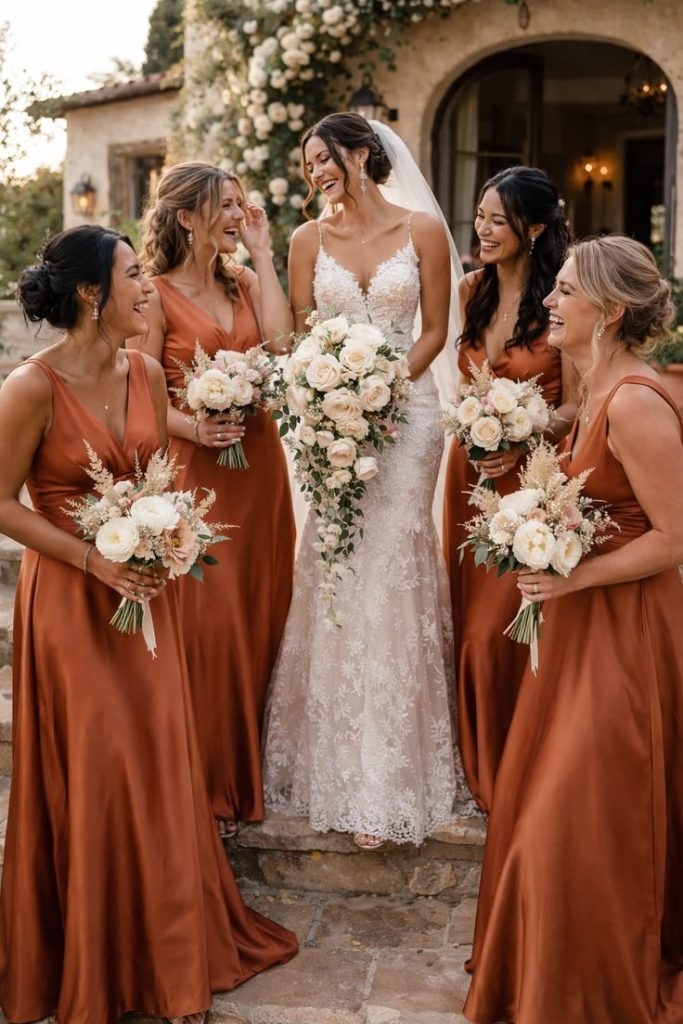
    3. Terracotta

    Terracotta introduces warmth without feeling overly bold. It works particularly well in relaxed or bohemian settings, especially when combined with textured elements like ceramics, rattan and dried florals.

    wedding colour
    Photo: Pinterest

    4. Rust

    Rust sits between orange and brown, making it a more muted way to bring warmth into your palette. It’s especially effective in fabrics — from bridesmaid dresses to napkins — and complements both neutrals and deeper tones.

    Photo: Pinterest

    5. Amber

    Amber brings a soft, golden warmth that enhances the overall atmosphere rather than dominating it. It works best through details like glassware, candles or subtle décor accents.

    Photo: Pinterest

    6. Navy

    Navy provides contrast and structure within an autumn palette. It anchors warmer tones like rust, marigold or burgundy, and works particularly well in more formal or evening settings.

    Photo: Pinterest

    7. Emerald green

    Emerald green adds a sense of richness and formality. It pairs well with metallics like gold, as well as classic combinations like white or deep red, making it a versatile choice across different styles of weddings.

    Photo: Pinterest

    8. Plum

    Plum introduces a deeper, more romantic layer to your palette. It works best when combined with other jewel tones or balanced with softer shades like mauve or dusty rose.

    Photo: Pinterest

    9. Mauve

    Mauve offers a softer alternative to traditional autumn shades. Its muted undertones make it easy to pair with greys, lilacs and warmer neutrals, adding depth without overpowering the palette.

    wedding colour
    Photo: Pinterest

    10. Copper

    Copper brings in a metallic element that still feels grounded and seasonal. It’s most effective in table settings — think cutlery, vases or candle holders — where it adds warmth and texture.

    Photo: Pinterest

    11. Sage green

    Sage green acts as a neutral base within an autumn palette. It complements both warm and cool tones, making it a practical choice for larger elements like table linens or bridal party outfits.

    Photo: Pinterest

    12. Marigold

    Marigold introduces a bold, vibrant contrast to deeper autumn shades. It works best when used intentionally in smaller elements, such as florals or stationery, to avoid overwhelming the overall look.

    wedding colour
    Photo: Pinterest

    13. Dusty rose

    Dusty rose bridges the gap between soft and structured. It pairs well with stronger tones like burgundy or navy, adding a subtle warmth that keeps the palette from feeling too heavy.

    Photo: Pinterest

    14. Camel

    Camel tones create a warm, understated base that works across both modern and rustic settings. When layered with similar neutrals, it creates a cohesive and inviting look.

    Photo: Pinterest

    15. Gold

    Gold is one of the easiest ways to elevate an autumn palette. It can be introduced through small details like flatware and decor accents, or used more prominently for a more refined finish.

    Photo: Pinterest

    16. Olive green

    Olive green has a slightly richer undertone than other greens, making it well-suited to autumn. It pairs naturally with warm neutrals and works well across both decor and fashion elements.

    Photo: Pinterest

    17. Cranberry

    Cranberry adds depth with a slightly brighter edge than burgundy. It works best as an accent colour, bringing contrast to neutral or earth-toned palettes.

    wedding colour
    Photo: Pinterest

    18. Peach

    Peach offers a softer, more unexpected addition to autumn palettes. When paired with deeper tones like navy or rust, it helps to lighten the overall look without losing warmth.

    Photo: Pinterest

    19. Taupe

    Taupe provides a neutral foundation that allows other colours to stand out. It works particularly well in linens and stationery, where it sets the tone without competing for attention.

    Photo: Pinterest

    20. Cinnamon

    Cinnamon captures the warmth typically associated with autumn. It works well across multiple elements — from fashion to florals — and pairs easily with both neutrals and richer tones.

    wedding colour
    Photo: Pinterest

    Bringing it together

    A strong autumn palette doesn’t rely on one standout colour, but rather on how each shade works alongside the next. Start with a base, build in contrast, and use texture to enhance the overall effect.

    When deciding on an MC for a wedding, many opt for their closest and loudest friends to lead the day. However, being the Master of ceremonies is a top job, and not everyone is cut out for it.

    If you’ve been asked to MC but you’re a bit nervous, fear not. All you need is some pre-planning and a lot of courage. Here are some tips to make sure you are on top of your game come wedding day.

    Fewer laughs, more sentimentality

    Weddings are all about sentimentality, so why not lean into it? Of course, you want to get guests laughing but humour is subjective, and some jokes will likely fail. This is why its best to be sincere and focus on the love of the bridal couple.

    Get the names right

    The most crucial rule with MCing is to get your facts right. There are many people involved in a wedding, and it’s easy to get things wrong if you’re not careful. Make sure you know how to pronounce the names and surnames of everyone giving a toast – you don’t want to offend your bestie’s new father-in-law!

    Custom-build your speech

    Don’t just turn to Google to write your speech and recycle the same tired jokes people have come to expect from weddings. Instead, spend some time thinking about what you’re going to say and get creative. It will help if you focus on the couple. Identify what is unique about them and their relationship, and then create something special based on that. 

    Keep an eye on the programme

    It’s always better to have a plan or programme of events written down to guide you on the day. Even if you know everything you need to say off by heart, having it written down will help to reassure you when your task begins. The running order and timing are extremely important. It is your job as MC to ensure that the guests are never left waiting for something, or that the food does not come out 20 minutes before it should be served. Know your schedule and keep to it.

    Be interactive

    Read through your speech as often as you can before you take the stage. This will ensure that you don’t spend the entire time looking down at a script. It will give you a chance to interact with the audience and make sure you use that shining personality that the bride and groom love about you! Remember, however, that you don’t have to stick strictly to your speech.

    Most importantly, no matter what happens, try to relax and enjoy the day. Just because you’re working the day, doesn’t mean you can’t have fun!

    ALSO SEE: Your guide to the perfect wedding seating plan

    Your guide to the perfect wedding seating plan

    Feature image: Pexels

    Finalising your guest list is where wedding planning starts to feel very real  (and very personal). Between budgets, venue limits and family expectations, deciding who gets a plus-one can quickly become one of the trickiest parts of the process.

    The good news? There’s no one-size-fits-all rule. With a clear approach (and a little confidence), you can make decisions that feel fair, thoughtful and aligned with your vision for the day.

    What is a wedding plus-one, really?

    A “plus-one” simply means a guest is invited to bring someone along — usually a partner, but sometimes a date or companion. It’s a lovely gesture, but not a requirement for every guest.

    Start with your non-negotiables

    Before diving into individual decisions, get clear on your limitations:

    • Budget: Every extra guest affects catering, seating and rentals
    • Venue capacity: Space will naturally cap your numbers
    • Wedding style: A large, lively celebration vs an intimate gathering

    Once you know your boundaries, it becomes much easier to make consistent calls.

    Who should get a plus-one?

    While every wedding is different, there are a few widely accepted guidelines that help keep things fair and respectful.

    Couples in committed relationships

    If a guest is married, engaged or in a long-term relationship, it’s generally expected to include their partner, even if you’ve never met them. It acknowledges their relationship as a meaningful part of their life.

    Your bridal party

    Your inner circle has likely shown up for every fitting, plan and pre-wedding moment. Offering them a plus-one is a simple but meaningful way to say thank you.

    Guests travelling or coming solo

    If someone is travelling far or won’t know many people at your wedding, allowing them to bring a guest can make the experience far more comfortable and enjoyable.

    Close friends and immediate family

    For your nearest and dearest, a plus-one can feel like a natural extension of their invite, even if they’re not in a serious relationship.

    Who doesn’t necessarily need one?

    This is where it gets a little more flexible and where your discretion comes in.

    Guests in casual or new relationships

    If someone has only recently started dating, you’re not obligated to extend a plus-one. You can always reassess closer to the wedding if things become more serious.

    Singles who know plenty of guests

    If your friend group overlaps or your family is tight-knit, solo guests are unlikely to feel alone — meaning a plus-one isn’t essential.

    Coworkers or distant connections

    If you’re inviting colleagues or acquaintances, it’s perfectly acceptable to keep the invite limited. Just make sure you’re consistent across the group.

    The golden rule: be consistent

    If there’s one thing that avoids awkward conversations, it’s consistency.

    For example:

    • All married and cohabiting couples get a plus-one
    • Only the bridal party receives one regardless of relationship status
    • Or, no plus-ones beyond serious relationships

    Whatever you decide, apply it across the board. It makes your choices easier to explain and easier for guests to accept.

    How to make it clear on your invitations

    Your invitation should do the talking for you.

    • Named guest only? That person is invited solo
    • “And Guest”? They have a plus-one
    • Both names listed? You’re inviting a specific couple

    You can also clarify your policy on your wedding website to avoid any confusion (or last-minute requests).

    When you can’t offer everyone a plus-one

    If your guest list is tight, don’t feel guilty. It’s completely acceptable to limit plus-ones, especially if you’re prioritising intimacy or working within a strict budget.

    If guests ask, a kind and honest response goes a long way: “We would have loved to include everyone, but due to venue limitations, we’ve had to keep things quite intimate.”

    ALSO SEE: Wedding guest dress code explained

    Wedding guest dress code… explained

    Feature image: Pexels

    One of the most difficult parts of planning your wedding food is deciding whether you want a buffet or plated meal. We’ve laid out the pros and cons so you can easily decide what’s best for you.

    A PLATED MEAL

    The facts

    A plated meal is the more traditional meal option, where your guests are each served three courses, plus canapés before the reception. Caterers will usually give guests an option of two to three main meals (with a vegetarian option as one of them).

    The pros

    All of your guests get their food at the same time. Since you know what everyone is eating, caterers will only buy for that amount of people, which makes it a more cost-effective option. You can also plan the entertainment – dancing, speeches and any surprises – in-between each course.

    The cons

    It needs more waitstaff, which can get expensive (if your wedding package includes servers, however, this won’t be a concern). And more than likely, you and your partner will choose options based on what you love to eat, which may not appeal to everyone.

    A BUFFET

    The facts

    Self-serve stations are set up. You can also hire servers to stand behind each warmer and dish up for the guests, which tends to be more hygienic and controlled. It is the non-traditional, more casual catering option.

    The pros

    Fewer servers will be needed and you can cut catering costs. You will also be able to serve more food options – which is a good idea, considering all the allergies, diets and intolerances guests may have. It encourages guests to mingle and chat, creating a relaxing atmosphere before party time.

    The cons

    Whether tables take turns heading up to the buffet or a long line forms, your guests will have to queue and wait for their food. If the buffet is not included in your catering package, you will have to rent the tables, linen, serving platters and warmers, which can be costly. People will always dish up more if they serve themselves, and caterers know this – the extra food purchased will beef up your catering bill. Guests milling around carrying plates laden with food may not bring the sense of elegance to the occasion that most couples would like.

    ALSO SEE: Wedding ceremony tips to know before you walk down the aisle

    Wedding ceremony tips to know before you walk down the aisle

    Feature image: Unsplash

    You’ve planned the seating chart, chosen the perfect playlist and said yes to the dress, but have you thought about what actually happens during your ceremony?

    Your wedding ceremony is one of the most photographed, emotional and memorable parts of the day. It’s also the part that most brides don’t rehearse properly. These wedding ceremony tips for brides will help you feel calm, confident and completely present from the moment you step into the aisle to your first kiss as newlyweds.

    Walk slower than you think you should

    Then slow it down again.

    Adrenaline will make everything feel like it’s happening in fast forward. Walking slowly not only gives your photographer time to capture those once in a lifetime moments, but it also allows you to actually take in the people, the music and your partner waiting at the end of the aisle.

    If you feel like you’re walking too slowly, you’re probably walking at the perfect pace.

    Carry your bouquet at your belly button

    It sounds oddly specific, but it makes a huge difference in photos.

    Holding your bouquet too high can hide the detailing on your dress and make your shoulders look tense. Hold it low, around your belly button, with the flowers facing outward. This helps your posture look more relaxed and keeps your neckline and bodice visible.

    Hold hands and lock eyes

    It might feel natural to look around at your guests, your parents or even your officiant, but the most meaningful place to look is right at each other.

    Holding hands throughout the ceremony grounds you, calms your nerves and keeps you emotionally connected. It also looks incredibly romantic in photos.

    Hold the kiss

    When it’s time for that “you may now kiss” moment, don’t rush it.

    Go in for the kiss and hold it while you both count to three in your heads. This gives your photographer enough time to capture the moment properly and prevents that blink and you miss it situation.

    Pause before you walk back down the aisle

    Once you’re officially married, take a second before turning to walk back up the aisle.

    Celebrate. Smile at your guests. Steal another kiss if you want to. That pause creates some of the most joyful and genuine photos of the day.

    Pause halfway down the aisle on your way out

    Your recessional is your very first moment as a married couple.

    As you walk back down the aisle together after the ceremony, stop halfway for a quick kiss or celebratory moment. It gives your guests something special to cheer for and creates one of the happiest photo opportunities of the entire day.

    Practise standing together

    It sounds simple, but knowing how to stand comfortably next to each other matters more than you think.

    Angle your bodies slightly toward one another rather than standing stiffly forward. It feels more natural and looks more intimate during the ceremony.

    Don’t forget to breathe

    Deep breaths will keep you calm and help prevent shaky voices during your vows.

    If you feel overwhelmed, gently squeeze your partner’s hand and take a slow breath together.

    ALSO SEE: High-neck wedding dresses we love

    High-neck wedding dresses we love

    Feature image: Jakob Owens/Unsplash

    As part of the wedding prep, the perfect rehearsal dinner will make for an evening of fun, love, and a chance to mingle before the big day. Lately, they’ve become known as extravagant evenings of dining, decor and preparations right before the wedding. But if you plan it right, you’ll be able to have a stress-free evening of celebration before your big day.

    STEP 1

    Make sure it’s clear who will be hosting and organising the event. It may be the groom’s side or the bride’s, or a combination. Make sure everyone is aware of their role to avoid any conflict or miscommunication on the night.

    STEP 2

    Decide on the kind of event you want to have. Do you prefer keeping it light and casual, or making it a big party? Let this set the precedent for the decor, the setting and the guest list.

    STEP 3

    Draw up the guest list. Aside from your bridal party, family and close friends, you may want to have certain people. This will depend heavily on the size of the event, the location and your personal preferences.

    STEP 4

    Whether you go big or small, creating a fun theme for the night will only add to the festivities. This can involve fun games and even some sneaky hints for the big day.

    STEP 5

    While it’s important to have a set schedule in place for how the evening will run, make room for surprises and deviations in the evening. For instance, you may have a set list of speakers, but if your other guests would like to say a few words then allow room for some extra time.

    You can also use your rehearsal dinner to spoil your guests with gifts for your bridal party and special thank yous to everyone who contributed to the planning of your special day.

    ALSO SEE: How to decide who gets an invite to your wedding

    How to decide who gets an invite to your wedding

    Image: Unsplash

    There are many aspects of a destination wedding you should consider when planning one. Yes, it is your big day. You should be allowed the final say in what goes down over this period. Just remember, though, that the celebratory atmosphere of your wedding does depend, in part, on your guests having a good experience. They have given up part of their time, travelled a few miles, and spent quite a bit of money, to be there for you. So here’s some advice on how to make your destination wedding easier and more enjoyable for your guests.

    Firstly, long before you do anything else, tell everyone about your plans to tie the knot overseas. Those you wish to invite need time to schedule the trip, and some might not be able to make it due to financial issues or prior engagements. It would be better if they declined long before you did the seating arrangements or decided who will be in the bridal party.

    Now, once you know who’s definitely coming, don’t leave them hanging with regard to transport, directions and accommodation. Research what group rates are available for flights as well as hotel rooms. Definitely send them directions to the main venue, and in case transport might be difficult for them, organising a shuttle service would be a great favour.

    Once your guests have arrived, make them feel welcome. A lovely little note left in plain sight on the bedspread or dressing table is always a good idea. A tiny gift, perhaps a small confection particular to the country you’re getting married in, would also go down well. In addition, you should probably give them products essential in dealing with that country’s climate and natural surroundings. Bug spray and sunscreen are good ideas if you’re tying the knot outdoors in the baking heat of a tropical paradise.

    Lastly, while the wedding is the reason they came, it should not be the only activity on the weekend schedule. Organise something special for your guests, maybe a fun brunch or dinner at a nearby venue. This will be a good chance for your friends and family to touch base and catch up. After all, you do want all the special people in your life to get to know each other, and to get along, don’t you?

    ALSO SEE: How to pack for your honeymoon

    How to pack for your honeymoon

    Feature image: Pexels

    Letting your family help out with all the wedding planning can be fun, exciting, and a relief. But they can often become too involved and start taking over, causing unnecessary drama and stress before the big day. It’s important to set some boundaries while still letting your loved ones know that their help is appreciated, which is why we’ve come up with simple solutions to getting everyone involved without it turning into a family takeover,

    1. KEEP IT SPECIFIC

    Assign your family members certain tasks to complete, making sure they keep you informed with their progress. This can be anything from making invitations to table decorations, leaving you to sort out the bigger decisions.

    2. COMMUNICATION

    Keep in contact with your family about your decisions and the progress of the wedding planning. This will allow them to feel like they are a part of it all, and that you value their opinion. It’s also important to speak up when you are unhappy, but approach it in a calm and gentle way.

    3. COMPROMISE

    If your parents are footing some of the bill, they’ll want to have a say in some of the arrangements. Welcome their ideas, but also explain your and your fiancée’s vision for your wedding before you get started.

    4. GET YOUR WEDDING PLANNER INVOLVED

    If you’re feeling overwhelmed with pressure from all sides, get your wedding planner to step in and act as a buffer between you and your family. This will also give them the opportunity to update everyone on the wedding progress and what plans are in place to achieve your vision.

    5. OFF LIMITS

    Keep certain aspects of the wedding planning decisions off limits. This doesn’t mean you can’t involve your family or keep them in the loop, but be strictly clear that it is for you to decide. This can be about your guest list, the dress, or wedding cake. To counter any protests, give your family something they are passionate about, such as the catering or wedding stationery.

    ALSO SEE: Relaxing bachelorette party ideas for the chilled bride

    Relaxing bachelorette party ideas for the chilled bride

    Image: Unsplash

    We all hope that our wedding day will go off without a hitch, but sometimes mishaps happen. Between wardrobe malfunction to allergic reactions to beauty blunders – it’s all part of the process.

    I’m sure we’d all love to be prepared for every scenario our minds can conjure, but this is simply not possible. However, a little preparation goes a long way and adding an emergency kit to your wedding day can be a great way to alleviate stress.

    Needle and Thread

    Sometimes things tear, and that’s true for bridesmaids and wedding dresses. Having a handy dandy sewing kit is a must when getting ready for your big day, it helps avoid anyone running around looking for a needle and thread.

    Shoe Repair Glue 

    We’re preparing for everything, right? While a tear in a dress is a very real reality, sometimes heels get stuck on things they shouldn’t and give way to gravity. Adding some shoe repair glue into your emergency kit may save you the trouble of re-doing your makeup after your wedding shoe hits a snag.

    Double-Sided Wardrobe Tape

    Stop necklines from sagging and keep straps covered with this life-saving tool! This magical little took has the ability to tackle wardrobe malfunction by simply peeling and sticking.

    Picture: Pinterest

    Wine Stain Remover

    The drinks are flowing and the guests are getting down on the dance floor. A shove here and a spill there, sometimes white wedding dresses can get stained when having a good time. Not to worry, Takealot has a few good options when it comes to stain removals, especially red wine!

    Mini First Aid Kit

    Grab a travel-sized first aid kit from your nearest pharmacy or online. These kits are equipped with everything you could need when handling bumps, scratches, and other minor accidents that may derail your day.

    ALSO SEE: 5 Breathtaking allergy-friendly florals to add to your wedding!

    5 Breathtaking allergy-friendly florals to add to your wedding!

    Feature Image: Pexels

    The first year of marriage is always marital bliss, especially when you have heaps of debt behind your name. While there’s nothing wrong with dreaming up the perfect wedding – bells and whistles included – walking down the aisle doesn’t have to mean walking straight into wedding debt.

    Overspending on your wedding day may just cancel out the marital bliss everyone enthusiastically talks about. According to a 2019 study by LendingTree concluded that 45% of newlyweds between the ages of 18 and 53 went into debt to pay for the wedding. And with many South African couples paying between R80 000 – R120 000, as per Standard Bank, it’s no surprise why.

    While getting married can be an expensive business, sometimes it helps to stop and think before making a big purchase on Kim Kardashian-esque flower wall.

    Trade debt for memories 

    Sometimes it’s easy to get caught up in the tasks and balance sheets of planning a wedding, but it’s important to remember why everyone is really attending your wedding – love. The food, DJ, wedding photographer, and signature drink are just the cherry on top of your love and commitment cake, and it’s important to keep this at the centre of your planning.

    Get on the same page

    According to the same 2019 study, nearly 76% of newlyweds who reported they went into debt also stated they argued over wedding-related expenses. The remedy? Bridal couples need to get on the same page when determining what they’re spending their hard-earned cash on. Creating a wedding budget and discussing expense details are two ways for avid debt collectors. If you’re looking to splurge on an open bar, make sure you’re both comfortable with how long it will be “open,” what liquor will be available, and what the total will come to.

    Stick to your boundaries

    We’ve all heard the phrase: “keeping up with the Joneses,” but sometimes it’s okay to watch them cruise on by. Planning a wedding can feel overwhelming which can easily lead to bridal couples listening to the opinions of others. A great way to avoid being swayed by friends and family members and what they’d like to see at your wedding is by writing down a list of wedding priorities that are important to you and your partner. Consider what is “worth-it” and what is “non-negotiable,” this will provide you with a better foundation with which to smile and say “no, thank you.”

    ALSO SEE: 5 Breathtaking allergy-friendly florals to add to your wedding!

    5 Breathtaking allergy-friendly florals to add to your wedding!

    Feature Image: Pinterest