• Category

    Advice

    Category

    It’s your nearest and dearests’ wedding coming up and you’ve been given a plus one. With no partner, you have to pick a lucky someone to accompany you to the big bash.

    It’s important to remember that it’s not just a plus one, but rather someone you know you can have fun with. The wedding is an important day for your loved ones as it sees the union of two people ready to tie the knot.

    So how do you choose the perfect partner to bring along?

    One of the most difficult parts of planning your wedding food is deciding whether you want a buffet or plated meal. We’ve laid out the pros and cons so you can easily decide what’s best for you.

    A PLATED MEAL

    The facts

    A plated meal is the more traditional meal option, where your guests are each served three courses, plus canapés before the reception. Caterers will usually give guests an option of two to three main meals (with a vegetarian option as one of them).

    The pros

    All of your guests get their food at the same time. Since you know what everyone is eating, caterers will only buy for that amount of people, which makes it a more cost-effective option. You can also plan the entertainment – dancing, speeches and any surprises – in-between each course.

    The cons

    It needs more waitstaff, which can get expensive (if your wedding package includes servers, however, this won’t be a concern). And more than likely, you and your partner will choose options based on what you love to eat, which may not appeal to everyone.

    A BUFFET

    The facts

    Self-serve stations are set up. You can also hire servers to stand behind each warmer and dish up for the guests, which tends to be more hygienic and controlled. It is the non-traditional, more casual catering option.

    The pros

    Fewer servers will be needed and you can cut catering costs. You will also be able to serve more food options – which is a good idea, considering all the allergies, diets and intolerances guests may have. It encourages guests to mingle and chat, creating a relaxing atmosphere before party time.

    The cons

    Whether tables take turns heading up to the buffet or a long line forms, your guests will have to queue and wait for their food. If the buffet is not included in your catering package, you will have to rent the tables, linen, serving platters and warmers, which can be costly. People will always dish up more if they serve themselves, and caterers know this – the extra food purchased will beef up your catering bill. Guests milling around carrying plates laden with food may not bring the sense of elegance to the occasion that most couples would like.

    ALSO SEE: Wedding ceremony tips to know before you walk down the aisle

    Wedding ceremony tips to know before you walk down the aisle

    Feature image: Unsplash

    You’ve planned the seating chart, chosen the perfect playlist and said yes to the dress, but have you thought about what actually happens during your ceremony?

    Your wedding ceremony is one of the most photographed, emotional and memorable parts of the day. It’s also the part that most brides don’t rehearse properly. These wedding ceremony tips for brides will help you feel calm, confident and completely present from the moment you step into the aisle to your first kiss as newlyweds.

    Walk slower than you think you should

    Then slow it down again.

    Adrenaline will make everything feel like it’s happening in fast forward. Walking slowly not only gives your photographer time to capture those once in a lifetime moments, but it also allows you to actually take in the people, the music and your partner waiting at the end of the aisle.

    If you feel like you’re walking too slowly, you’re probably walking at the perfect pace.

    Carry your bouquet at your belly button

    It sounds oddly specific, but it makes a huge difference in photos.

    Holding your bouquet too high can hide the detailing on your dress and make your shoulders look tense. Hold it low, around your belly button, with the flowers facing outward. This helps your posture look more relaxed and keeps your neckline and bodice visible.

    Hold hands and lock eyes

    It might feel natural to look around at your guests, your parents or even your officiant, but the most meaningful place to look is right at each other.

    Holding hands throughout the ceremony grounds you, calms your nerves and keeps you emotionally connected. It also looks incredibly romantic in photos.

    Hold the kiss

    When it’s time for that “you may now kiss” moment, don’t rush it.

    Go in for the kiss and hold it while you both count to three in your heads. This gives your photographer enough time to capture the moment properly and prevents that blink and you miss it situation.

    Pause before you walk back down the aisle

    Once you’re officially married, take a second before turning to walk back up the aisle.

    Celebrate. Smile at your guests. Steal another kiss if you want to. That pause creates some of the most joyful and genuine photos of the day.

    Pause halfway down the aisle on your way out

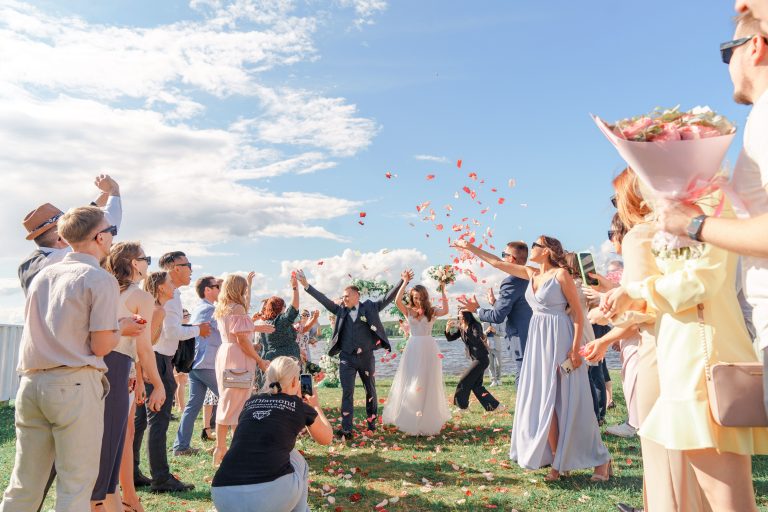
    Your recessional is your very first moment as a married couple.

    As you walk back down the aisle together after the ceremony, stop halfway for a quick kiss or celebratory moment. It gives your guests something special to cheer for and creates one of the happiest photo opportunities of the entire day.

    Practise standing together

    It sounds simple, but knowing how to stand comfortably next to each other matters more than you think.

    Angle your bodies slightly toward one another rather than standing stiffly forward. It feels more natural and looks more intimate during the ceremony.

    Don’t forget to breathe

    Deep breaths will keep you calm and help prevent shaky voices during your vows.

    If you feel overwhelmed, gently squeeze your partner’s hand and take a slow breath together.

    ALSO SEE: High-neck wedding dresses we love

    High-neck wedding dresses we love

    Feature image: Jakob Owens/Unsplash

    As part of the wedding prep, the perfect rehearsal dinner will make for an evening of fun, love, and a chance to mingle before the big day. Lately, they’ve become known as extravagant evenings of dining, decor and preparations right before the wedding. But if you plan it right, you’ll be able to have a stress-free evening of celebration before your big day.

    STEP 1

    Make sure it’s clear who will be hosting and organising the event. It may be the groom’s side or the bride’s, or a combination. Make sure everyone is aware of their role to avoid any conflict or miscommunication on the night.

    STEP 2

    Decide on the kind of event you want to have. Do you prefer keeping it light and casual, or making it a big party? Let this set the precedent for the decor, the setting and the guest list.

    STEP 3

    Draw up the guest list. Aside from your bridal party, family and close friends, you may want to have certain people. This will depend heavily on the size of the event, the location and your personal preferences.

    STEP 4

    Whether you go big or small, creating a fun theme for the night will only add to the festivities. This can involve fun games and even some sneaky hints for the big day.

    STEP 5

    While it’s important to have a set schedule in place for how the evening will run, make room for surprises and deviations in the evening. For instance, you may have a set list of speakers, but if your other guests would like to say a few words then allow room for some extra time.

    You can also use your rehearsal dinner to spoil your guests with gifts for your bridal party and special thank yous to everyone who contributed to the planning of your special day.

    ALSO SEE: How to decide who gets an invite to your wedding

    How to decide who gets an invite to your wedding

    Image: Unsplash

    In terms of wedding decisions, choosing who will – and won’t – be getting an invite to your big day is right up there with the date and the dress. Unless you’re in a position to cater for 500 of your closest acquaintances, you’re going to have to be selective. So … who makes the cut?

    START WITH WHAT YOU KNOW

    Ultimately, the maximum number of invitations you send out depends on your budget and the size of your venue. Once you know how many guests you can afford or accommodate, you can start tailoring the guest list to match.

    DON’T PLAY A NUMBERS GAME

    A 50-50 split between you and your fiancé sounds logical, but don’t be constrained by ratios. You’ll definitely have some friendships that overlap. Plus, if one of you has a smaller family, there’s no point filling that ‘side’ with nice-to-have acquaintances while the other person has to tell a beloved uncle that there’s just no more room.

    BUSINESS AND PLEASURE

    It’s a reality that you spend as much time with your colleagues as you do with your fiancé. But do you want them at your wedding? Do you ever socialise with them other than after-work drinks? Do your topics of conversation start and end with bashing that annoying client? Have they met your husband- or wife-to-be? Do you see them still being in your life if you changed jobs? Be tactful in inviting those who do pass muster by keeping wedding office chatter to a minimum.

    ‘YOU REMEMBER AUNT SANDRA…’

    Family is where you’re likely to run into trouble; it’s a mire of obligation and potential for someone to take offence. This is where blanket rules become handy. For example, not inviting family members you haven’t seen in years, or who haven’t met your fiancé. Sticking to rules leaves little room for those who don’t make the list to complain.

    IT’S MY PARTY

    Your parents and future in-laws may expect to have a say in the guest list, especially if they’re helping to pay for it. They may want to invite friends who watched you grow up – or maybe just want to show off to the Joneses across the street. Allocate the parents an equal number of guest suggestions, but let them know the final decision rests with you. And stick to your guns – the only people you should invite are those you couldn’t imagine celebrating it without.

    A LESSON IN BEING RUTHLESS

    1.  ‘My number-one rule was that I wouldn’t meet anyone for the first time on my wedding day,’ says Storm Wilkinson, who put a ring on it in 2013. ‘I’m sorry if you’ve been dating for “like a million years” – I don’t know them, they’re not coming. Budgets are a harsh reality.’
    2. Once you’ve worked out a per-head cost, apply it to any guests you’re on the fence about. If spending that figure on that person makes you go: ‘Pffft,’ take their name off the list.
    3. Avoid fake-smiling on your wedding day. ‘You don’t want to have anyone at your wedding that you have to pretend to be happy to see,’ says Aleisha McCormack, host of The Bridechilla podcast. ‘Ditch them.’

    ALSO SEE: 5 tips to get your partner involved in the wedding planning

    5 tips to get your partner involved in the wedding planning

    Image: Unsplash

    If your wedding falls during Ramadan and you have Muslim guests, you might wonder how to make the experience a respectful one for them during this time. With a little thought, you can ensure everyone feels included while you enjoy your day. These simple tips help you plan a wedding during Ramadan that works for all your guests.

    Time it right
    Avoid food-focused moments like canapés, cocktail hour or dinner before sunset if you can. Ramadan shifts each year, so sunset (iftar) times change daily and by city. Check a local timetable online. Even noting sunset on your programme helps guests plan.

    Offer simple iftar
    A small iftar table at sunset is thoughtful. Dates, water, juice or light snacks — enough to break the fast comfortably.

    Talk to your caterer
    Let your caterer know in advance about fasting guests and halal meal requests. Keep meals warm or plated later if needed. Small adjustments go a long way.

    Cocktail hour before sunset?

    If you have a cocktail hour before sunset, provide comfortable seating and social spaces so fasting guests can enjoy themselves without focusing only on food.

    Provide quiet spaces
    Some guests may want to pray after sunset. A small, private room is helpful. Not mandatory, just considerate.

    Share information in advance
    Mention that your wedding falls during Ramadan on your website or invitations. Let guests know you’ve considered fasting and halal options. It helps them plan and shows respect.

    Don’t assume everyone is fasting
    Children and those with health reasons may not fast. Flexibility is key, so focus on consideration, not assumptions.

    Small gestures count
    A quick check-in with Muslim guests before the day — asking if there’s anything that would make it easier — is often appreciated more than any big arrangement.

    ALSO SEE: 7 quirky wedding ideas perfect for summer

    7 quirky wedding ideas perfect for summer

    Feature image: Pexels