• Tag

    flowers

    Browsing

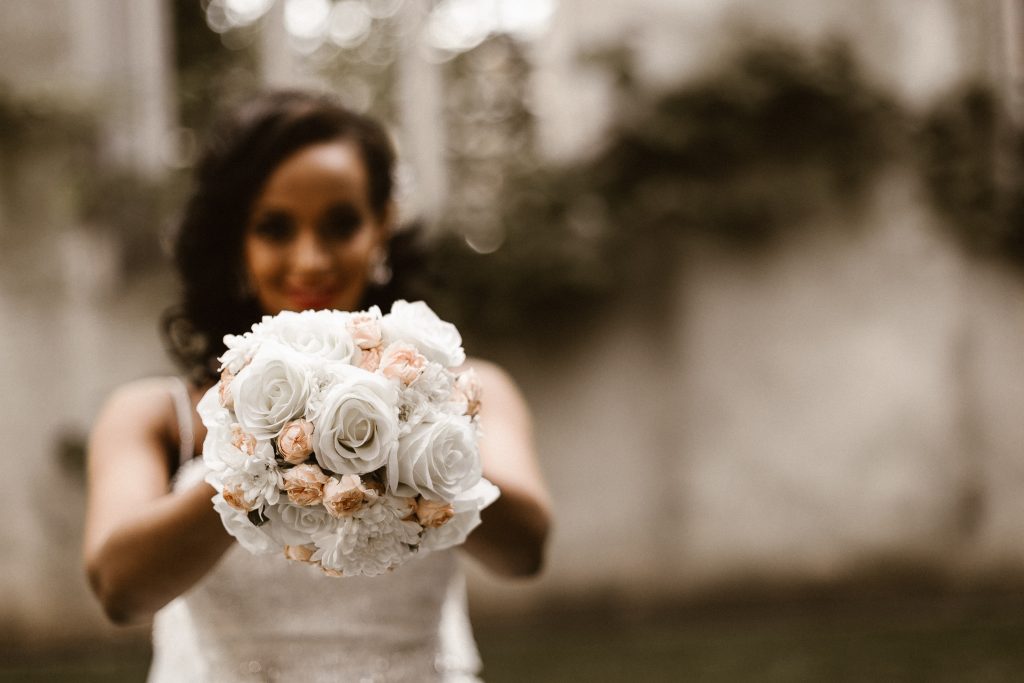
    Your wedding bouquet is one of the few details you physically carry through one of the biggest days of your life.

    It’s in your photographs. It’s in your vows. It sits beside you at dinner, appears in quiet moments while getting ready, and somehow becomes part of the memory itself.

    And then… a week later? Most bouquets wilt.

    But a growing number of couples are choosing not to let that happen.

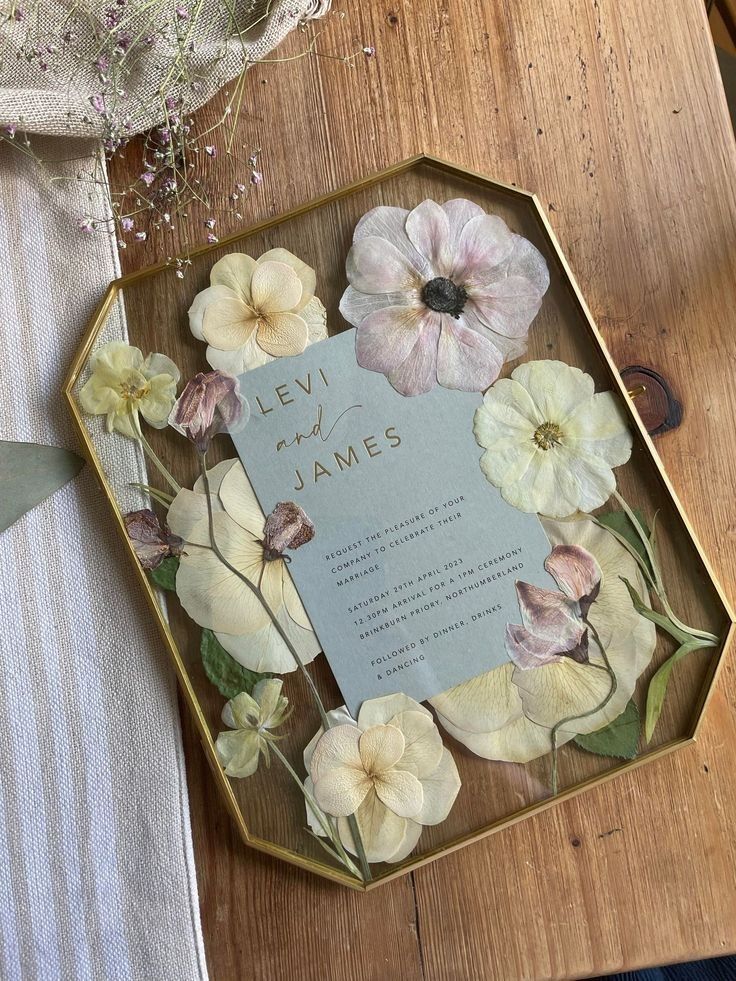
    Pressed flower preservation – transforming wedding blooms into framed botanical artwork – is becoming one of the most meaningful post-wedding keepsakes globally, and South African brides are starting to embrace it too. Instead of preserving flowers in a box or drying them upside down, bouquets are carefully pressed, arranged and framed into pieces designed to live on your walls for decades.

    Why pressed flower art is having a moment

    Wedding trends have shifted dramatically over the past few years.

    Couples are spending more intentionally – choosing fewer throwaway details and investing in meaningful heirloom pieces instead. Pressed floral art fits perfectly into that mindset.

    Unlike resin preservation (which some couples note can yellow over time), pressed floral artwork creates a lighter, gallery-style finish that feels timeless and easier to style in modern homes. Community conversations around bouquet preservation also show increasing preference for pressed pieces because they display beautifully and feel less bulky than traditional keepsakes.

    The appeal is simple:

    • It becomes actual artwork rather than storage
    • You preserve a real piece of your wedding day
    • Every frame is entirely unique
    • It doubles as meaningful home décor

    How wedding flower preservation actually works

    Professional pressed flower preservation is more involved than simply placing blooms inside a book.

    Studios carefully deconstruct bouquets bloom by bloom, remove moisture through controlled pressing and drying, then rebuild the arrangement into a custom composition before sealing it behind archival-grade glass.

    Most preservation artists recommend receiving flowers within 24–72 hours after the wedding, while blooms are still fresh. Timing matters more than most couples realise.

    A few flowers press especially beautifully:

    • Spray roses
    • Garden roses
    • Cosmos
    • Daisies
    • Delphinium
    • Lisianthus
    • Sweet peas

    Thicker blooms (like some orchids or calla lilies) may require specialised handling or alternative preservation methods.

    Can you press your bouquet yourself?

    Absolutely — if you’re patient. The basic process looks like this:

    1. Separate the bouquet – Remove blooms individually instead of pressing the bouquet whole.

    2. Air-dry first – Fresh flowers often hold too much moisture. Allow blooms to rest before pressing.

    3. Layer properly – Use absorbent paper with even pressure between layers.

    4. Wait it out – Depending on bloom type and climate, pressing can take one to two weeks.

    5. Design before framing – Arrange first, glue second. Pressed floral composition is where the magic happens.

    If you’re emotionally attached to the bouquet though? Consider outsourcing. There’s no redo button.

    South African studios that can preserve your wedding flowers for you

    Forget Me Not (Pty) Ltd

    A preservation-led studio creating custom botanical keepsakes and floral artworks.

    • Location: Randburg, Johannesburg
    • Estimated pricing: From approximately R2,500–R8,000+ depending on frame size and complexity (confirm directly for custom quotations)
    • Contact: +27 68 849 4639 / [email protected]
    • Website:  ForgetMeNotTM
    • Best for: Couples wanting bespoke framed floral keepsakes.

    LOULOU Flower Studio

    Known primarily for floral design, with bespoke floral artistry and preservation conversations increasingly becoming part of the offering space.

    • Location: Pinelands, Cape Town
    • Estimated pricing: Custom quote basis (expect premium floral art pricing depending on scale)
    • Contact: +27 83 781 3148 / [email protected]
    • Website: LoulouFlowerStudio
    • Best for: Couples wanting floral design expertise translated into keepsake art.

    VELT designs

    A floral-focused creative studio producing highly design-conscious botanical work.

    • Location: V&A Waterfront, Cape Town
    • Estimated pricing: Bespoke commissions; approximately R3,000–R10,000+ depending on artwork scope
    • Contact: +27 81 333 3077 / [email protected]
    • Website: VELT
    • Best for: Modern couples who want their bouquet to become statement interior décor.

    Belle En Rose Resin

    While known for resin preservation, this is worth considering if you love preserving florals in artistic formats beyond traditional pressing.

    • Location: South Africa
    • Estimated pricing: From approximately R2,000+ depending on piece type
    • Contact: +27 71 213 6484 / [email protected]
    • Website: BelleEnRoseResin
    • Best for: Couples exploring alternative bouquet preservation styles.

    Before you hand over your bouquet: what preservation artists wish couples knew

    • Tell your florist beforehand that you plan to preserve the bouquet.
    • Keep stems in water after the wedding.
    • Avoid leaving flowers in direct sunlight.
    • Refrigerate rather than freeze if preservation won’t happen immediately.
    • Book your preservation artist before the wedding date where possible.

    Your flowers won’t stay exactly the same – colours soften, petals shift and time leaves its own signature – but that’s also part of the beauty.

    The takeaway

    Your wedding flowers were never meant to last forever.

    But the feeling attached to them can.

    Pressed flower art turns something fleeting into something you’ll pass every day in your hallway, bedroom or home office – a quiet reminder that one beautiful day actually happened.

    And years later, that frame may end up becoming one of the few wedding details that still lives with you.

    ALSO SEE: Flowers in season for winter weddings: The best cold-weather blooms for bouquets and décor 

    Flowers in season for winter weddings: The best cold-weather blooms for bouquets and décor

    Featured image: Pinterest
    Wedding florals are getting simpler. The clearest expression of that shift is the monofloral bouquet: a bouquet made using only one type of flower, repeated and styled as a single statement.

    Instead of mixed arrangements, brides (including a growing number of celebrities) are opting for this stripped-back approach. Roses only. Tulips only. Calla lilies only. The result is far more minimal than traditional bridal bouquets.


    View this post on Instagram


    A post shared by R Í V A B R I D A L (@_rivabridal)

    For years, wedding bouquets leaned into variety which consisted of layered textures, seasonal mixes, trailing greenery. The direction now is the opposite. Monofloral bouquets remove the mix entirely. The focus shifts to shape, repetition, and uniformity rather than contrast.


    View this post on Instagram


    A post shared by ENTRE TALLOS (@entre.tallos)

    The most popular choices

    Certain flowers are being used repeatedly in monofloral bouquets:

    • Roses
    • Tulips
    • Calla lilies
    • Hydrangeas
    • Baby’s breath (gypsophila)

    Each option works because it holds its form well when used in repetition.


    View this post on Instagram


    A post shared by THE WEDDING BLISS (@theweddingbliss)

    The styling logic

    The monofloral bouquet relies on precision. With no mix of blooms to create interest, shape and execution become the focus.

    Common styling choices include:

    • Monochrome palettes
    • Tight, structured bouquet shapes
    • Minimal wrapping (silk ribbon or exposed stems)
    • Repetition carried through bridesmaids or ceremony florals

    ALSO SEE: Veil trends dominating 2026

    Veil trends dominating 2026

    Feature image: Pexels

    When you really think about it, the idea of walking down the aisle carrying a bunch of flowers seems a bit odd. Perhaps for decorative purposes it works, but one could argue its a bit random and inconvenient, and serves to block the full view of the main attraction – the wedding gown – as well.

    Yet, you’d be hard-pressed to find a bride without a bouquet, or at least some form of it. Many consider it to be an essential part of the bride’s look.

    While we can all agree that the bouquet does add a touch of natural beauty which is unmatched, this is not the reason brides carry bunches of blossoms. Like most other wedding traditions, the practice is rooted in reasoning from centuries passed.

    In Ancient Rome, brides would carry flowers as they were believed to signify new beginnings, fidelity and hope of fertility, according to Modern Wedding. Bouquets, however, were not always made up of flowers.

    Herbs took preference for brides in the Middle Ages. Dill and garlic were most commonly used as they were said to ward off evil spirits and bad luck, according to Readers Digest. Reportedly, the dill would make a second appearance on the wedding day – during the feast – to prepare the newlyweds for the consumation of their marriage since it is considered an aphrodisiac.

    Later on, during the Victorian Era, the act of giving and receiving flowers came to be known as an expression of love. As they were then linked to love and romance, they increasingly became incorportated into weddings.

    Since then, it seems the practice has stuck and is not going anywhere either. Flowers are incorporated into weddings through bouquets, table decorations, and much more.

    There is a popular myth that has been reported by many publications, including Bustle, which that claims another reason for the bouquet in the 15th century was to mask the smell of the bride.

    This claim is based on the fact that, in those times, people only had one bath per year. Huffington Post reported that June was the most popualr month for weddings and most women took their annual bath in May.

    According to Snopes, an online fact checking resouce, this is not true. Brides have never carried a bouquet to mask their smell.

    “Although the modern practice of full-immersion bathing was a long way off in the 1500s (among other reasons because filling a vessel large enough to hold a person with heated water was rather impractical given the effort required to collect fresh water and fuel for heating it), people did still “bathe” in the sense of attempting to clean themselves as best they could with the resources at hand,” explains Snopes.

    “Although today’s brides carry flowers simply because it is now the custom to do so, at one time bridal bouquets were symbols of sexuality and fertility. Covering up anyone’s bad smell played no part in why this custom came into being.”

    ALSO SEE: How wedding dress trends have changed through the decades

    How wedding dress trends have changed through the decades

    Image: Unsplash

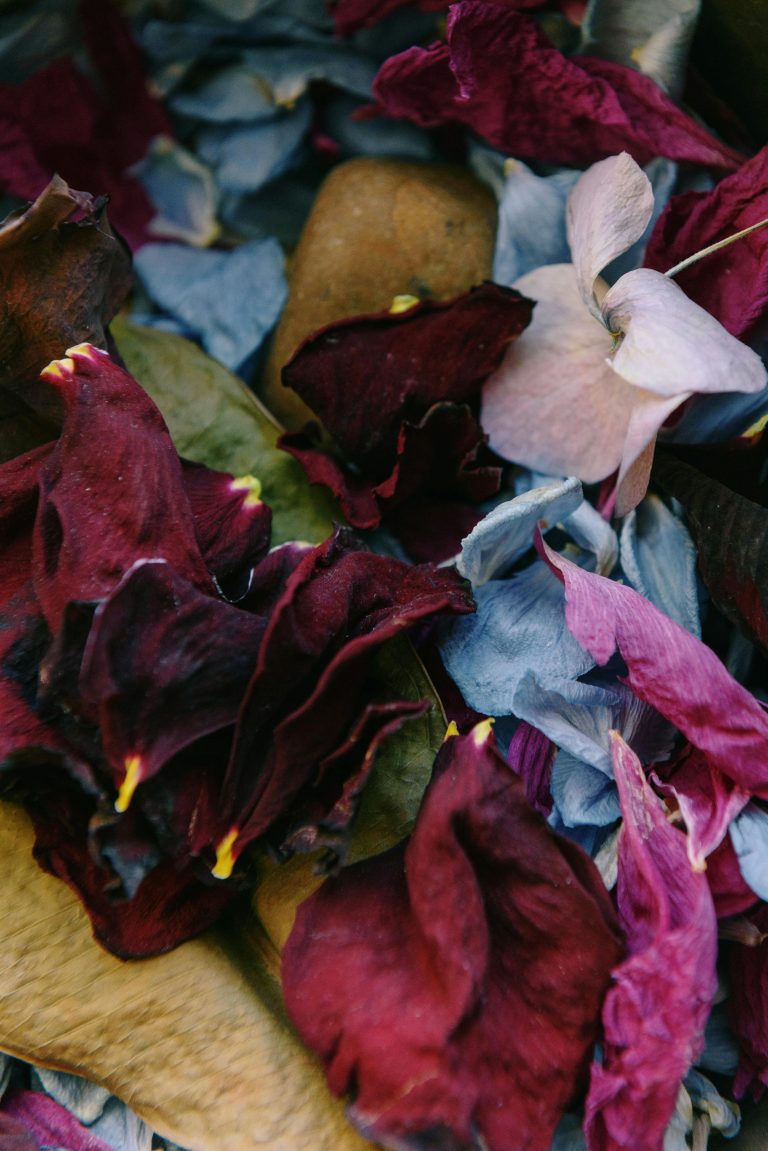
    There’s one specific wedding moment that never really gets old: the confetti toss. Dried flower petals as confetti is surprisingly easy to make yourself. Plus, it turns something fleeting into something personal, especially if the flowers come from your garden, your bouquet, or a place that means something to you.

    Here’s how to do it properly, without overcomplicating things:

    Why flower petal confetti works so well

    Petal confetti has become a wedding favourite for good reason. It looks softer in photos and it’s biodegradable.

    It’s also:

    • More sustainable than paper confetti
    • Easy to make in bulk
    • Naturally colour-customisable
    • Far more “organic” in movement when thrown

    And if you plan it right, it can even become part of your wedding prep ritual: a slow, satisfying DIY in the weeks leading up to the day.

    The best flowers to use (and how they behave when dried)

    Not all petals dry equally well. Some hold their colour beautifully, while others fade or become too brittle. The trick is choosing flowers that dry flat, light, and still visually interesting.

    Roses (the classic)

    Drying time: 1–3 weeks

    Roses are the go-to for a reason. They dry well, hold their shape, and keep a romantic softness that works in almost any colour palette.

    • Best for: blush, white, red, and peach tones
    • Tip: separate petals before drying for faster results
    • Result: soft, slightly curled petals with great colour retention

    Lavender (for texture and scent)

    Drying time: 1–2 weeks

    Lavender brings something extra — not just colour, but fragrance and texture.

    • Best for: rustic, countryside, or Provence-inspired weddings
    • Dries quickly and cleanly
    • Keeps its shape better than most petals

    Marigolds (for bold colour)

    Drying time: 1–2 weeks

    If you want confetti that shows up in photos, marigolds are a strong choice.

    • Bright oranges and yellows stay vibrant
    • Petals dry flat and lightweight
    • Ideal for summer weddings, especially in warm climates

    Hydrangeas (for softness and volume)

    Drying time: 2–3 weeks

    Hydrangeas don’t behave like traditional petals — they dry into delicate fragments that add softness and fullness.

    • Best used in pastel or muted palettes
    • Colours soften slightly when dried
    • Adds a “cloud-like” effect to confetti mixes

    Bougainvillea (a South African favourite)

    Drying time: 1–2 weeks

    Bougainvillea is practically made for confetti.

    • Naturally vibrant pinks, purples, and reds
    • Dries quickly in warm, dry air
    • Thin petals that flutter beautifully when thrown

    Delphinium (for cooler tones)

    Drying time: 2–3 weeks

    Delphinium brings in those softer blues and purples that are often hard to find in dried flowers.

    • Elegant and delicate
    • Works well in coastal or garden weddings
    • Needs gentle handling once dried

    How to dry the petals (the simple way)

    There’s no need for fancy equipment. Air drying works best and keeps the colour intact.

    1. Pick flowers early in the morning when they’re freshest
    2. Gently remove petals from stems
    3. Spread them out in a single layer on baking paper or a mesh tray
    4. Keep them in a cool, dry, shaded space
    5. Turn them every few days so they dry evenly

    Avoid direct sunlight, as it tends to bleach petals and make colours dull.

    Store your dried petals in paper bags or breathable containers until the wedding day.

    ALSO SEE: Locally loved flowers for your wedding bouquet

    Locally loved flowers for your wedding bouquet

    Feature image: Ksenia Chernaya/Pexels

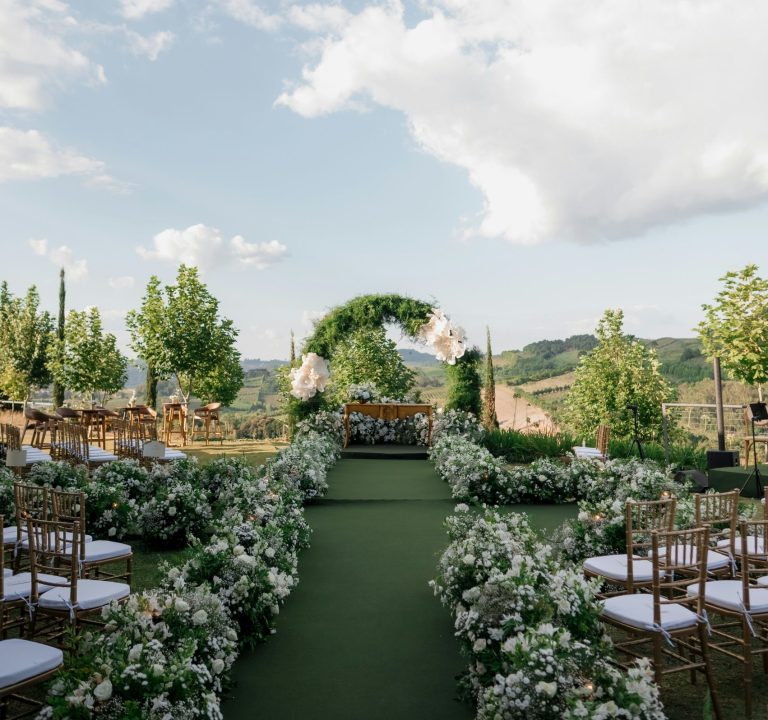
    As the backdrop to your wedding, your wedding arch quite literally frames your ceremony. Flowers, fabrics and unusual shapes bring your wedding arch a unique, personal touch guaranteed to wow your guests.

    Here are some ideas for your big day:


    View this post on Instagram


    A post shared by L (@seniorfloraldesign_supplier)


    View this post on Instagram


    A post shared by Heike Hayward (@fleurlecordeur)


    View this post on Instagram


    A post shared by BISOUS EVENTS (@bisous_events)


    View this post on Instagram


    A post shared by Ilsé Vincent (@blomstories)


    View this post on Instagram


    A post shared by Heike Hayward (@fleurlecordeur)


    View this post on Instagram


    A post shared by Ilsé Vincent (@blomstories)


    View this post on Instagram


    A post shared by Heike Hayward (@fleurlecordeur)


    View this post on Instagram


    A post shared by Ilsé Vincent (@blomstories)


    View this post on Instagram


    A post shared by Heike Hayward (@fleurlecordeur)

    ALSO SEE: Tips for choosing your wedding’s signature cocktail names 

    Tips for choosing your wedding’s signature cocktail names

    Feature image: Jonathan Borba/Unsplash

    A key element of any traditional wedding, your bridal bouquet styles should not only be one that you love, but should also effortlessly match your colour palette, your decor style and your dress.

    1. Nosegay – A compact cluster of flowers wrapped tight and cut to one uniform length

    2. Pompander – A flower-covered ball shape, tied with a ribbon (a great option for flower girls)

    3. Posy – One of the more popular options, it’s a small, round bouquet tied with ribbon

    4. Hand-tied – A classic choice, it’s simply a dense bunch of flowers loosely tied together

    5. Composite – Made up of different petals or buds wired together on a single stem

    6. Pageant – Similar to the cascade, but more compact and pulled together

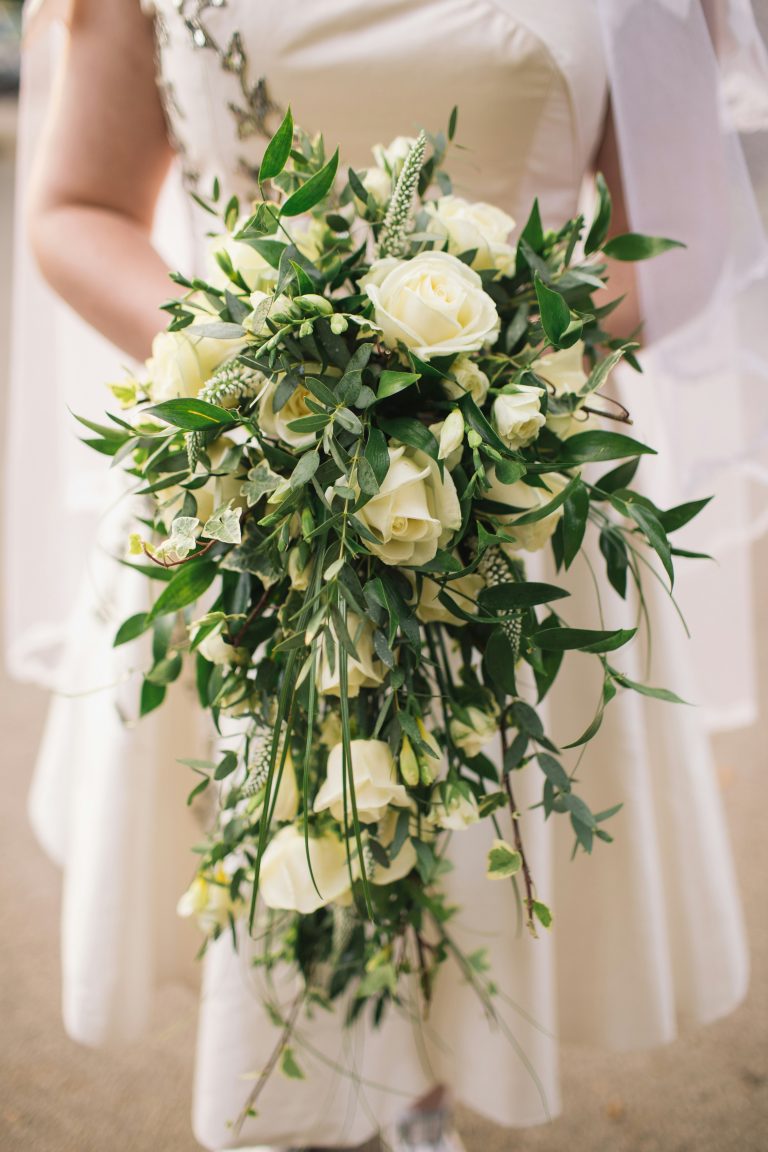
    7. Cascade – A waterfall-like spill of blooms, either anchored in a holder or hand-tied

    8. Round – The more buttoned-up version of a hand-tied bouquet, tied with ribbon

    ALSO SEE: How to save money on wedding flowers without sacrificing style

    How to save money on wedding flowers without sacrificing style

    Illustrations: Robyn-Lee Baatjie

    Feature image: James Bold/Unsplash

    Everyone loves a rose, a hydrangea, stargazer lilies or orchids in their wedding bouquets. These exquisite flowers are staples in many a flower arrangement but dare we say, they’re outdated?

    If you’re looking to bring some flair to your flowers, make your bouquet out of these gorgeous indigenous flowers:

    The King Protea

    Yes, yes this is not a revelation and has been popular in many a bouquet. It’s easy to see why, though. The National Flower of South Africa is a seriously beautiful plant that deserves a spot in your flower arrangements.

    Impala lily 

    St Joseph’s and stargazers are spectacular, we can’t deny it. The pollen, while fragrant, will leave a whole mess on your white dress. Switch it out for some beautiful impala lilies, which will bring the best of the white and pink to your bunch.

    Yellow arum lily 

    If you really want to make a statement, pop a few yellow arrum lilies into your bouquet. These beautiful plants look otherworldly and the colour is captivating.

    Watsonia

    If you want to splash some pink into the mix, the elegant and dainty watsonia is your plant. These flowers are subtle yet sophisticated and will tie your flower arrangement together.


    View this post on Instagram


    W A T S O N I A . collected at Bushman Rock. #botanicaldeconstruction #botanicalstudy #watsonia #harare #zimbabwe

    A post shared by R O B B I E H O N E Y . (@robbiehoney) on

    Barberton daisy

    These robust beauties come in many different colours, so the choice is yours. In the South African context though, this specific flower is bright red, giving your bouquet an edge.


    View this post on Instagram


    A post shared by @flawsome_studio

    Agapanthus or lily of the Nile 

    While not only found in South Africa, the lily of the Nile is common in many gardens across the country. These flowers bloom in purple and white, so if you want to tone your bouquet up or down, this is your flower.

    Sunflowers 

    Cute and quirky, sunflowers are a marvellous plant. Again they are not endemic to South Africa (we know) but they beloved by us. A bouquet of sunflowers could be a simple yet bold move.

    Dried English lavender 

    Dried bouquets are a massive wedding trend. If you’re looking to keep things neutral and want to add a hint of colour to your flowers, opt for some dried English lavender. It still retains some of the deep purple but without being over the top.


    View this post on Instagram


    Our online dried flower shop is incoming! Keep on the look out for updated inventory. & Email for custom bouquets!

    A post shared by Sticks and Stems (@sticksandstems_) on

    Pampas grass

    This versatile, South American plant can be used in so many ways throughout your wedding. They can be shaped, twisted and dyed to suit your wedding colour theme. They will also add an effortless elegance and feathery femininity to your bouquet.


    View this post on Instagram


    Pampaslarimiz yol kenarindan toplama degil,özel yetiştirme ürundür. Lutfen yol kenarlarindan toplanmis yabani pampaslar ile fiyat kiyaslamasi yapmayiniz.. Stoklarimiz sinirli sayida olmayıp daimi olarak binlerce siparis temin edebiliriz.. Toplu alimlarda iskontomuz vardir. Turkiyede bircok ile toptan satis tarafimizca yapilip, yurt disi gönderilerimiz icinde anlasmali kargo sirketi ile cok uygun fiyatlara gondermekteyiz. Yurt ici ve yurt disi referanslarimiz icin lutfen sayfamizi takip edip inceleyiniz.#pampas #pampasotu #pampastag #pampasgrass #pampasbitkisi #pampaswedding #sözmasası #pampasçiceği #pampasorganizasyon #nikahmasasi #nişanorganizasyonu#sazlıkotu #tarzevlerr #nişanmasası#tarzevler#organizasyon #organizasyonmalzemeleri #organizasyonçiçekleri #kınaorganizasyon #dugunorganizasyon #gelincicegi #gelintagı #gelinmasası #gelinmasasıçiçeği #evdekorasyonu #evdekorasyonfikirleri #evinizdekitarz #tagyapimi #tag #gelintagıarkafon

    A post shared by Cemile İnat (@pampas.pampasotu) on

    Tip: Consult with your florist as to when these flowers are in season and what their availability is. Some may not bloom en masse, making it tricky to hero it for the entire flower ensemble.

    ALSO SEE: Blooming Innovation: The Rise of Bridal Bag Bouquets & 2025 Bouquet Trends

    Blooming Innovation: The Rise of Bridal Bag Bouquets & 2025 Bouquet Trends

    Feature image: Instagram

    Your long list of wedding planning to-do’s is slowly but surely shortening. The next item on your list happens to be flowers. The problem: there are so many choices and not enough time to give them all some consideration. On top of that, you’re not sure if you know enough about flowers to make a good choice.

    Not to worry. Have a look at this list of wedding flower trends for 2020, to make your decisions and planning a little easier.

    Bouquet Trends:

    – Big and Bright 

    https://www.instagram.com/p/B429pi7A-DK/

    Larger, brighter flowers are popping up more and more at weddings. Big flowers can make your bouquet look much fuller for less money. In addition to this, the bouquet becomes a statement in itself because it catches the eye and stands out. The bright colours do well to create excitement and bring out a more playful feeling, lightening the mood of the venue instantly.

    – Unstructured and untamed 

    https://www.instagram.com/p/B3JoDvwn8I6/

    For a push towards a more natural and lush look for wedding flowers, a trend seems to be growing around variety. Bouquets are looking less and less uniform, as if they have been effortlessly thrown together with not much consideration to having a pattern or multiples of the same flower. Many who have gone for this trend have added some greenery, dried grass, or foilage for a more boho feel.

    – Blushes and bleached 

    https://www.instagram.com/p/B1cIqb0hdDd/

    If you want something more understated or minimalistic, then this wedding flower trend is for you. The classic blush pink and white used at weddings can be upgraded and updated by adding some bleached tones and bleached foilage into the mix.

    Decor trends:

    – Arches/Moongates 

    https://www.instagram.com/p/B3247xThIrS/

    A decorated arch, under which you say your vows, makes for beautiful photograph opportunities. The arch draws the attention of the attendees to the right place and ensures that the couple has all eyes on them.

    – Flowers down the aisle 

    https://www.instagram.com/p/Ba9O3FUHdUQ/

    Create a whimsical, fairytale feel by lining the aisle with flowers. This simple addition will do wonders for the ambience at your wedding.

    Bonus Trend:

    – Locally Sourced

    This is one of the best wedding flower trends we’ve seen so far! Brides and grooms are opting for the more environmentally friendly option of locally sourced floral arrangements. Not only is this trend eco-friendly, but it is good for your budget too.


    Image: Unsplash