• Tag

    planning a wedding

    Browsing

    Weddings are expensive – there’s no sugar-coating it. Between venues, catering, attire and décor, costs can quickly spiral beyond what many couples originally planned. But cutting costs doesn’t have to mean sacrificing style.

    In fact, some of the most beautiful weddings today are built around intentional choices rather than extravagant spending. With the rise of intimate celebrations, personalised experiences and sustainability-focused planning, couples are finding creative ways to stretch their budgets while still creating a day that feels luxurious and memorable.

    If you’re looking to save without compromising on the overall aesthetic, these smart wedding budget hacks prove that less spending doesn’t have to mean less impact.

    1. Choose an off-peak wedding date

    Saturday weddings during peak wedding season often come with premium pricing. Opting for a Friday, Sunday or even a weekday wedding can significantly reduce venue and supplier costs while giving guests something unique to look forward to.

    1. Consider a restaurant wedding

    Many stylish restaurants already offer beautiful interiors, furniture, lighting and experienced catering teams. This means fewer décor rentals and vendor costs while still delivering an elevated guest experience.

    1. Host a backyard celebration

    Backyard weddings continue to trend thanks to their intimate atmosphere and flexibility. With thoughtful styling, a family garden can feel just as magical as a traditional venue.

    1. Keep your guest list intentional

    One of the biggest drivers of wedding costs is guest count. Fewer guests means lower catering, seating, stationery and beverage expenses. Focus on inviting the people who genuinely matter.

    1. Skip the traditional wedding cake

    A small display cake paired with sheet cakes served behind the scenes can save hundreds while still delivering those picture-perfect cake-cutting moments.

    1. Ask talented friends and family for help

    If you have a friend who is a baker, makeup artist, photographer, florist or graphic designer, consider whether they’d be willing to contribute their expertise as a wedding gift.

    Just ensure expectations are clearly communicated beforehand.

    1. DIY your wedding signage

    Modern minimalist signage is easier than ever to create using design platforms like Canva and affordable local printing services.

    1. Repurpose ceremony flowers

    Move ceremony arrangements to the reception space after the vows. Floral arches, aisle arrangements and plinth flowers can all enjoy a second life.

    1. Choose seasonal blooms

    Imported flowers can dramatically increase floral budgets. Seasonal, locally sourced flowers often look fresher and more abundant while costing less.

    1. Rent instead of buy

    From décor items to lounge furniture and even designer wedding dresses, rentals allow couples to achieve a luxury look without the luxury price tag.

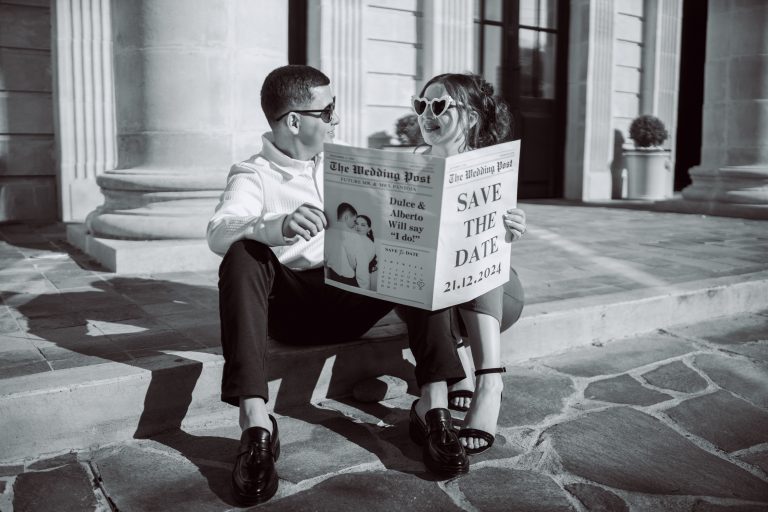
    1. Send digital save-the-dates

    Digital invitations and save-the-dates have become increasingly popular. They’re cost-effective, eco-friendly and easy to manage.

    1. Limit your wedding party

    Fewer bridesmaids and groomsmen means lower spending on gifts, bouquets, transport and attire coordination.

    1. Choose statement over quantity

    Rather than filling a venue with countless décor elements, focus your budget on one or two standout moments, such as a dramatic ceremony backdrop or striking tablescape.

    1. Buy a pre-loved wedding dress

    The second-hand bridal market has grown significantly, offering designer gowns at a fraction of their original price.

    1. Consider sample sales

    Bridal boutiques regularly host sample sales where brides can find luxury gowns at heavily discounted prices.

    1. Simplify your menu

    Guests often remember delicious food more than elaborate food presentations. A thoughtfully curated menu can feel just as special as a lavish multi-course affair.

    1. Skip individual wedding favours

    Many couples are moving away from traditional favours altogether. If you’d still like to thank guests, consider one meaningful edible gift rather than multiple small items.

    1. Use candles strategically

    Few décor elements create atmosphere as effectively as candlelight. Candles can instantly elevate a space while costing considerably less than extensive floral installations.

    1. Opt for a smaller bouquet

    The trend towards understated bridal bouquets isn’t just stylish—it also helps reduce floral costs.

    1. Hire newer suppliers

    Talented emerging photographers, content creators and planners often charge less while building their portfolios.

    Always review their previous work before booking.

    1. Book an all-inclusive venue

    Venues that include catering, furniture, staffing and coordination can often offer better overall value than sourcing each service separately.

    1. Choose one signature cocktail

    Instead of a fully stocked premium bar, offering one or two signature drinks can help manage beverage costs while adding personality.

    1. Embrace minimalist stationery

    Clean, elegant designs often require fewer printing techniques and embellishments while still looking sophisticated.

    1. Share transport where possible

    Group transport for guests or the wedding party can reduce logistics expenses while simplifying the day.

    1. Buy décor from marketplace groups

    Many couples sell wedding décor after their celebrations. Purchasing pre-loved items can result in substantial savings.

    1. Use content creators instead of extra camera crews

    Wedding content creators have become increasingly popular for capturing behind-the-scenes moments and social-ready footage at a lower price point than adding additional videography coverage.

    1. Focus on guest experience, not trends

    Not every viral wedding trend needs to make it onto your wedding checklist. Invest in elements that genuinely enhance your celebration rather than chasing fleeting aesthetics.

    1. Prioritise what matters most

    Before booking anything, identify the three elements that matter most to you as a couple. Allocate more budget there and scale back elsewhere.

    This ensures your spending aligns with your priorities rather than outside expectations.

    A beautiful wedding isn’t measured by its price tag

    The most memorable weddings aren’t necessarily the most expensive – they’re the ones that feel personal, intentional and true to the couple celebrating. By making strategic decisions and focusing on what truly matters, you can create a wedding that feels effortlessly elegant without stretching your budget beyond its limits. After all, luxury isn’t always about spending more; it’s about spending wisely.

    ALSO SEE: Up, up and away! DIY balloon wedding arch 

    Up, up and away! DIY balloon wedding arch

    Featured image: merwak. raw / Pexels

    There’s a certain point in wedding planning where romance quietly exits the room and spreadsheets move in. Guest lists stretch. Venue capacities shrink. Budgets become suspiciously personal.

    And somewhere between trimming cousins and calculating canapé costs, many couples find themselves asking the question they never thought they’d need to ask: Can you invite someone to the ceremony… but not the reception?

    Short answer? Yes – but proceed thoughtfully. Because while modern weddings have become far more flexible, guest feelings still matter.

    First things first: what’s actually considered acceptable?

    Traditionally, wedding etiquette has long held one simple rule: if someone is invited to witness the ceremony, they should also be invited to celebrate at the reception. The reverse, however, is increasingly common.

    Translation? A private ceremony followed by a larger celebration is generally easier for guests to understand than inviting people to the vows and not the party.

    That said, weddings in 2026 don’t follow one template anymore. Couples are choosing intimacy, intention and practicality over outdated expectations.

    When a ceremony-only guest list actually makes sense

    Your ceremony venue has limited capacity

    Historic chapels, destination venues, family homes and religious spaces often come with strict numbers.

    If your dream ceremony seats 40 but your reception venue accommodates 120, splitting the guest list can feel less like exclusion and more like logistics.

    You want the vows to feel deeply personal

    For some couples, the ceremony feels sacred and intimate.

    They want parents, siblings and closest friends present – then open the celebration afterwards.

    Think: private “I do”, public celebration.

    Cultural or religious traditions shape the day

    Many weddings already divide attendance naturally across events.

    Some ceremonies are family-focused while larger receptions become the community celebration.

    Budget realities are doing the talking

    Reception costs add up quickly.

    Meals, drinks, staffing and décor often mean each additional guest has a real financial impact.

    And honestly? Couples shouldn’t feel pressured into hosting beyond their means.

    Where things get tricky

    Inviting guests to the ceremony and excluding them from the reception can feel more personal.

    Guests often interpret the reception as the hospitality portion of the day.

    In other words:

    • Ceremony only = “Come watch.”
    • Reception = “Come celebrate with us.”

    That doesn’t mean ceremony-only invitations are wrong – but they do require extra care.

    If you’re going this route, ask yourself:

    • Is there a genuine reason?
    • Is the decision consistent?
    • Would I feel okay receiving this invitation?

    If the answer becomes uncomfortable, it’s worth rethinking.

    How to do it without hurting feelings

    Be crystal clear on invitations

    Confusion creates awkwardness.

    If someone is invited to only one part of the day, their invitation should reflect exactly that – no assumptions, no vague wording.

    Avoid obvious “tiers”

    Guests compare notes more than couples think.

    Randomly separating friendship groups or inviting one half of established couples to different portions can feel uncomfortable.

    Don’t overexplain

    You don’t owe everyone a budget breakdown.

    A simple:

    “We’re keeping the ceremony intimate but would love to celebrate with you afterwards”

    usually lands better than paragraphs of justification.

    Make reception-only guests feel included

    If guests won’t witness the ceremony, bring the story into the reception.

    Play a short video, share vows in speeches, display ceremony photos, or recreate a meaningful moment.

    People remember how they felt – not whether they saw the legal paperwork.

    The modern wedding verdict

    The truth? There’s no universal guest-list formula anymore.

    Private ceremonies. Reception-only invitations. Multi-day celebrations. Intimate legal weddings followed by bigger parties.

    It’s all fair game.

    The goal isn’t pleasing everyone.

    It’s making choices that feel intentional, communicating them clearly, and creating an experience where every guest feels wanted – not ranked.

    Because people rarely remember whether they attended the vows. They remember whether they felt invited into the joy.

    ALSO SEE: How to navigate an intimate wedding guest list when you have a big family 

    How to navigate an intimate wedding guest list when you have a big family

    Featured image:  Pavel Danilyuk / Pexels

    Durban knows how to throw a wedding – but if there’s one thing local couples know too well, it’s that weather can change plans faster than a seating chart can. Which is exactly why indoor wedding venues are having a moment.

    From grand ballrooms and elegant blank-canvas spaces to hidden gems that work beautifully for intimate celebrations, indoor venues offer the kind of predictability that still feels magical. Think air-conditioning, backup power, flexible styling and spaces that photograph beautifully regardless of what’s happening outside.

    If you’re venue hunting in Durban and dreaming of a celebration that feels polished, practical and unforgettable, here are some indoor wedding venues worth adding to your shortlist.

    1.  Sky Venue – For city glamour and ocean views

    Perched within Durban’s beachfront hotel strip, this venue is ideal for couples wanting a polished, hotel-style wedding without leaving the city.

    Location: Southern Sun Elangeni & Maharani, Snell Parade, Durban
    Estimated pricing: From approximately R45 000–R90 000+ depending on guest count, catering and package selection
    Best for: Elegant receptions, destination weddings, formal evening celebrations
    Contact: +27 31 362 1300 / [email protected]
    Website:  Southern Sun Elangeni & Maharani

    Why we love it: The indoor setting means uninterrupted celebrations, while the beachfront location delivers that iconic Durban feeling without relying on outdoor weather.

    2. The Stamford – For couples who want a blank canvas

    One of Durban’s more versatile event spaces, this venue works especially well for couples who already have a strong décor vision.

    Location: Greyville, Durban
    Estimated pricing: Around R20 000–R45 000 venue hire (varies by guest count and inclusions)
    Best for: Modern weddings, cultural celebrations, custom décor concepts
    Contact: +27 67 577 9326 / [email protected]
    Website: The Stamford

    Why we love it: Spacious interiors, full air-conditioning and flexibility make this one a strong option for couples wanting to build the wedding around their own aesthetic.

    3. 20 On Barham – For intimate luxury

    If your Pinterest board is filled with understated elegance and garden-party energy (without depending entirely on the outdoors), this Westville favourite deserves attention.

    Location: Westville, Durban
    Estimated pricing: Approximately R35 000–R75 000+ depending on package and guest count
    Best for: Boutique weddings, refined receptions, intimate celebrations
    Contact: +27 31 465 1716 / [email protected]
    Website: 20 On Barham 

    Why we love it: It feels intimate without feeling small – something increasingly popular with modern Durban couples.

    4. The Bond Shed – For industrial-chic weddings

    Warehouse-inspired spaces continue trending and this one delivers a more contemporary wedding atmosphere.

    Location: Point Waterfront, Durban
    Estimated pricing: Around R30 000–R70 000+ depending on setup requirements
    Best for: Editorial-style weddings, contemporary receptions, statement décor
    Contact: +27 63 887 9865 / [email protected]
    Website: The Bond Shed

    Why we love it: High ceilings and a clean architectural backdrop make décor transformations feel dramatic.


    View this post on Instagram


    A post shared by The Bond Shed (@thebondshed_events)

    5. Nour Venues – For modern celebrations with elevated styling

    This venue has been quietly building a reputation among couples wanting a polished indoor setup.

    Location: Durban North
    Estimated pricing: Approximately R25 000–R60 000+ depending on package
    Best for: Nikah celebrations, receptions, contemporary weddings
    Contact: +27 72 677 7770 / [email protected]
    Website: Nour Venues

    Why we love it: It already carries a styled-event feel, which can reduce décor pressure elsewhere in the budget.


    View this post on Instagram


    A post shared by Nour Venues (@nourvenues)

    6. The Venue Shongweni – Shongweni Valley – For couples wanting countryside romance indoors

    Technically outside central Durban but firmly worth the drive.

    Location: 1 Bushbuck Rd Outer West Durban 3701
    Estimated pricing: Approximately R45 000–R85 000+ depending on season and package
    Best for: Couples wanting indoor comfort with scenic surroundings
    Contact: +27 64 908 9556 / [email protected]
    Website: The Venue Shongweni

    Why we love it: It gives destination wedding energy without asking guests to travel too far.

    What Durban couples should ask before booking

    Before paying a deposit, ask:

    • Is backup power included?
    • Is there air-conditioning?
    • Are tables, chairs and staffing included?
    • Is catering in-house or external?
    • What happens in case of weather disruptions?
    • Is setup and breakdown included in venue hire?

    Note: Durban wedding venue pricing changes quickly depending on season, guest count and package inclusions – so treat these as realistic starting estimates and always request a formal quotation before committing.

    Choosing a Space that Holds the Day

    Indoor wedding venues in Durban aren’t just a practical backup plan – they’re what give you control in a city where weather, timelines and logistics don’t always play along. But beyond that, they shape the atmosphere of your entire day.

    The right space won’t just “host” your wedding. It will hold it – the noise, the nerves, the laughter, the soft in-between moments you don’t plan for but remember most.

    So instead of asking which venue is the most impressive, ask which one still feels like you when the room is full, the music is playing, and everything else fades out for a second.

    That’s the one worth booking.

    ALSO SEE: City Chic: The Most Beautiful Urban Wedding Venues Across South Africa 

    City Chic: The Most Beautiful Urban Wedding Venues Across South Africa

    Featured image: Pinterest

    Some wedding regrets are expensive. Others only show up months later when you’re scrolling through your gallery thinking: Wait… did we never take a photo of that?

    Because while everyone remembers the first kiss, confetti toss and dramatic sunset portraits, the photos couples often treasure most are usually the quieter, less obvious moments.

    Wedding photographers consistently say the same thing: couples rarely regret taking too many photos – they regret forgetting the meaningful ones.

    Before you finalise your shot list, save this.

    1. The moment before everything begins

    There’s something cinematic about the anticipation before the ceremony – but more importantly, it captures emotions you won’t recreate later.

    Think:

    • The dress hanging up
    • Your suit being buttoned
    • Final makeup touches
    • Deep breaths
    • Last hugs before walking out

    Those in-between moments often become emotional favourites because they capture who you were before becoming newlyweds.

    2. A photo with every immediate family member (yes, individually)

    This sounds obvious until timelines run tight.

    One of the biggest wedding photo regrets couples report is realising afterward they never got a proper photo with a parent, sibling, grandparent or child.

    Create a short family list beforehand and assign someone to gather people quickly.

    Future you will be grateful.

    3. Your guests arriving and interacting before the ceremony

    You planned the flowers, stationery and seating for months – but the energy before the ceremony often disappears undocumented.

    Capture:

    • Guests greeting each other
    • People reading signage
    • Kids running around
    • Quiet anticipation

    These photos tell the story of the day, not just the highlights.

    4. A full-room photo before guests enter

    Reception styling gets a few minutes of perfection before people sit down.

    Don’t forget:

    • Tablescapes
    • Place settings
    • Candles lit
    • Floral installations
    • Wide-angle room shots

    This is especially important if décor was a major investment.

    5. The reaction photos during your vows

    Most couples focus on getting the kiss.

    The real magic?
    Everyone watching.

    Ask your photographer to capture:

    • Parents’ reactions
    • Friends crying
    • Guests laughing
    • Your partner’s face while you speak

    These often become the most emotional images in the gallery.

    6. A proper photo of your hands and rings

    Tiny detail. Huge regret.

    Hands appear in more wedding photos than couples realise – and your rings deserve more than one close-up.

    Get:

    • Ring shots before the ceremony
    • Natural hand moments
    • Close-ups during vows

    7. The “we actually got married” just-married moment

    Not posed portraits.

    That first minute after the ceremony.

    The walking.
    The laughing.
    The “did that really just happen?” expression.

    Some photographers call this the emotional exhale – and it often produces the most natural images of the day.

    8. Your outfit from the back

    You’ll probably have dozens of front-facing portraits.

    But details people often forget:

    • Veil length
    • Dress train
    • Suit tailoring
    • Buttons
    • Embellishments

    Especially if you spent months choosing the outfit.

    9. A private couple portrait away from everyone

    Take 10–15 minutes.

    No bridal party.
    No phones.
    No audience.

    Those quieter portraits often feel the most intimate because they capture the only part of the day that truly belongs to the two of you.

    10. Photos with the people who helped make the day happen

    Not vendors – your people.

    The friend who fixed your veil.
    The sibling who held everything together.
    The aunt who coordinated family.
    The parent who quietly carried the stress.

    These photos age beautifully.

    11. Movement shots

    Perfection is overrated.

    Ask for:

    • Walking
    • Twirling
    • Laughing
    • Dancing
    • Running through confetti

    Movement creates photographs that feel lived in instead of staged.

    12. The final photo of the night

    Everyone remembers the entrance. Almost nobody remembers the ending.

    Whether it’s a sparkler exit, empty dance floor, takeaway coffee or one last quiet hug – take one final image.

    Because endings deserve documenting too.

    The takeaway:

    Your wedding gallery shouldn’t just show what your wedding looked like.

    It should remind you what it felt like.

    And the photos couples regret forgetting are almost never the dramatic ones – they’re usually the moments that seemed too ordinary to capture at the time.

    ALSO SEE: 12 South African wedding photographers every couple should know 

    12 South African wedding photographers every couple should know

    Featured image: Isaac Naph / Pexels

    A beautiful wedding day doesn’t happen by chance. Behind every seamless ceremony, perfectly timed sunset photo, and packed dance floor is one thing most guests never see: a well-planned wedding timeline.

    While it may not be the most glamorous part of wedding planning, your timeline is the framework that keeps everything moving smoothly. It ensures vendors know where to be, gives your photographer enough time to capture key moments, and helps you stay present rather than worrying about what’s happening next.

    The good news? Building a wedding timeline doesn’t have to be complicated.

    Start with the non-negotiables

    Before you schedule anything else, identify the fixed points of your day. These are the moments that can’t easily move and will form the backbone of your timeline.

    These typically include:

    • Ceremony start time
    • Venue access time
    • Reception start time
    • Dinner service
    • Sunset (especially for outdoor weddings and golden-hour portraits)
    • Venue closing time

    Wedding planners recommend building your timeline around these anchor points first before filling in the details. This approach creates a realistic framework rather than trying to squeeze important moments into an already crowded schedule.

    Work backwards from the ceremony

    One of the biggest mistakes couples make is underestimating how long getting ready actually takes.

    Hair and makeup are often the first events to run behind schedule, which can create a domino effect throughout the day. Experts recommend building your morning timeline by working backwards from the ceremony and allowing extra time for delays.

    For example, if your ceremony begins at 3pm:

    • 2:30pm – Arrive at venue
    • 2:00pm – Get dressed
    • 12:00pm – Hair and makeup
    • 11:00am – Photographer arrives for detail shots
    • 10:00am – Wedding party preparations begin

    Starting earlier than you think you need to, creates breathing room and helps keep the morning calm.

    Decide whether you’re having a first look

    A first look can significantly impact your timeline.

    For couples choosing a first look, many portraits, bridal party photos, and even some family photos can happen before the ceremony. This often means spending more time with guests during cocktail hour instead of disappearing for photographs.

    If you’re skipping the first look, you’ll need to reserve additional time immediately after the ceremony for:

    • Couple portraits
    • Family formals
    • Bridal party photographs

    This can take anywhere from 60 to 90 minutes depending on the size of your wedding party and family.

    Schedule photography with intention

    Photography often determines the flow of the entire day.

    Professional photographers consistently advise couples to discuss timelines well in advance and ask exactly how much time is needed for:

    • Couple portraits
    • Family photographs
    • Bridal party images
    • Detail shots
    • Sunset portraits

    Rather than guessing, let your photographer guide these timing decisions. They know how long each session realistically takes and can help prevent rushed photos or missed moments.

    Don’t forget golden hour, either. The hour before sunset offers some of the most flattering natural light of the day and is worth reserving 10 to 15 minutes for if possible.

    Build buffer time into everything

    If there’s one piece of advice nearly every planner and photographer agrees on, it’s this: add buffer time.

    A timeline without flexibility leaves no room for reality.

    Hair and makeup may run late. A family member may be hard to find for photos. Traffic might take longer than expected. Small delays are normal, but buffer time prevents them from affecting the rest of the day.

    As a general rule:

    • Add 15 to 30 minutes between major events
    • Add extra travel time between locations
    • Allow additional time for family portraits
    • Schedule short breaks for touch-ups, refreshments, and regrouping

    Think of buffer time as insurance for your timeline.

    Keep your reception flowing

    Most successful receptions follow a natural rhythm that keeps guests engaged while allowing plenty of time for celebrating.

    A typical reception flow includes:

    1. Cocktail hour
    2. Grand entrance
    3. First dance
    4. Dinner service
    5. Speeches and toasts
    6. Parent dances
    7. Cake cutting
    8. Open dancing
    9. Late-night snack or send-off

    While every couple will customise this order to suit their celebration, having a clear structure helps vendors coordinate seamlessly behind the scenes.

    Share the timeline with everyone

    Your timeline only works if everyone has it.

    At least two weeks before the wedding, distribute a final version to:

    • Photographer
    • Videographer
    • Planner or coordinator
    • Caterer
    • Florist
    • DJ or band
    • MC
    • Bridal party

    When everyone is working from the same schedule, communication improves and the day runs far more smoothly.

    The bottom line

    The best wedding timelines aren’t packed down to the minute. They’re realistic, flexible, and designed around your priorities.

    Start with your non-negotiable moments, build backwards, trust your vendors’ expertise, and leave plenty of room for the unexpected. When the logistics are taken care of, you’ll be free to focus on what truly matters: celebrating one of the most meaningful days of your life.

    ALSO SEE: 5 Ways to practice self care while planning your wedding

    5 Ways to practice self care while planning your wedding

    Featured image: www.kaboompics.com / Pexels

    There’s a quiet shift happening in the wedding world – and it’s not about décor trends or dress silhouettes. It’s about the day itself. 

    More couples are considering weekday weddings to stretch budgets, secure dream venues, and avoid peak-season pressure. But while the idea sounds practical on paper, the reality is a little more layered. 

    So, are weekday weddings smart planning, or just inconvenient for everyone involved? 

    Let’s break it down properly. 

    Why couples are choosing weekday weddings

    1. Better pricing and more flexibility

    One of the biggest drivers behind weekday weddings is cost. Venues, photographers, planners, and even some décor suppliers often offer lower rates from Monday to Thursday compared to peak weekend bookings. 

    For couples working with tighter budgets (or simply wanting more value for money), this can be a game-changer. It may also open doors to suppliers or venues that are usually fully booked on weekends. 

    1. More availability for top vendors

    If you’ve ever tried booking a sought-after wedding photographer or venue on a Saturday in peak season, you already know the struggle. 

    Weekdays often come with better availability, which means less compromise and more freedom to choose your dream team. 

    1. Less competition, more breathing room

    Weekday weddings tend to feel less rushed. Venues may be quieter, staff less stretched, and timelines slightly more flexible. 

    For couples who want a more intimate or relaxed atmosphere, this can enhance the experience. 

    The inconvenient truth: guest availability

    This is where weekday weddings get complicated. 

    1. Work commitments are real

    The biggest challenge is simple: most guests work Monday to Friday. Attending a weekday wedding often requires taking leave, which isn’t always possible – especially for guests travelling from out of town or those with limited annual leave. 

    This can directly impact attendance numbers, no matter how much people love you. 

    1. Travel and accommodation pressure

    A weekday wedding often means guests must plan extra carefully: 

    • Taking additional leave days  
    • Booking accommodation mid-week  
    • Arranging childcare or work coverage  

    This adds friction that weekend weddings don’t usually have. 

    1. The “early exit” effect

    Even when guests do attend, weekday weddings can feel shorter. People may leave earlier to prepare for work the next day, which can affect the energy of the reception. 

    The social balancing act

    Weekday weddings aren’t inherently “good” or “bad” – they just require more intentional communication. 

    If you’re considering one, transparency becomes everything: 

    • Send save-the-dates early  
    • Be clear about timing expectations  
    • Consider local vs travelling guest dynamics  
    • Don’t assume attendance is guaranteed  

    A weekday wedding works best when couples are realistic about their guest list and priorities. 

    So… are weekday weddings worth it?

    Here’s the honest answer: it depends on what matters more to you. 

    If your priority is budget control, vendor availability, and a more intimate feel – weekday weddings can be incredibly smart.  If your priority is a full guest list, high-energy celebration, and maximum convenience for everyone – weekends still win. 

    There’s no wrong choice, only trade-offs. 

    The key is being honest about what kind of wedding you want and what your guests can realistically give. 

    Final thought

    Weekday weddings aren’t just a scheduling decision – they’re a reflection of priorities. 

    And in modern wedding planning, that’s really what everything comes down to: choosing what matters most and letting go of what doesn’t. 

    ALSO SEE: Are destination weddings still worth it in 2026? 

    Are destination weddings still worth it in 2026?

    Featured image: Phát Võ Hồ Tấn / Pexels

    Dreaming of a small, intimate wedding sounds simple enough – until you start writing the guest list. 

    For couples with large families, trimming the numbers can quickly become one of the most emotionally charged parts of wedding planning. Suddenly, every name carries a story, every invitation feels political, and every decision seems capable of causing unintended hurt feelings. 

    Yet intimate weddings continue to grow in popularity for a reason. Couples are increasingly choosing meaningful celebrations over large-scale events, prioritising quality time with loved ones, budget flexibility, and experiences that feel deeply personal. 

    The challenge? Balancing your vision with family expectations. 

    If you’re trying to keep your wedding small without upsetting half the family tree, here’s how to navigate the process with grace. 

    Start with your non-negotiable number

    Before names enter the conversation, determine your ideal guest count. 

    Whether your venue has a strict capacity limit or you’re working within a budget, having a clear maximum number creates an objective framework for decision-making. It’s far easier to explain that your venue only accommodates 80 guests than to justify why one cousin made the list while another didn’t. 

    Once you’ve settled on a number, stick to it. Expanding “just a little” for one branch of the family often opens the floodgates for everyone else. 

    Create guest list tiers

    One of the most effective strategies is to organise potential guests into categories. 

    Tier 1: Immediate family, closest friends, and people actively involved in your life. 

    Tier 2: Extended relatives and friends you see regularly. 

    Tier 3: Distant relatives, family acquaintances, and people you feel obligated to invite rather than genuinely want present. 

    This exercise quickly reveals where your priorities lie and helps ensure that the people attending are those who truly matter to you as a couple. 

    Decide on a consistent family rule

    Consistency is your best defence against family drama. 

    Perhaps you’re inviting only first cousins. Maybe you’re limiting invitations to aunts and uncles but not their adult children. Some couples choose a “household-only” rule, while others invite only relatives they’ve maintained an active relationship with. 

    Whatever approach you choose, apply it fairly across both families. 

    A clear, consistent guideline feels less personal and helps reduce accusations of favouritism. 

    Have difficult conversations early

    One of the biggest mistakes couples make is avoiding uncomfortable conversations until invitations are sent. 

    If you know certain family members may be disappointed, it’s often kinder to explain your plans beforehand. A personal phone call can go a long way toward preserving relationships and preventing misunderstandings. 

    Be honest, warm, and direct. 

    You don’t need to apologise for wanting an intimate wedding. Instead, explain that you’ve had to make difficult decisions to stay within your guest count and that the choice isn’t a reflection of how much you value the relationship. 

    Remember that parents may have expectations too

    In many families, weddings are viewed as community celebrations rather than purely personal events. 

    Parents may have long-standing friendships, cultural expectations, or family obligations they feel should be honoured. While it’s important to hear their perspective, it’s equally important to establish boundaries around who ultimately makes the final decisions. 

    If parents are contributing financially, discussing guest list expectations early can help avoid conflict later in the planning process. 

    The goal isn’t to win an argument – it’s to find a compromise that still feels authentic to your vision. 

    Consider alternative ways to include loved ones

    Not everyone needs to be physically present to feel included. 

    Couples are increasingly finding creative ways to involve extended family, such as: 

    • Hosting a casual engagement celebration before the wedding 
    • Planning a post-wedding family lunch or gathering 
    • Sharing professional photographs and wedding videos afterwards 
    • Including personal messages or updates for relatives who couldn’t attend 

    These gestures help loved ones feel remembered, even if space limitations prevent an invitation. 

    Resist the guilt

    Perhaps the hardest part of planning an intimate wedding is accepting that not everyone will be happy. 

    Some disappointment is inevitable, particularly in large families where weddings have traditionally been expansive affairs. However, your wedding day shouldn’t become a performance designed to satisfy every expectation. 

    Years from now, you are unlikely to regret having a celebration that reflected your values, your budget, and your relationship. 

    What you’ll remember most is how the day felt. 

    Keep the focus where it belongs

    At its heart, a wedding isn’t about numbers. It’s about bringing together the people who have genuinely shaped your journey as a couple. 

    An intimate guest list allows for deeper conversations, more meaningful moments, and the chance to spend quality time with every person in the room. 

    While navigating family dynamics may not be easy, staying true to your vision can result in a celebration that feels more personal, intentional, and unforgettable. 

    Sometimes, less really is more.

    ALSO SEE: 5 ways to avoid a family takeover at your wedding 

    5 ways to avoid a family takeover at your wedding

    Featured image: Beniam / Pexels

    Wedding planning has changed dramatically over the last few years, and one of the biggest shifts has been how couples invite their guests.

    While traditional paper invitations still hold a special place in many weddings, digital wedding invitations have become a practical, stylish, and increasingly popular alternative. From instant delivery and RSVP tracking to reduced costs and environmental benefits, it’s easy to see why more South African couples are choosing to go paperless.

    If you’re weighing up your options, here’s why digital invitations deserve a place on your wedding planning checklist.

    A more budget-friendly option

    Let’s be honest: weddings are expensive.

    By the time you’ve factored in design, printing, envelopes, and postage, traditional invitation suites can quickly become a significant line item in your budget.

    In South Africa, professionally printed invitation suites can cost anywhere from R25 to R100+ per invitation, depending on the paper quality, finishes, and quantity ordered. For a guest list of 100 guests, that can easily add up to several thousand rand before you’ve even paid for postage.

    Digital invitations, on the other hand, typically cost a fraction of that amount. Many couples create custom digital invitations for between R500 and R3 000, while some online platforms offer beautifully designed templates for even less.

    The savings can be redirected towards other priorities, whether that’s upgrading your menu, booking a content creator, or extending your honeymoon.

    Simplified RSVPs

    One of the biggest frustrations for couples is chasing guests for responses.

    Digital invitations often include built-in RSVP functionality, allowing guests to confirm attendance with a single click. Many platforms also allow couples to collect dietary requirements, song requests, accommodation details, and travel information in one place.

    Instead of juggling spreadsheets and WhatsApp messages, everything is automatically organised and updated in real time. Digital RSVP systems have become one of the biggest reasons couples choose electronic invitations.

    Perfect for South African guest lists

    South African weddings often involve guests travelling from different cities, provinces, or even countries.

    Whether your guests are spread between Cape Town, Johannesburg, Durban, Gqeberha, or overseas, digital invitations arrive instantly. There’s no waiting for postal services or worrying about invitations getting lost in transit.

    They’re also incredibly easy to share via email, WhatsApp, or a wedding website, making communication much more efficient.

    An eco-conscious choice

    For couples trying to make more sustainable wedding decisions, digital invitations are an obvious win.

    Choosing a paperless invitation reduces the need for paper, ink, packaging, and transportation. While no wedding is completely waste-free, digital invitations are one simple way to lessen your environmental impact without sacrificing style.

    They feel more personal than ever

    Gone are the days when digital invitations meant sending a simple PDF.

    Today’s digital invitations can include:

    • Animated designs
    • Engagement photos
    • Video messages
    • Interactive RSVP buttons
    • Google Maps links
    • Wedding websites
    • Accommodation information
    • Countdown timers

    Many couples are even incorporating short videos or personalised animations to create an experience that feels every bit as special as opening a traditional invitation.

    The rise of the hybrid invitation

    Not ready to completely give up paper?

    You don’t have to.

    Many modern couples are embracing a hybrid approach: sending digital invitations to most guests while reserving printed invitations for immediate family members, older relatives, or keepsake purposes.

    This approach offers the best of both worlds – maintaining tradition where it matters while reducing overall costs and waste. Hybrid invitation strategies are becoming increasingly common, particularly for formal weddings and multi-generational guest lists.

    Are digital wedding invitations right for you?

    Digital invitations work particularly well for:

    • Modern weddings
    • Destination weddings
    • Smaller guest lists
    • Eco-conscious celebrations
    • Budget-conscious couples
    • Tech-savvy guests

    However, if you’re hosting a highly formal or traditional wedding, you may still prefer the timeless elegance of a printed invitation suite.

    Ultimately, the best choice is the one that suits your wedding style, your guests, and your priorities.

    Final thoughts

    Wedding invitations are about more than sharing a date and venue – they’re the first glimpse your guests get into your celebration.

    Whether you choose a beautifully printed suite, a fully digital invitation, or a combination of both, the goal remains the same: creating an experience that reflects your story as a couple.

    And in a world where weddings are becoming more personal, intentional, and flexible, digital invitations are proving that sometimes the simplest option can also be the smartest.

    ALSO SEE: Dos and Don’ts of wedding invitations 

    Dos and Don’ts of wedding invitations

    Featured image: Recep ÇELİK / Pexels

    Your venue is not just a backdrop. It shapes your budget, your guest experience, your timeline, your décor decisions and – if we’re being honest – your stress levels too. 

    And while it’s easy to fall in love with sweeping vineyard views or a dramatic ballroom ceiling, the prettiest venue in your saved folder can quickly become a logistical nightmare if you don’t ask the right questions upfront. 

    In 2026, couples are becoming far more intentional about venue selection. Flexibility, sustainability, weather contingency plans, accessibility and transparent pricing are now just as important as aesthetics. Experts are also seeing a rise in all-in-one venues, intimate guest experiences and multipurpose spaces that can seamlessly transition from ceremony to after-party. 

    So, before you put down a deposit or sign a contract, here are the questions every couple should ask first.

    What exactly is included in the venue fee?

    This is the question that separates the “reasonable” venue from the one quietly draining your budget. 

    Some venues include tables, chairs, glassware, staff, generators, lighting and coordination. Others hand you an empty space and charge extra for every little thing. Ask for a detailed breakdown of what’s actually included – in writing. 

    And don’t forget to ask about: 

    • Setup and breakdown 
    • Cleaning fees 
    • Security 
    • Corkage 
    • Cake-cutting fees 
    • Service charges 
    • VAT 

    Those “small extras” add up frighteningly fast.

    Are there any hidden costs we should know about?

    A venue may look affordable on paper until overtime fees, mandatory staffing costs or vendor restrictions enter the chat. 

    Ask: 

    • What happens if the wedding runs late? 
    • Are there penalties for extending the reception? 
    • Are gratuities included? 
    • Is there a minimum spend requirement? 
    • Are there seasonal pricing changes? 

    Transparency matters. If a venue feels vague about pricing, take that seriously. 

    What’s the real guest capacity?

    Not the “squeezed in shoulder-to-shoulder” number. The realistic one. 

    A venue may technically hold 200 guests, but once you add a dance floor, DJ booth, stage, dessert table and lounge seating, the space can feel cramped very quickly. 

    Ask the venue to show you examples of layouts for guest counts similar to yours.

    Is there a weather backup plan?

    This one is non-negotiable – especially for outdoor weddings. 

    Even if you’re getting married in the middle of summer, weather can still humble you. Ask: 

    • Is there an indoor backup option? 
    • Is tenting available? 
    • Who organises the weather contingency plan? 
    • Is the backup space included in the price? 
    • Will the backup still comfortably fit your guest count? 

    And here’s the important part: if you hate the backup option, do not book the venue hoping the weather will magically cooperate.

    What are the venue’s vendor policies?

    Some venues allow complete flexibility. Others require you to use their preferred caterers, florists or DJs. 

    Neither option is necessarily bad – but you need to know before booking. 

    Ask: 

    • Can we bring our own vendors?
    • Are outside vendors charged additional fees?
    • Do vendors need insurance?
    • What time can vendors access the venue for setup?

    This becomes especially important if you already have suppliers you love.

    Is the venue accessible for all guests?

    Couples are paying far more attention to accessibility in 2026 – and rightly so. 

    Think beyond aesthetics and consider your actual guests: 

    • Is there wheelchair access? 
    • Are there accessible bathrooms? 
    • Is parking nearby? 
    • Are elderly guests able to move around comfortably? 
    • Is the terrain manageable in heels? 

    A stunning mountaintop venue loses its charm very quickly if half your guests struggle to reach it.

    What happens if our guest count changes?

    Because it probably will. 

    Ask about: 

    • Minimum guest requirements 
    • Final headcount deadlines 
    • Pricing adjustments 
    • Whether the layout can be modified if numbers increase or decrease 

    Flexible venues tend to make the planning process far less stressful.

    How private is the venue?

    This is becoming a much bigger consideration for modern couples. 

    Some venues host multiple weddings simultaneously, while others remain open to the public during events. 

     Ask: 

    • Will there be another wedding happening at the same time? 
    • Are any areas shared? 
    • Are there public guests nearby? 
    • Is a full venue buyout possible? 

    Privacy affects everything from photos to the overall atmosphere.

    What are the timing and noise restrictions?

    Nothing kills the mood like being told to lower the music at 9pm. 

    Ask: 

    • What time does the reception need to end? 
    • Are there noise restrictions? 
    • Is there an after-party option? 
    • How early can setup begin? 
    • How late can vendors collect equipment? 

    This matters more than couples initially realise – especially if you want a proper dance floor moment.

    What does the lighting actually look like at night? 

    A venue can look dreamy at noon and completely different after sunset. 

    Visit the venue at the same time of day your wedding will take place if possible. Pay attention to: 

    • Natural lighting 
    • Sunset direction 
    • Reception lighting 
    • Outdoor visibility 
    • Generator or backup power options 

    Your photographer will thank you.

    What accommodation and transport options are nearby?

    Your venue experience doesn’t end once the reception does. 

    Ask: 

    • Are there nearby hotels or guesthouses? 
    • Is transport available? 
    • Is parking sufficient? 
    • Are there shuttle options for guests? 

    Destination-style weddings and weekend wedding experiences are still incredibly popular, so convenience matters.

    How sustainable is the venue?

    Sustainability is no longer a “nice extra” for many couples – it’s becoming an expectation. 

    Ask whether the venue: 

    • Uses energy-efficient systems 
    • Has recycling practices 
    • Sources local produce 
    • Minimises food waste 
    • Offers reusable décor or furniture options 

    Eco-conscious weddings continue to shape venue trends in 2026, particularly among younger couples wanting a more intentional celebration. 

    What’s written in the cancellation or postponement policy?

    Not the fun question. Still one of the most important. 

    Read the contract carefully and ask: 

    • Is the deposit refundable? 
    • What happens if we postpone? 
    • What qualifies as force majeure? 
    • Can the date be transferred? 
    • What happens if the venue cancels? 

    If anything feels unclear, ask for clarification before signing. 

    Choose a venue that feels right – not just one that looks good

    Because the truth is, your venue sets the tone for everything that follows. It’s where your memories will unfold, where your people will gather, and where the atmosphere of your entire celebration begins to take shape. 

    So yes – fall in love with the architecture, the views and the candlelit reception spaces. But don’t ignore the practical questions in the process. A venue should not only photograph beautifully; it should make your wedding day feel seamless, comfortable and genuinely reflective of you as a couple. 

    The right venue won’t leave you second-guessing every detail. It will give you clarity, confidence and the freedom to enjoy the experience you’ve spent months planning. 

    And honestly? That peace of mind is worth just as much as the aesthetic. 

    ALSO SEE: Enchanting Wedding Venues Across South Africa: From Vineyards to Safari

    Enchanting Wedding Venues Across South Africa: From Vineyards to Safari

    Featured image: Dhemer Gonçalves / Pexels

    Somewhere between the champagne tower and the sparkler exit, the wedding reception outfit change became a thing. Not just for celebrities or luxury weddings either – suddenly brides everywhere are slipping into feather-trimmed minis, satin slips and crystal-covered party dresses halfway through the evening.

    And honestly? We get the appeal.

    After hours of posing, greeting guests and navigating stairs in a gown that weighs approximately the same as a small child, changing into something lighter sounds less like vanity and more like survival. But with weddings becoming increasingly curated for content, the second-look trend also raises a fair question: is this genuinely practical… or are we just adding another expensive “must-have” to an already overwhelming day?

    The answer sits somewhere in the middle.

    Why brides are loving the second-look trend

    Reception outfit changes are having a major moment because weddings themselves are becoming more personalised and less rigid. According to wedding trend experts, 2026 weddings are leaning heavily into intentionality and self-expression rather than tradition for tradition’s sake.

    That shift naturally extends to fashion.

    For some brides, the ceremony dress is about drama and romance – the cathedral veil, the structured corset, the train that glides beautifully down the aisle. The reception look, though, is where personality comes out. Think playful minis, sleek satin gowns, tailored bridal suits or even sneakers paired with sequins.

    And practically speaking? It makes sense.

    Many modern bridal gowns are stunning, but not necessarily designed for six hours of dancing, hugging relatives and sprinting across the venue because your MC disappeared before speeches. Brides online consistently mention comfort, mobility and wanting to actually enjoy the party as the biggest reasons they opted for a second outfit.

    There’s also the photography factor. Reception looks photograph differently – often more editorial, more relaxed and more fashion-forward. A structured ceremony gown creates timeless portraits, while a reception outfit captures movement and energy.

    Essentially, brides are treating their wedding like chapters instead of one long aesthetic.

    But here’s the part nobody really talks about

    A second outfit can quietly double the stress.

    Because now you’re sourcing two bridal looks. Two sets of alterations. Two pairs of shoes. Possibly two hairstyles depending on the vibe shift. And if timelines aren’t planned properly, outfit changes can actually pull you away from the very reception you spent months planning. There’s also the financial reality.

    Wedding fashion trends in 2026 are undeniably more fashion-focused, with brides increasingly investing in multiple “moments” throughout the day. But not every wedding budget has room for a second custom look that might only be worn for two hours.

    And truthfully? Sometimes the pressure to have a reception dress feels less about practicality and more about social media expectations.

    Not every wedding needs a dramatic reveal moment. In fact, one recent viral wedding clip sparked debate after a bride’s second-look entrance barely registered with guests who were busy eating and talking. Brutal? Slightly. But also, a reminder that guests care far more about the atmosphere than outfit logistics.

    The smarter alternative brides are choosing

    Interestingly, some brides are moving away from full outfit changes altogether and opting for transformable gowns instead. Think detachable overskirts, removable sleeves, dramatic capes or convertible trains.

    You still get the “two looks” effect without disappearing for 20 minutes midway through dinner.

    It also feels more aligned with where bridal fashion is heading overall: versatility over excess. Bridal trends for 2026 are less about performing luxury and more about making choices that genuinely improve the experience.

    And honestly, that’s probably the healthiest shift the wedding industry could make.

    So… worth it?

    If changing outfits will make you feel more comfortable, confident or free enough to fully enjoy your reception? Absolutely worth it.

    If you’re only considering it because TikTok convinced you every bride needs a sparkly mini dress reveal? Probably not.

    Your guests will remember the energy of your wedding long before they remember whether you wore one outfit or three. The best bridal styling decisions are usually the ones rooted in practicality, personality and feeling like yourself – not just recreating a Pinterest board in real life.

    Because at the end of the day, the real flex is actually enjoying your wedding. Not surviving it in shapewear and regret.

    ALSO SEE: Non-white wedding dresses are no longer a bridal taboo

    Non-white wedding dresses are no longer a bridal taboo

    Featured image: Aynura Berdyyeva / Pexels