
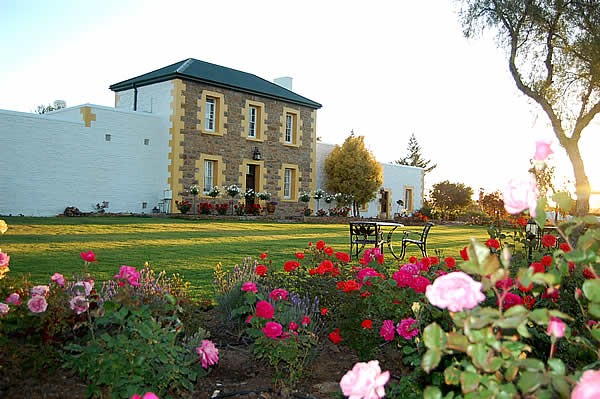
It’s probably a little early for jokes about the old ball-and-chain (note: it’s always too early), but if you’re going to be stuck in prison together, you want it to be The Old Jail in the town of Willowmore.
Built in the 1880’s, this prison-turned-boutique-guest-house north-east of Knysna oozes old-school charm. The Old Gaol, as it was then called, comprised a hospital cell, hard labour cells, awaiting trial cells, a female cell and kitchen cell.
After closing down as a prison in 1960, the property passed through many hands, and was uninhabited for almost 12 years, until the current owners took over and slowly turned the rustic grounds into a guest house, while still keeping many of the gorgeous Victorian features of the building. The cells and exercise areas have been converted into elegant rooms, each with its own private courtyard.

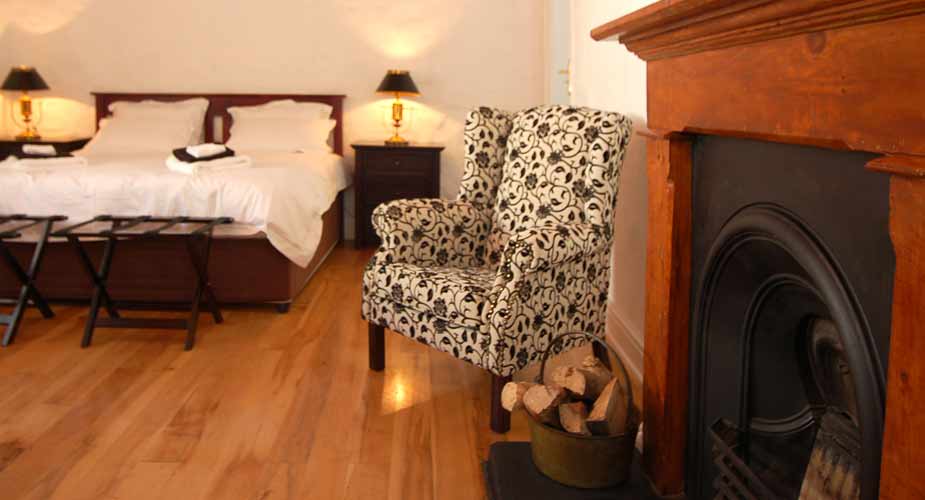
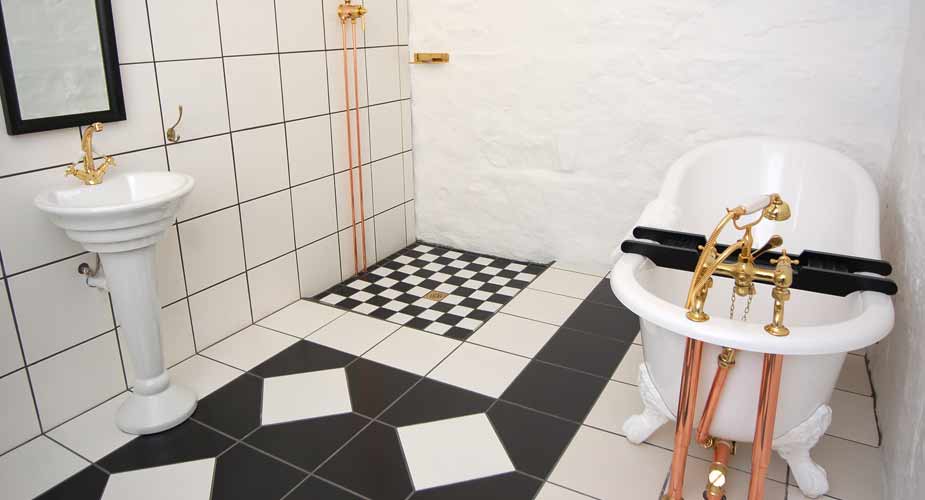
The Old Jail has three rooms in total, each air conditioned with modern amenities, high quality period finishes and private courtyards.
All three rooms are en-suite with original features, quality bedlinen and private entrance. They are easily accessible from the large safe parking area.
Farmers Suite 1 and Farmers Suite 2 have fully equipped kitchens and are two-roomed suites. Farmers Suite 1 has a sleeper couch for two sharing children 10 years and younger. Farmers Suite 2 has one extra bed for a child. This room has inter-leading doors with The Donkey Room for larger families.
The Donkey Room has an open plan bathroom with two single beds and is a sleep and go unit with an under counter fridge.
Full of history, the Karoo town of Willowmore has functioned as a farming and trading town since its discovery in 1819. There is an abundance of greenery and stunning hiking trails to explore, as well as many farmlands around. Take a trip to the Willowmore Town Hall, or visit one of the many museums around to explore and uncover the past.

If you choose to leave your room (after all, you aren’t actually in prison), Baviaanskloof Wilderness Area nearby offers several hiking, mountain biking and 4×4 trails.
Picture/s: The Old Jail
When deciding on an MC for a wedding, many opt for their closest and loudest friends to lead the day. However, being the Master of ceremonies is a…
An engaged couple was lucky enough to say their I do’s in hospital, moments before the groom needed to be sedated and put on a ventilator.
Elizabeth Kerr, 31, and Simon O’Brien, 36, were both admitted to Milton Keynes University Hospital with breathing difficulties on January 9 after contracting COVID-19.
The pair were kept in separate wards, and a kind nurse offered Kerr the opportunity to marry in the hospital as it may be their last chance, reports the BBC
They began putting plans together but needed to fast track the wedding as the groom’s condition deteriorated further. On January 12, it was so severe that he needed to be put on a ventilator in the intensive care unit.
The wedding ceremony was held in the ward moments before they intubated O’Brien. The ceremony was filmed for family and friends, and the hospital’s catering staff even provided a cake.
“With lots of teamwork… we were able to give them a wedding, not necessarily the wedding that they would have initially intended, but certainly something positive, remarkable and memorable for them to really hold on to,” nurse Hannah Cannon told the BBC.
Both are now recovering in hospital, and have been reunited in a recovery ward where they were able to kiss for the first time as a married couple.
This wedding was a special moment for Kerr, one she is eternally grateful for.
“If we hadn’t had each other and we hadn’t been given that opportunity to get married, I don’t think both of us would be here now,” she said.
Picture: Pexels
Not one for wedding cake? There are so many unique alternatives that will please your sweet tooth. Among them is the macaron tower, a luxurious treat that stands…
There’s a lot to be said about the sheer look, especially when it comes to a wedding. Translucent materials, both the fabric and the paper kind, can easily accentuate the elegance of the occasion.
We’ve rounded up five ways in which sheer fabric and stationery can be effectively incorporated into your wedding, be it as part of your ensemble, or on every placemat at the reception.
The dress
View this post on Instagram
Wearing a wedding dress made from sheer fabric is a great means to look radiant and daring while walking down the aisle. The delicacy of the material will give you an angelic, almost ethereal look, which is suitable for such a romantic occasion.
This look will be enhanced if you are wearing several layers of the fabric. Also, given that sheer materials are so lightweight, you won’t have many hassles donning them on your wedding day.
The veil
View this post on Instagram
You might not be that keen on an outfit that’s got too much sheer. But there’s nothing wrong with a touch of it. That’s where the veil comes in. It’s not compulsory to wear one, but it’s a lovely embellishment to an outfit, and will almost certainly be made of sheer fabric.
And if you’re dress is a bit simple, then your veil can add a bit of energy to the ensemble. For example, a veil that’s longer than most, or one that features an intricate detail will definitely turn heads.
The décor
View this post on Instagram
There are plenty of ways in which sheer materials can be used to decorate your wedding venue or reception area. Tie it around the back of the chairs or at the end of every pew; cover the tables in it; or hang it from the ceiling.
What’s particularly satisfying about using see-through fabrics as décor is their subtlety. If you were to use a heavier fabric, the venues might begin to feel stuffy and claustrophobic after a while.
The invitations
View this post on Instagram
Stationery plays a bigger part than you might realise when it comes to planning a wedding. After all, the whole thing starts with an invitation. And this is where we start talking about vellum, or translucent paper.
Its particular delicacy contributes to the idea that a wedding is an important, elegant and refined affair. Added to that, it can easily be combined with other materials of different colours to make your invitations look particularly festive.
The reception
There is also the matter of your guests’ comfort, and sheer paper can help with that as well. You don’t only need it for the invitations, and can use it at the reception. Create menus or place cards with fonts that match your colour theme.
These items, made for the sole purpose of giving your guests an easy time of it, will make the occasion all the more charming for them. But don’t stop there. Why not also hand out your wedding favours in wonderful packets made with see-through paper? A lovely way to end things off!
View this post on Instagram
Picture: Pexels
Robben Island’s annual mass Valentine’s Day wedding will not go ahead as planned in 2021 and has officially been cancelled. This comes after the Department of Home Affairs…

When it comes to weddings, the groom is often relegated to honeymoon duty. But there’s so much more your beau can take charge of – and he may even enjoy it.
If you’re struggling to encourage your partner to take an active role in wedding planning, the best thing to do is to start small. Here are ways to get them talking.
The food
We all know the saying ‘the way to a man’s heart is through his stomach’, so what better way to get him into wedding prep than by roping him in when it comes to your reception menu. Whether you’re having a totally over-the-top do or a rustic country affair, he’s sure to have dishes in mind that he’d love to sink his teeth into on the day.
The bar
Cocktails may be your cuppa, but a pint or two may be more to your male guests’ liking. This is exactly why you should have your significant other organise the bar. He’ll add drinks that he knows you love (hello, basil and cranberry mojito!), as well as ensure there are plenty of craft beers and single malts for the boys.
The suits
Your beau will want to make sure you have your dream wedding day, so tell him exactly what you are planning for your and your bridesmaids’ dresses, and ask him to coordinate his groomsmen accordingly. You’d be surprised how stylish he can be when left to his own devices.
The gift registry
Many couples who’ve been living together may not need – or want – gifts for their home, but whether or not you do, it’s important to allow your guests the option of getting you something. Decide what types of gifts you’d like together, then have your beau register and select them or set up a honeymoon fund where guests can deposit monetary gifts.
The vows
If you plan to write your own wedding vows, present your fiancé with mementos that will remind him of your relationship. This will help spark some memories that could kick-start the process for writing his own vows.
The music
A DJ or band might be the last thing on your mind right now, but your man will be counting on some tunes he won’t need to waltz to. Make sure he knows the type of atmosphere you envision for your reception, then let him have at it and be surprised when the DJ hits play.
The ring
The ring is perhaps the most important item on this list as it is a symbol of your love for each other. You might have given him the inspiration for what you’d like, but it’s his duty to hunt down the perfect one and take care of logistics and safekeeping before he finally slides it on to your finger.
Picture: Pexels