• Author

    Wedding ETC

    Browsing

    There’s something poetic about the final moments of a wedding.

    Long after the vows have been exchanged, the speeches have wrapped and the dance floor has emptied, your grand getaway becomes the closing scene – the moment guests remember driving home and the one that often ends up in the final frames of your wedding album.

    Yet strangely, it’s also one of the most overlooked parts of wedding planning.

    Back in the day, a decorated getaway car and a handful of tied-on tins felt like enough. Today’s couples are approaching their exits differently. The trend isn’t necessarily bigger or louder – it’s more intentional, more personal and designed to feel like an extension of the celebration rather than an afterthought.

    Here’s how to leave your wedding in a way that feels unforgettable.

    Match the exit to the energy of your day

    The most memorable exits aren’t random. A black-tie city wedding may call for a vintage car moment under glowing streetlights, while a vineyard celebration might feel better suited to a lantern-lit walk through the vines.

    Think of your exit as the final sentence of your wedding story. If your celebration leaned playful and social, your send-off should feel high-energy. If your day felt intimate and romantic, choose something quieter and cinematic.

    The goal isn’t to impress guests – it’s to create emotional continuity.

    Reimagine the classic getaway car

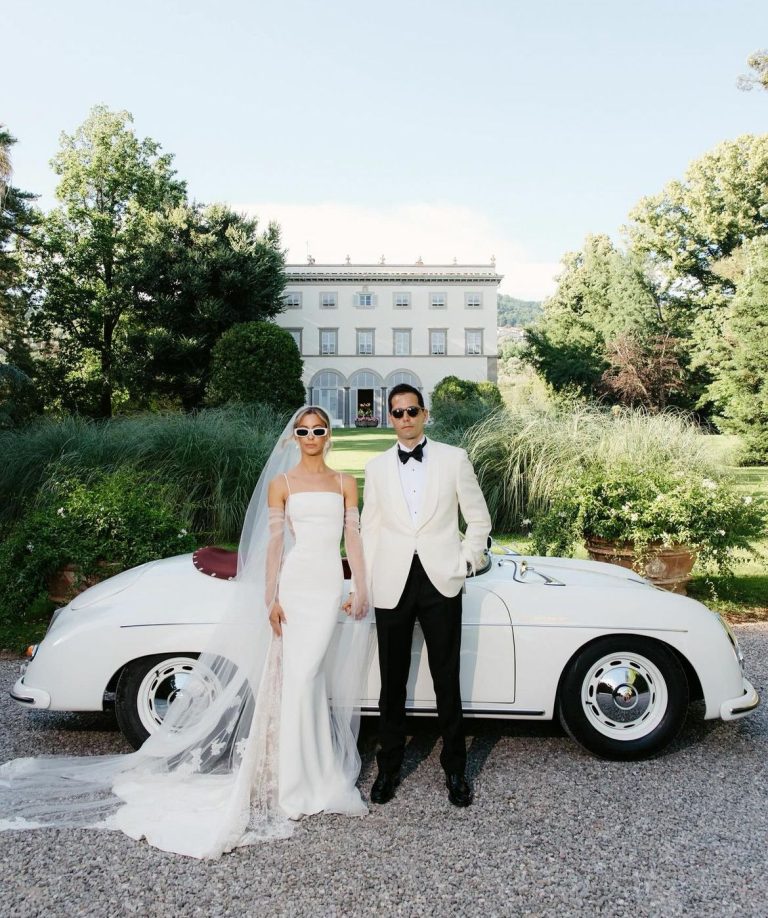
    The vintage car exit remains timeless for a reason. But couples are styling them differently now: personalised signage, monochrome ribbon details, florals that mirror the tablescape and editorial-style photography that feels more fashion campaign than tradition.

    For destination weddings, local transport is becoming part of the storytelling too – whether that’s a coastal vehicle, a retro bus or something tied to the setting itself.

    Your transport doesn’t need to be extravagant. It just needs to feel considered.

    The sparkler exit still works – but smarter

    Few wedding moments photograph as beautifully as a sparkler tunnel. But today’s couples are making practical adjustments: longer sparklers for timing, coordinated guest positioning and designated organisers to keep the moment smooth instead of chaotic.

    Before committing, confirm venue policies and fire restrictions. And if flames aren’t practical? There are alternatives.

    Think:

    • Bubbles
    • Ribbon wands
    • Glow sticks
    • Biodegradable confetti
    • Dried flower petals
    • Streamers

    Eco-conscious send-offs are becoming increasingly popular, especially as couples prioritise lower-waste celebrations.

    The private last dance is quietly becoming the luxury move

    One of the most talked-about shifts in modern weddings isn’t actually an exit at all. It’s the private last dance.

    Once guests move outside to prepare for the send-off, couples stay behind for one final song together in an empty reception space – no cameras in your face, no hosting duties, no timeline pressure. Just a minute to absorb what just happened.

    It feels cinematic. And for couples who spent months planning, it creates something rare on the wedding day: stillness.

    Outfit changes are changing the getaway moment too

    The rise of second bridal looks has created a whole new category of grand exits.

    Mini dresses, tailored white sets, sleek satin silhouettes and comfortable statement shoes are increasingly becoming the final look of the night – especially for couples heading into after-parties.

    Your exit outfit doesn’t need to replace your dress. It simply gives your wedding a final chapter.

    Remember: your guests want a moment, not a production

    Interestingly, couples are moving away from exits that feel performative and towards moments that feel emotionally memorable. Weddings in 2026 are leaning into experiences that prioritise connection over spectacle.

    That means the best getaway isn’t necessarily fireworks.

    Sometimes it’s walking hand in hand through your favourite people while they cheer. Sometimes it’s sneaking away quietly. Sometimes it’s one final dance before the lights come up.

    The final send-off

    You spend months thinking about how to arrive – but how you leave deserves equal attention.

    Your grand getaway is more than transport. It’s the final feeling your guests take home and your first moment stepping into married life together.

    Make it feel like an ending worth remembering.

    ALSO SEE: Ten creative ways to exit your wedding 

    Ten creative ways to exit your wedding

    Feature image: Pinterest

    South Africa loves to call itself the Rainbow Nation – a place where cultures, languages and identities coexist in vivid colour. Weddings reflect that beautifully. Across the country, couples are blending traditions, creating ceremonies that honour more than one heritage and redefining what modern marriage looks like.

    But not too long ago, some South Africans were legally forbidden from marrying the person they loved.

    Interracial marriage in South Africa has a history shaped by politics, control and resistance – and understanding that history gives even more meaning to the couples celebrating their love freely today.

    When love became political

    Before apartheid was formally introduced, race already influenced daily life in South Africa. But things changed dramatically after the National Party came into power in 1948 and began codifying racial segregation into law. One of the earliest and most symbolic pieces of apartheid legislation was the Prohibition of Mixed Marriages Act of 1949.

    The law banned marriages between white South Africans and people classified as belonging to other racial groups. Marriage officers were prohibited from conducting these unions, and interracial marriages performed outside South Africa could also be considered invalid at home. Soon after, restrictions extended beyond marriage.

    The Immorality Act made intimate relationships across racial lines illegal too – turning private relationships into matters of state control. Together, these laws became central to apartheid’s broader project of enforcing racial separation.

    The couples who existed anyway

    History often records laws more clearly than it records people. Yet despite restrictions, interracial relationships continued to exist – quietly, carefully and sometimes at enormous personal risk.

    Some couples left the country. Some kept relationships private. Others challenged social expectations simply by continuing to choose one another. What makes this chapter of history powerful is not that love suddenly appeared after laws changed. It never disappeared.

    The law tried to regulate relationships – but it could not erase them.

    1985: A turning point

    On 19 June 1985, South Africa repealed the Prohibition of Mixed Marriages Act through the Immorality and Prohibition of Mixed Marriages Amendment Act.

    The repeal did not end apartheid overnight. But symbolically, it marked an important shift: the state could no longer decide who people were allowed to love or marry.

    For many South Africans, it represented something larger than legislation – a small but meaningful crack in a system built on separation.

    What interracial marriage looks like in South Africa today

    Today’s South African weddings tell a very different story. Modern couples are increasingly embracing blended celebrations – combining faith traditions, multilingual ceremonies, family rituals and fashion influences that reflect multiple identities at once.

    Interracial marriage is no longer framed as unusual in the mainstream wedding space. Instead, the conversation has evolved into one about intentionality and how couples honour different cultures while building something entirely their own.

    And perhaps that is the most remarkable part. Not that interracial marriage exists – but that many couples now have the freedom to make love visible.

    Weddings have always been about more than two people. But sometimes, they tell the story of a country too.

    ALSO SEE: Two Families, One Heart: How to Blend Traditions & Relationships in a Blended Wedding 

    Two Families, One Heart: How to Blend Traditions & Relationships in a Blended Wedding

    Featured image: David Disponett / Pexels

    The confetti has settled, the honeymoon photos have been posted, and your wedding dress is finally back from the cleaners. But before you fully slip into married life, there’s one final task on your newlywed to-do list: the paperwork.

    While it may not be nearly as exciting as planning your big day, taking care of important administrative updates can save you a significant amount of time and frustration later. From obtaining the correct marriage certificate to updating your banking details and beneficiaries, here’s everything South African newlyweds should tick off after saying “I do.”

    Start with your marriage certificate

    Once your marriage has been registered, you’ll receive a handwritten marriage certificate from your marriage officer. This serves as immediate proof of marriage, but many couples later require an official certificate from the Department of Home Affairs for legal and administrative purposes.

    An official marriage certificate may be required when:

    • Applying for visas
    • Updating bank records
    • Registering on medical aid
    • Purchasing property jointly
    • Changing a surname
    • Handling estate or insurance matters

    If you anticipate international travel, immigration applications or legal processes abroad, it is worth requesting the appropriate certificate from Home Affairs as soon as possible.

    Decide what you’re doing about your surname

    One of the first questions many newlyweds face is whether to change their surname, keep their existing surname or adopt a double-barrelled surname.

    South African law allows spouses to choose how they wish their surname to be recorded following marriage. The choice is entirely personal and there is no legal requirement to change your surname after getting married.

    If you do decide to update your surname, you’ll need to ensure that the change is reflected across all your official documents and accounts. This often becomes the most time-consuming part of the post-wedding admin process.

    Apply for a new ID if necessary

    If your surname has changed, you’ll need to apply for a new South African ID document or Smart ID card reflecting your updated details. Your marriage certificate will usually be required as supporting documentation.

    This is an important step because many other institutions will require your updated ID before processing changes to their own records.

    Check your passport before booking international travel

    Planning a honeymoon abroad? Make sure the name on your passport matches your travel bookings.

    If you’ve changed your surname, consider whether you need to update your passport immediately or wait until after upcoming travel plans. Mismatched names across documents can create unnecessary complications when travelling internationally.

    Update your bank accounts

    One of the most commonly forgotten tasks is updating your banking information.

    Contact your bank to update:

    • Personal details
    • Surname changes
    • Joint account information (if applicable)
    • Debit orders linked to your account

    You’ll typically need your updated ID and marriage certificate when making these changes.

    Review your medical aid and insurance policies

    Marriage is a good opportunity to reassess your healthcare and insurance coverage.

    Remember to update:

    • Medical aid membership
    • Life insurance beneficiaries
    • Gap cover policies
    • Short-term insurance policies
    • Income protection cover

    Failing to update beneficiary details can create unnecessary complications in the future.

    Revisit your will

    This is perhaps the least romantic item on the list – but arguably one of the most important.

    Major life events, including marriage, should prompt a review of your will and estate planning documents. If you already have a will, ensure it reflects your current wishes and circumstances. If you don’t have one yet, now is the ideal time to create one.

    Update your employer records

    Notify your employer’s HR department of any changes to your marital status or surname.

    This may affect:

    • Payroll records
    • Pension and provident funds
    • Group life cover
    • Emergency contact details
    • Employee benefits

    A quick update now can prevent future administrative headaches.

    Don’t forget your digital paperwork

    In today’s world, some of your most important records live online.

    Take a few minutes to update:

    • SARS details
    • Investment accounts
    • Loyalty programmes
    • Subscription services
    • Utility accounts
    • Mobile phone contracts

    While these updates may seem minor, keeping your information consistent across platforms can save a surprising amount of frustration later.

    Create a newlywed admin folder

    One of the smartest things you can do after getting married is create a dedicated digital folder containing:

    • Marriage certificate copies
    • Certified documents
    • Updated identification
    • Insurance paperwork
    • Medical aid records
    • Beneficiary forms

    Trust us – future you will be grateful.

    The best weddings are built on thoughtful planning, and the same can be said for married life. Once the last champagne glass has been cleared and the thank-you notes have been sent, taking care of these essential updates will help ensure a smooth transition into your next chapter as a married couple.

    After all, a strong marriage isn’t only about celebrating milestones – it’s also about laying the foundations for the future you’ll build together.

    ALSO SEE: Already married? Have a wifelorette! 

    Already married? Have a wifelorette!

    Featured image: Hugo Martínez / Pexels

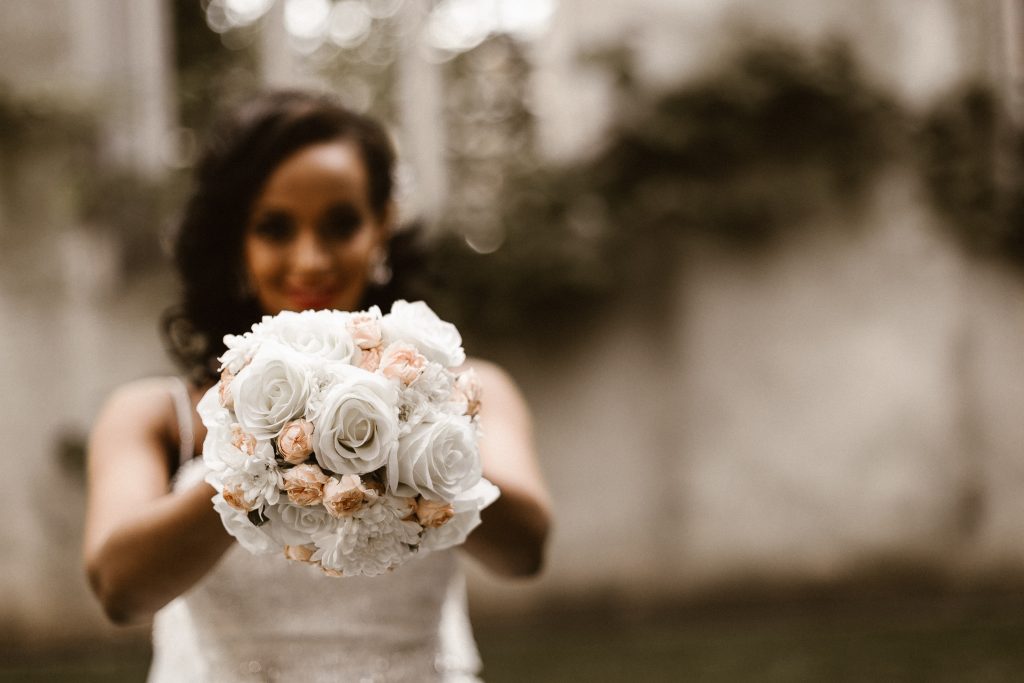
    When you really think about it, the idea of walking down the aisle carrying a bunch of flowers seems a bit odd. Perhaps for decorative purposes it works, but one could argue its a bit random and inconvenient, and serves to block the full view of the main attraction – the wedding gown – as well.

    Yet, you’d be hard-pressed to find a bride without a bouquet, or at least some form of it. Many consider it to be an essential part of the bride’s look.

    While we can all agree that the bouquet does add a touch of natural beauty which is unmatched, this is not the reason brides carry bunches of blossoms. Like most other wedding traditions, the practice is rooted in reasoning from centuries passed.

    In Ancient Rome, brides would carry flowers as they were believed to signify new beginnings, fidelity and hope of fertility, according to Modern Wedding. Bouquets, however, were not always made up of flowers.

    Herbs took preference for brides in the Middle Ages. Dill and garlic were most commonly used as they were said to ward off evil spirits and bad luck, according to Readers Digest. Reportedly, the dill would make a second appearance on the wedding day – during the feast – to prepare the newlyweds for the consumation of their marriage since it is considered an aphrodisiac.

    Later on, during the Victorian Era, the act of giving and receiving flowers came to be known as an expression of love. As they were then linked to love and romance, they increasingly became incorportated into weddings.

    Since then, it seems the practice has stuck and is not going anywhere either. Flowers are incorporated into weddings through bouquets, table decorations, and much more.

    There is a popular myth that has been reported by many publications, including Bustle, which that claims another reason for the bouquet in the 15th century was to mask the smell of the bride.

    This claim is based on the fact that, in those times, people only had one bath per year. Huffington Post reported that June was the most popualr month for weddings and most women took their annual bath in May.

    According to Snopes, an online fact checking resouce, this is not true. Brides have never carried a bouquet to mask their smell.

    “Although the modern practice of full-immersion bathing was a long way off in the 1500s (among other reasons because filling a vessel large enough to hold a person with heated water was rather impractical given the effort required to collect fresh water and fuel for heating it), people did still “bathe” in the sense of attempting to clean themselves as best they could with the resources at hand,” explains Snopes.

    “Although today’s brides carry flowers simply because it is now the custom to do so, at one time bridal bouquets were symbols of sexuality and fertility. Covering up anyone’s bad smell played no part in why this custom came into being.”

    ALSO SEE: How wedding dress trends have changed through the decades

    How wedding dress trends have changed through the decades

    Image: Unsplash

    There are few wedding-day moments as intimate as standing across from the person you love while someone guides you into your next chapter. And yet, when couples begin planning, the officiant is often treated like a last-minute booking rather than one of the most important decisions of the entire celebration.

    The truth? Your officiant sets the tone for the ceremony. They carry the energy of the room, calm nerves, direct emotion, and shape the experience your guests will remember long after the dance floor empties.

    Whether you’re planning a deeply traditional nikah, a modern garden ceremony, or something beautifully unconventional, finding the right officiant matters more than most couples realise.

    Here’s how to choose one that feels genuinely aligned with you.

    Decide what kind of ceremony you actually want

    Before you begin searching, ask yourselves one question: What do we want this ceremony to feel like?

    Do you picture something spiritual and faith-led? Romantic and relaxed? Short and simple? Emotional and story-driven? Formal and elegant? The answer will immediately narrow down the kind of officiant you need.

    Some couples want an officiant who feels warm and conversational, while others prefer someone more traditional and structured. Neither is wrong – but choosing someone whose style clashes with your vision can make the ceremony feel disconnected from the rest of the day.

    Your ceremony should feel like an extension of your relationship, not a script being read at you.

    Personality fit matters more than couples expect

    A technically qualified officiant is one thing. A good emotional fit is another entirely.

    You’ll be sharing vulnerable moments with this person. They’ll be speaking about your relationship in front of your closest friends and family. If the chemistry feels awkward, overly performative, or impersonal during your first conversation, trust that instinct.

    The right officiant should make you feel comfortable almost immediately. You should leave the meeting feeling calmer – not more stressed.

    Pay attention to whether they:

    • Listen well
    • Ask thoughtful questions
    • Respect your boundaries and beliefs
    • Understand your dynamic as a couple
    • Feel adaptable rather than overly rehearsed

    Because the best ceremonies never feel copy-and-pasted.

    Don’t ignore the legal side

    Romance aside, there’s paperwork involved – and this is where couples sometimes get caught out.

    In South Africa, your officiant must be legally authorised to solemnise marriages if you want the legal ceremony handled on the day itself. Some couples choose to do the legal signing separately and have a symbolic ceremony afterwards, which opens up more flexibility.

    Either way, clarify:

    • Whether they are legally registered
    • What documents are required
    • Whether they handle submissions to Home Affairs
    • If there are additional fees for travel or administration
    • Sorting out the logistics early prevents unnecessary stress later.
    • Ask to hear or read past ceremonies

    A polished Instagram page doesn’t always translate into a meaningful ceremony.

    Ask if they can share excerpts from previous ceremonies, testimonials, or videos. This gives you a better sense of their speaking style, pacing, warmth, and ability to hold a room emotionally.

    You’re looking for authenticity – not someone trying to go viral during your vows.

    Make space for personalisation

    The most memorable ceremonies are usually the ones that feel deeply personal.

    Maybe that means including cultural traditions, bilingual vows, a moment of prayer, family involvement, poetry, or a retelling of your love story that actually sounds like you. A good officiant will help shape those details naturally instead of forcing you into a rigid format.

    And if you’re a couple who hates being the centre of attention? Tell them. A skilled officiant knows how to create emotional impact without making the ceremony feel uncomfortable or theatrical.

    Don’t leave it too late

    Popular officiants book out months – sometimes more than a year – in advance, especially during peak wedding season.

    Once you’ve secured your venue and date, start researching officiants alongside your photographer and planner. Waiting until the final stretch often means settling for whoever is available instead of someone who genuinely fits your vision.

    Final thoughts

    Flowers wilt. Table settings get packed away. Even the smallest details guests swore they’d remember eventually blur together.

    But the ceremony? That stays with people.

    The right officiant doesn’t just conduct your wedding – they anchor it. They create the emotional heartbeat of the day and help turn a beautiful event into a meaningful memory.

    So, take your time. Ask questions. Trust your instincts. And choose someone who makes standing at the altar feel a little less nerve-wracking and a lot more like coming home.

    ALSO SEE: How to be the best wedding MC

    How to be the best wedding MC

    Featured image: Caleb Oquendo / Pexels

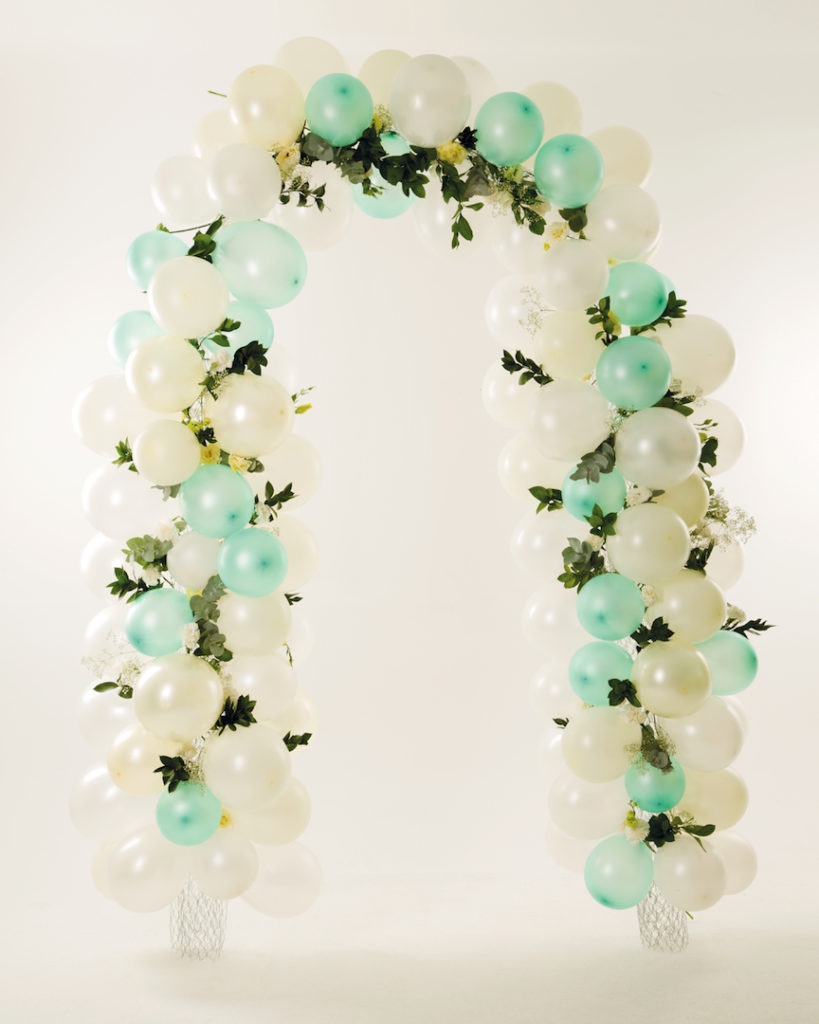
    Say your I-dos under this fresh, fun balloon wedding arch. Prepare the wire structure and balloons the day before, then just add greenery in the morning.

    WHAT YOU’LL NEED

    6 m chicken wire
    Florist’s wire
    Wooden rods or fishing line
    Florist’s foam
    Balloons
    Flowers and leaves

    INSTRUCTIONS

    Step 1

    Roll your chicken wire lengthways into a tube and bend in the centre to create an arch. Keep the arch together by tying florist’s wire at intervals along it.

    Step 2

    If the arch is going outside, use sturdy wooden rods or poles to stand it upright. Insert one end of each rod into the ground at least 20 cm deep. Place the bottom ends of the arch over the rods and secure with florist’s wire. If the arch will be placed indoors, suspend it from the ceiling with fishing line.

    Step 3

    Insert bits of damp florist’s foam into the arch, ensuring they are hidden.

    Step 4

    Blow up as many balloons as you like (we used 150) and attach to the arch using florist’s wire.

    Step 5

    Insert your flowers and leaves into the foam, using florist’s wire to hold them in place.

    Step 6

    Cover any exposed florist’s foam with balloons or flowers.

    ALSO SEE: How to make your own flower petal confetti

    How to make your own flower petal confetti

    Wedding favours are having a quieter, more intentional moment — and thank-you shortbread biscuits are leading the way. Delicate, nostalgic, and effortlessly elegant, these buttery treats add a personal touch to your celebration while giving guests something genuinely memorable to take home. Whether beautifully boxed, ribbon-tied, or displayed alongside your reception décor, shortbread biscuits are proof that the sweetest details are often the simplest.

    WHAT YOU’LL NEED
    250g butter, at room temperature
    ½ cup caster sugar, plus extra to dust
    1 vanilla pod, seeds only
    2 cups flour
    ½ cup cornflour
    Custom-made rubber stamps
    Biscuit cutters

    METHOD
    1. Have your rubber stamps made with the greetings of your choice (you can order stamps from rubberstampsa.co.za).
    2. Preheat oven to 160°C and grease a 20 cm baking tray.
    3. Beat the butter until soft, then beat in the caster sugar and vanilla seeds until light and fluffy. Mix in the rest of the ingredients to form a stiff dough.
    4. Roll the dough out on the baking tray so you don’t have to move it afterwards and cut them with your cookie cutters. Stamp each one with your rubber stamp.
    5. Bake for 30 minutes, or until golden. Remove from the oven and immediately dust with caster sugar.
    6. Carefully remove the shortbread fingers from the tray and transfer to a wire rack to cool before serving.
    7. Once they’ve cooled completely, you can put your biscuits in gift boxes or tie them up with cellophane and a pretty ribbon.

    In a world of elaborate wedding trends and over-the-top details, there’s something undeniably charming about a buttery shortbread biscuit wrapped with intention. Equal parts nostalgic and thoughtful, these sweet treats prove that wedding favours don’t need to be extravagant to leave a lasting impression. Sometimes, the most memorable gestures are the simplest ones – made with love, shared with gratitude, and enjoyed one crumb at a time.

    ALSO SEE: Budget-friendly wedding favours you can DIY

    Budget-friendly wedding favours you can DIY

    Featured image: Kristina Paukshtite / Pexels

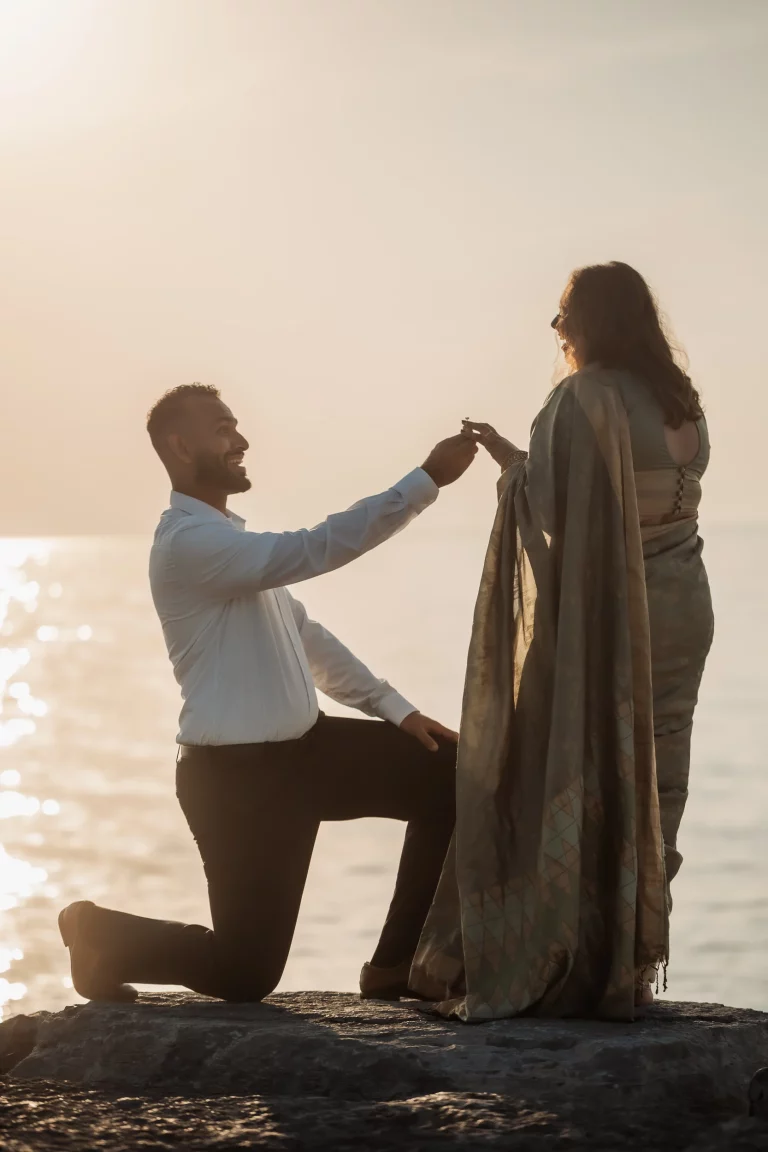
    A proposal should be well planned and deliberately thought out. We’re sure you’ve imagined yours before. Who hasn’t? Perhaps you saw the movie The Wedding Singer, which led you to crave a public display. Maybe you watched Leap Year, and the proposal on the ocean-side cliff led you to consider something more private.

    It’s also possible that you’re not sure if you (or your partner) would prefer a public or private proposal. Consider the pros and cons of a public proposal to help you make the final decision.

    Pros: 

    – It will be an event to remember 

    The public gesture will play like a movie in your partners head for years and years to come. It will likely be one of their fondest memories.

    A public proposal also makes it easier for you to catch the moment on video or in a series of photographs. Arrange for a friend or family member to secretly record everything as it happens, and make it a moment that lasts forever.

    – You can get other loved ones involved 

    Sharing this special moment with people who care dearly about you (and your partner) can make it feel extremely special. You’ll get to celebrate your engagement with your loved ones as it happens. On top of that, you can share the planning and preparations for the proposal with everyone you’re inviting to relieve some of the pressure.

    – It will be easier to spread the news 

    If your proposal is public, everyone you care about will either be there when it happens or will find out very soon after. You won’t have to spend a day calling everyone with the good news.

    Cons: 

    – Might not go as planned 

    If you’ve been together for a long time, and you’ve spoken about marriage, then this shouldn’t be too much of a worry. However, there is always the chance that your partner says no. In public, a “no” will feel so much worse.

    On a similar note, you cannot control the environment around you. You could get caught in bad weather, your big question may be drowned out by noise, and other people may try to get involved unexpectedly.

    – Unnecessary pressure

    You could be putting unnecessary pressure on your partner to say yes, when they aren’t sure they’re ready to. They may feel more comfortable in a private setting to ask you to discuss the proposal and the way forward, but in public they can’t really do that.

    You’ll also be putting a lot of pressure on yourself. A public proposal takes a lot of organizing and co-ordinating. If you’re not good under pressure, perhaps you should go for something more manageable.

    – Expenses can pile up 

    If you’re really going big, like writing “will you marry me” in the sky, you may have to spend quite a bit of money. You’ll have to decide if it’s worth it, because that money may be better spent on the wedding itself.

    The most important thing to consider about a public proposal is what will be most comfortable for you and your significant other. If you don’t mind the attention and pressure, and the big gesture and fanfare has always been something you wanted, then go for it!

    ALSO SEE: Engagement ring care tips to keep your sparkler looking new

    Engagement ring care tips to keep your sparkler looking new

    Feature image: BimbaPro/Pexels 

    Incorporating Mzansi flavour into your wedding is a lovely way to pay homage to your country or family. Whatever your heritage, here are some of the best ways to stay proudly South African on your big day.

    1. A sense of ceremony

    Are there poems, quotes or vows that are particular to your heritage or culture? Incorporate them into your ceremony and make sure to emphasise them in your programme. You could even elaborate on the origin and history of the words you include or ask whoever is marrying you to add these anecdotes as well.

    2. Your attire

    Is there a specific colour or print that has meaning in your family? Try and include it in a subtle way, for example, maybe a hairpin, brooch, pocket square or even a pair of shoes in a colour or pattern that represents your particular heritage.

    3. The food

    How about serving welcome drinks infused with flavours of well-known South African herbs and plants? Think buchu gin, geranium cordial, rooibos iced tea … the options are endless. And when it comes to food, traditional doesn’t have to mean boring. There are many ways you can transform much-loved homestyle dishes – from bredie to braai – into appetising, intricate canapés and sophisticated mains.

    4. Flowers & decor

    South Africa is blessed with an abundance of unique, exquisite flora. Instead of trying to get hold of exotic plants and flowers, try using indigenous, seasonal ones that are found in your hometown. Proteas, strelitzias and succulents can look striking paired with simple greenery, and will be a much more cost-effective option too! Consider texture as well: wooden, woven or African-print table runners and underplates work well when combined with minimalist elements.

    5. The music

    A wedding playlist is very personal and should include songs from some of your favourite moments together. Add a little twist by including a traditional song somewhere in the playlist – whether it be during your first dance or when people are grooving on the dance floor later.

    Celebrate your love, the Mzansi way

    At the heart of it all, adding a touch of Mzansi flair to your wedding is about celebrating where you come from and the people who helped shape your story. Whether it’s through music, food, fashion or meaningful traditions, these local touches create a wedding that feels warm, personal and unmistakably South African. The beauty of a Mzansi-inspired celebration is that there are no strict rules — just moments that honour your culture, your love story and the joy of bringing people together.

    ALSO SEE: 7 Fun-loving wedding ideas to move your wedding from traditional to funtastic

    7 Fun-loving wedding ideas to move your wedding from traditional to funtastic

    Featured image : Pinterest

    When it comes to finding “the one” and having that movie-magic moment where your bridesmaids break into a sob after just one look of you in the perfect wedding dress, it all comes down to finding the right shape for your body. We’ve turned to the experts for this one, putting our ear close to the ground and listening to the suggestions that dress designers may have for some potential gown stumbling blocks.

    You’re fuller in the hip/thigh area: 

    Choose something you are comfortable in. If you are confident and love your curves, then there are ways to make a fitted dress accentuate all the right areas. If you are more conservative or feel self-conscious, then go with something that cinches in at the waist and naturally flows out from there.

    You have larger than average breasts: 

    Get a fully structured bustier if your bust needs that lift and support, or a daring plunge for those girls stay in place.

    You are petite

    If you are going for lace, something with smaller patterns would be best. If not, choose something streamlined and gorgeous! Even the princess look can work, if done right.

    You don’t look good in classic white or ivory

    Nude, toffee and sand shades are hot this season! Oyster is also a wonderful shade that suits a variety of skin tones.

    You’re not too keen on exposing a lot of skin 

    A beautiful, hand-engineered, appliquéd illusion sleeve is the best of both worlds!

    ALSO SEE: 10 things to know before going dress shopping

    10 things to know before going dress shopping

    Feature Image: @aglowceleste