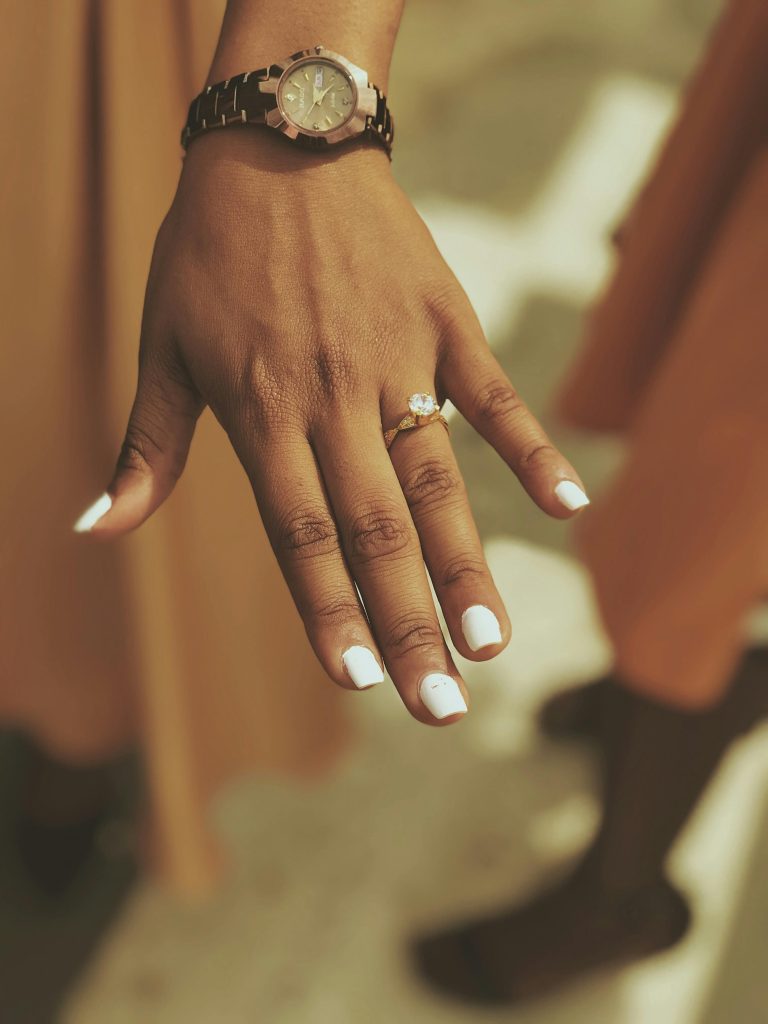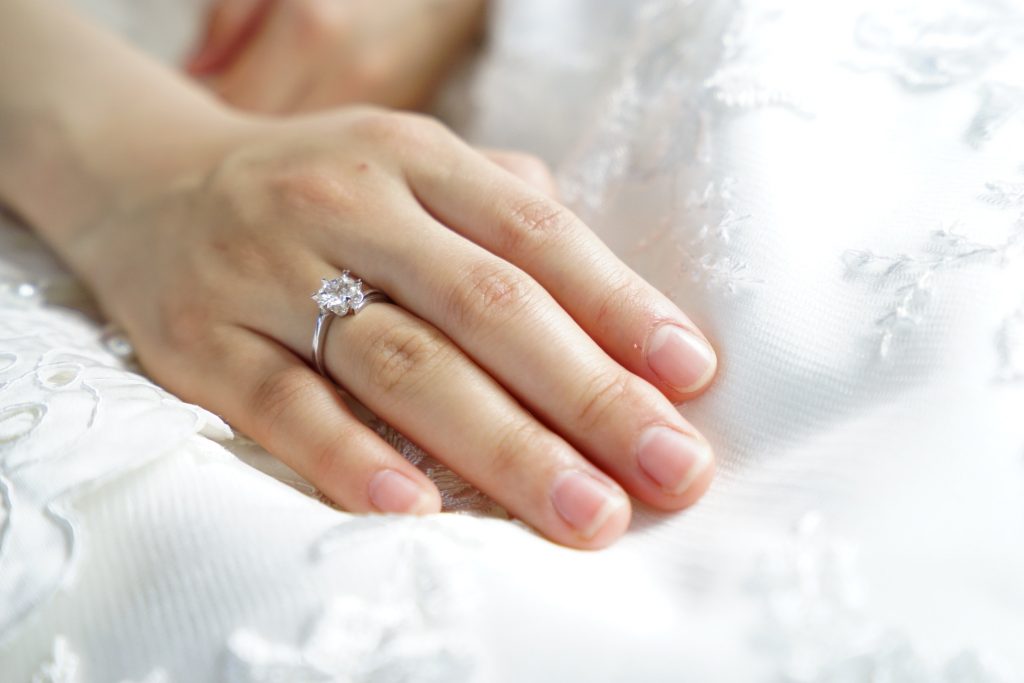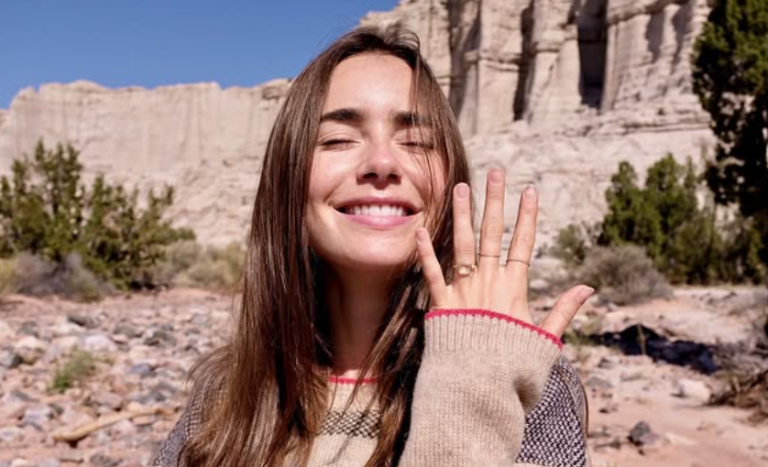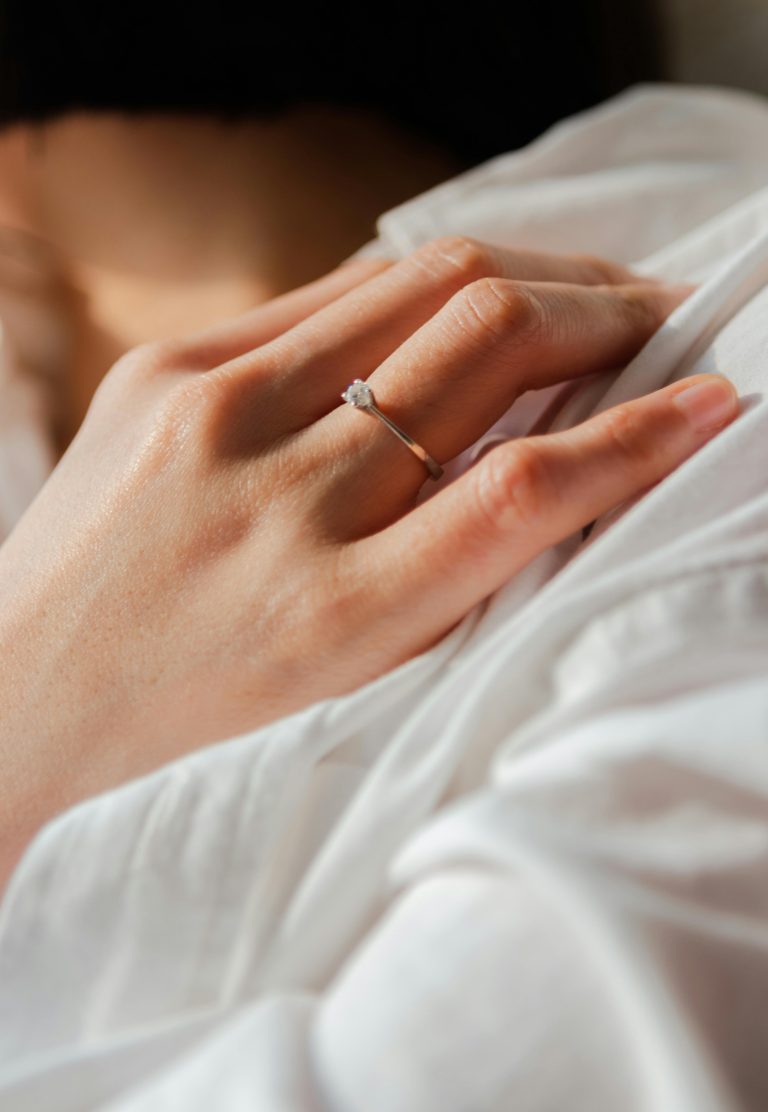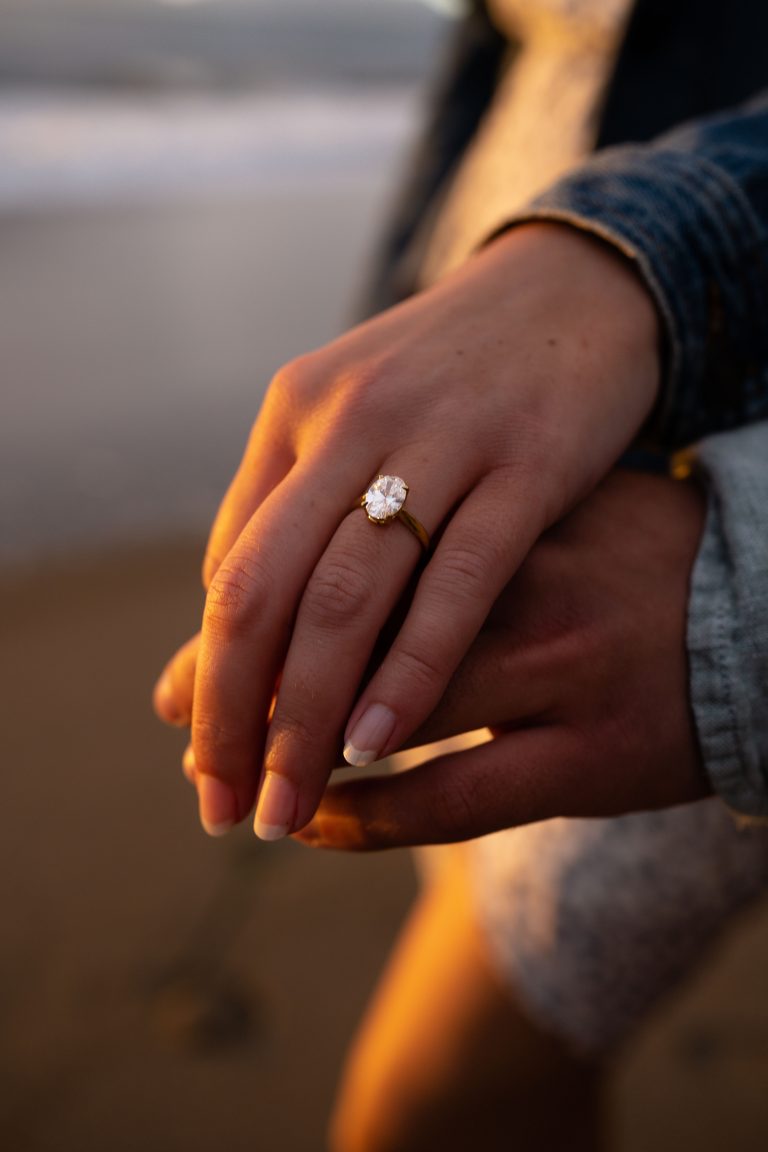
For years, engagement ring shopping has been dominated by one question: How many carats? But the brides getting it right in 2026 are asking something smarter – how will this ring actually look and feel on my hand?
Because here’s the truth: a bigger diamond doesn’t automatically mean a better ring.
The way a diamond shape, setting and band interact with your hand can completely change how a ring looks. The same stone can appear delicate on one person and dramatically oversized on another.
So before locking in a carat weight, here’s what to know.
First: stop thinking size – start thinking proportion
There’s no universal “perfect” engagement ring for every hand shape. Experts consistently point to proportion as the real deciding factor – how the stone, setting and band work together visually rather than the number attached to the certificate.
That’s why two diamonds with identical carat weights can look completely different once worn.
Shape changes perception. Band width changes perception. Even nail length can subtly influence how a ring reads on the hand.
If you want fingers to look longer
Elongated cuts continue to dominate engagement trends for a reason.
Oval, pear, marquise and elongated emerald cuts naturally create vertical lines that visually lengthen the finger and often make the centre stone appear larger than its actual carat weight.
This works particularly beautifully for:
- Shorter fingers
- Smaller hands
- Anyone wanting a more elongated silhouette
- Brides who love elegant, modern proportions
WeddingETC tip: If you’ve saved endless celebrity engagement ring photos lately, chances are an oval is already sitting somewhere on your Pinterest board.
If your fingers are long or slender
This is where you have freedom.
Long fingers carry almost every major diamond shape well, but structured cuts often create beautiful balance. Think:
- Round brilliant
- Cushion
- Princess
- Asscher
- Radiant
These shapes add width and presence without exaggerating finger length.
You can also experiment with slightly thicker bands or statement settings without overwhelming the hand.
Wider fingers? Don’t automatically go smaller
One of the biggest misconceptions in ring shopping is assuming a smaller stone will look more flattering.
In reality, slightly larger centre stones or elongated cuts often create more balance because they cover more visual space and draw the eye vertically rather than horizontally.
Halo settings and side stones can also create presence without dramatically increasing budget.
The band matters more than you think
Everyone talks about diamonds. Hardly anyone talks about the band.
But band width quietly changes the entire look of the ring.
- Thin bands (around 1.5–2mm) make centre stones appear larger
- Medium bands (2–3mm) create classic balance
- Wider bands (3mm+) feel more substantial and complement larger stones
A delicate solitaire can feel effortless and modern, while a wider band can make a ring feel intentional and architectural.
Consider your real life – not just the proposal photos
Your engagement ring isn’t for one day.
If you work with your hands, travel often, wear gloves regularly or prefer low-maintenance jewellery, practicality matters.
Higher-set stones can maximise sparkle but may catch more easily, while lower-profile settings often feel more wearable for everyday life.
And don’t forget to think ahead: your engagement ring should work with your future wedding band too.
The final rule? There actually isn’t one
The most flattering engagement ring isn’t determined by hand size, trends or someone else’s Pinterest board.
It’s the one that feels balanced when you look down at it.
Try shapes you didn’t expect to love. Compare proportions instead of chasing carats. And remember: the best ring doesn’t just photograph beautifully – it feels like you.
That’s the real forever piece.
ALSO SEE: Lab-grown vs natural diamonds: The ring question couples are asking in 2026
Lab-grown vs natural diamonds: The ring question couples are asking in 2026
Featured image: Marcus Queiroga Silva / Pexels