

Trains were originally added to wedding dresses as a symbol of wealth due to the extra fabric needed. The style became popular as brides all over wanted to emulate the royal and wealthy style and you have to admit, they do make a huge impression.
Here are some of the latest wedding dresses featuring trains:
Rossana Spose
View this post on Instagram
Pronovias
View this post on Instagram
Gahlia Lahav
View this post on Instagram
Calegra Bridal
View this post on Instagram
Robyn Roberts Bridal
View this post on Instagram
Molteno Creations
View this post on Instagram
Feature image: Pixabay
Another royal wedding is on its way. Princess Beatrice is newly engaged to property tycoon Edoardo Mapelli Mozzi. The announcement was made by the Royal Family in a…
You can also read: Best wedding planning APP’s and tools.
Just like the wedding and everything that surrounds it, your honeymoon will be yet another expensive weight on your shoulders. However, with some careful planning, lots of research and a bit of consideration, it is possible to save some money. Here’s how:
1. Include it in your registry
Instead of opting for the traditional registry, ask guests for a contribution towards your honeymoon in general, or specific excursions, tickets or bookings. It’s no longer frowned upon to ask for a donation instead of a gift, as more and more couples already have everything they need for their home before even getting married.
2. Who needs souvenirs?
Instead of spending unnecessary money on souvenirs (which, let’s face it, you’ll never look at again), rather spend it on experiences – such as special dinners, excursions or tours. These experiences are much more valuable than physical things. However, if you love doing outdoorsy stuff, such as hiking, it might even cost you less!
3. Use public transport instead of Ubers
Do some research and gather information on how the public transport system works in the areas you’ll be in. Ubers and taxis are often much more expensive than the public systems, so this way you’ll be able to save quite a bit. Your hotel or accommodation staff will also be able to assist you with recommendations and guides.
4. Be clever with your travel dates
You don’t need to leave for your honeymoon the moment you get married. Because most couples still need to take personal matters, such as work, into consideration before being able to leave, you can plan your honeymoon around ‘cheaper’ seasons, flights and destinations. Consider off-season options, as this will not only be cheaper all round, but also less crowded.
5. Score some points
On your credit card, that is. Lots of credit card services offer rewards that you can use for travel, including discounts on flights, accommodation, restaurants etc. Although you’d have to start planning this one quite a bit in advance, it will definitely be worth it.
6. DIY
Instead of booking everything through a travel agency, do your research, plan carefully, and book everything yourself to avoid paying any additional fees. Also make sure to check the direct websites of hotels, lodges or resorts, as they often have slightly lower rates than when it’s booked elsewhere. If you do, however, prefer to use an agent, make sure they book package deals for you, so that you can get the most bang for your buck.
7. Take a chance
It might be a little forward, but when booking a room, a restaurant or whatever it may be, casually mention that it’s your honeymoon. People love romance, so they might just give you a freebie, an upgrade or a warm(er) welcome.
8. Get travel insurance
9. Consider when you eat out
You don’t have to eat at a restaurant for every single meal. Go to local markets or grocery stores and gather a few bits and pieces to take on a picnic, to have in your room or to make a meal yourself. This way you’ll also experience more of your surroundings and of the culture than you would sitting down at a restaurant three times a day.
10. Go on the hunt
Again, you’ll need to take some time and do your research with this one, but make an effort to hunt for some deals. Many hotels, destinations, cruises and airlines have regular deals – whether it’s for honeymooners, seasonal or simply because. Make use of them and be sure to make some calls to figure out if they don’t offer any additional deals. If you don’t ask, you’ll never know.
Image: Unsplash
Make-up is a great way to enhance your natural beauty but having great skin is the first step to achieve that undeniable glow. Attaining a natural glow may…

The 1950s were a wild time. The Cold war was escalating, Elvis and his pelvis were gyrating to the amazement of adoring fans and television had not even been introduced to South Africa. It is also in this time period that women were being given some, uh, interesting advice on relationships.
A 1958 article published in American Women’s Magazine, McCall’s, titled “129 Ways to Get a Husband” gives us insight into what life was like for women in the 1950s:
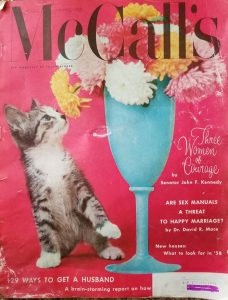
Kim Marx-Kuczynski from Madison, Wisconsin found the article in a rummage sale and was fascinated by its contents. “I think the article is reflective of the social mores of the era, and I found the comparison between what was acceptable then and what is acceptable now fascinating. It also made me grateful that so much progress has been made,” she told Bored Panda.
“It’s outdated and absurd and funny, but it had serious intentions,” Kim concluded. “Society has changed so much in the last sixty years, and this article exemplifies the differences between what our moms and grandmas grew up with compared to ourselves and the coming generations. It’s fascinating.”
The article had invited 16 “experts” to analyse what the “sixteen million women over the age of seventeen who are not married,” and who would presumably like to be married, according to the article, could do to find a husband. The results are nothing short of hilarious. Here is some of the funniest advice from the article:
On where to find Mr. Right:
– Have your car break down at strategic places.
– Look in the census reports for places with the most single men.
– Read the obituaries to find eligible widowers.
– Become a nurse or an airline stewardess – they have very high marriage rates.
– Be nice to everybody – they may have an eligible brother or son.
– Be friendly to ugly men – handsome is as handsome does.
– Don’t be afraid to associate with more attractive girls; they may have some leftovers.
How to let him know you’re there:
– Wear a band-aid. People always ask what happened.
– Stand in a corner and cry softly. Chances are good that he’ll come over to find out what’s wrong.
– Buy a convertible. Men like to ride in them.
– “Accidentally” have your purse fly open, scattering its contents all over the street.
On how to look good to him:
– Get a sunburn.
– When you are with him, order your steak rare.
– Don’t tell him about your allergies.
– Don’t whine.
On how to land him:
– Talk to his father about business and agree that taxes are too high!
– If he’s rich, tell him you like his money – the honesty will intrigue him!
– Never let him believe your career is more important to you than marriage.
– Point out to him that the death rate of single men is twice that of married men.
Wild ideas:
– If your mother is fat, tell him you take after your father. If he’s fat too, tell him you’re adopted!
– Rent a billboard and post your picture and telephone number on it!
– Paint your name and number on the roof and say, “Give me a buzz, pilots.”
– Stand on a busy street corner with a lasso.
Feature image: Mortgage Broker Toronto/Pixabay
Planning your wedding is definitely a stressful task, so the honeymoon might not even be an aspect you’re focused on right now, however, there is one additional task…

Wedding receptions are the time to celebrate and rejoice the new marriage. They usually consist of food, tearful speeches, fun and dancing. When it comes to the dance floor, everyone knows great music makes the party. Here are a few old school songs you need in your wedding playlist:
50s
Fly Me to the Moon – Frank Sinatra (1954)
70s
Isn’t She Lovely – Stevie Wonder (1976)
Play That Funky Music – Wild Cherry (1976)
Stayin’ Alive – Bee Gees (1977)
Y.M.C.A – Village People (1978)
What you won’t do for love – Bobby Caldwell (1978)
Don’t Stop ‘Til You Get Enough – Michael Jackson (1979)
80s
Celebration – Kool & The Gang (1980)
Just The Two Of Us – Grover Washington Jr. (1981)
Don’t Stop Believin’ – Journey (1981)
It’s Raining Men – The Weather Girls (1982)
True – Spandau Ballet (1983)
Girls Just Wanna Have Fun – Cyndi Lauper (1983)
Wake Me Up Before You Go-Go – Wham (1984)
Love song – The Cure (1989)
90s
End of the Road – Boyz II Men (1992)
Macarena – Los del Río (1993)
Wonderwall – Oasis (1995)
Gettin’ Jiggy With It – Will Smith (1998)
I Want It That Way – Backstreet Boys (1999)
Feature image: Unsplash