
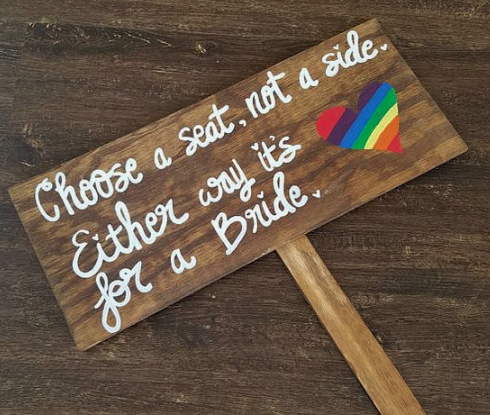
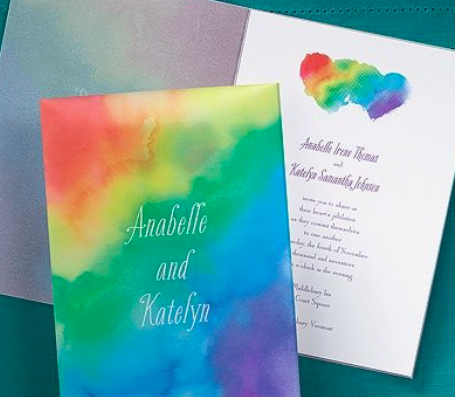
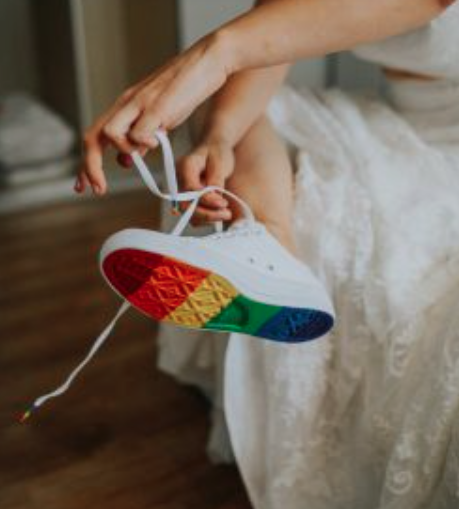
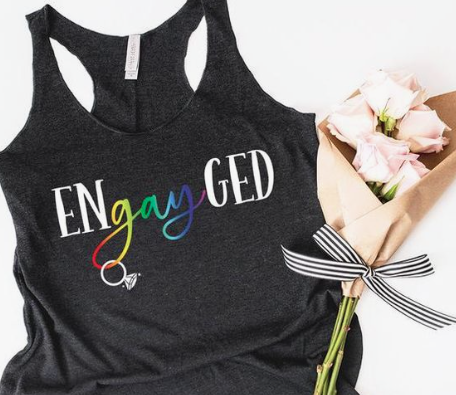
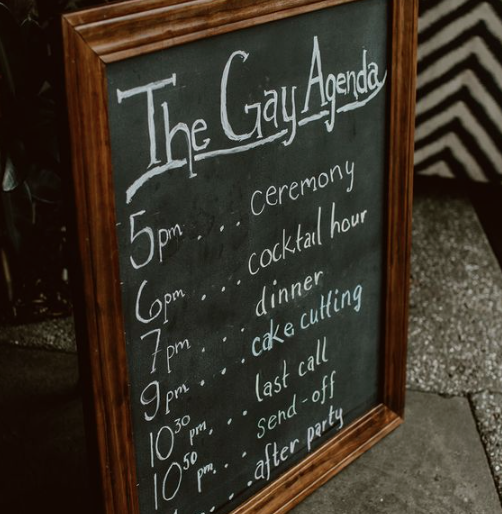
When you are part of a couple that falls somewhere on the LGBTQIA+ spectrum, chances are, there are hardships you have had to deal with in expressing your love freely. As a result, most queer couples would like to incorporate one or more of the pride flags into their wedding decor, but how do you do this without it overwhelming the entire aesthetic of your big day?
There are a number of flags that can be incorporated, and each will depend on the couple getting married. These are the various flags:
The Gilbert Baker flag/original Pride flag:
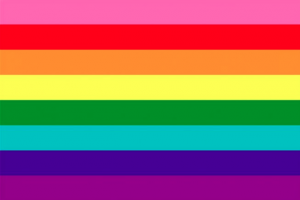
In 1977, Harvey Milk challenged Gilbert Baker, a veteran who taught himself to sew, to come up with a symbol of pride for the gay community. This is how the original Pride flag was born, and it is inspired by Judy Garland’s Over the Rainbow.
The flag made its debut at the San Francisco Gay Freedom Day Parade celebration on June 25, 1978. Each colour symbolises the following:
Hot pink = Sex
Red = Life
Orange = Healing
Yellow = Sunlight
Green = Nature
Turquoise = Magic/Art
Indigo = Serenity
Violet = Spirit
The revised Pride flag:
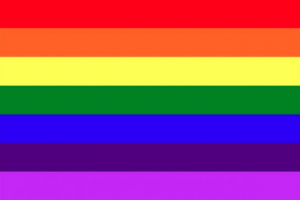
After Harvey Milk was assassinated, many in the LGBTQIA+ community wanted the Pride flag to commemorate all the hard work he did to uplift and build the community. The demand for the flag, however, was greater than the fabric at hand. This is how the original flag evolved into the flag we know today – if you pay attention, you will notice that the hot pink strip is missing.
The Bisexual flag
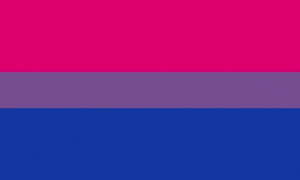
The flag was designed by Michael Page, and shows the heteronormative colours for boys and girls, and their overlap.
The flag was inspired by an older symbol for bisexuality, which is two overlapping pink and dark blue triangles, often called “biangles”.
The pansexual flag:
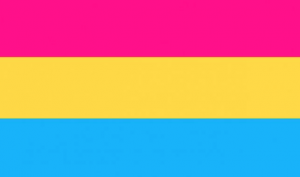
This flag was created on the web in 2010, and this flag represents the pansexual love and acceptance of all genders in partners. The pink represents women, while the yellow represents all non-binary and gender-nonconforming individuals. The blue at the bottom of the flag represents men.
The asexual flag/ace flag:
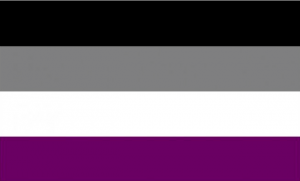
The asexual flag was also created in 2010, and was inspired by the logo of the Asexual Visibility and Education network. It represents the identity of asexual individuals, as well as those who are graysexual (individuals who find themselves in a fluid spot between sexual and asexual), and demisexuals (those who are only attracted to partners they share an emotional connection with).
The polysexual flag:
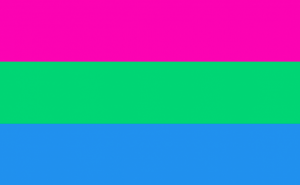
Polysexuality is the attraction to multiple genders but not all, and is often viewed as the middle ground between bisexuality and pansexuality. Polysexuality is widely believed to centre more around attractions to femininity and masculinity rather than gender itself. The pink represents attraction to females; the blue for males. The green is for an attraction to those who don’t conform to either gender.
Agender flag:
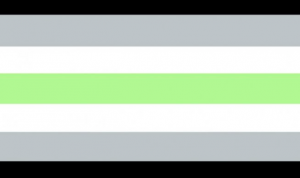
While genderqueer people bend the rules of gender, agender people reject a gender completely. For their flag, the black and white stripes represent the absence of gender, while green – the inverse of the gender-heavy purple – represents nonbinary genders.
The genderqueer flag:
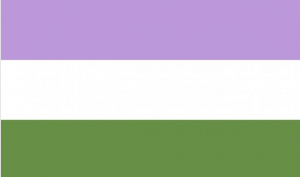
Created in 2011 by Marilyn Roxie, the genderqueer flag highlights androgyny with lavender, agender identities with white, and nonbinary people with green. Some people refer to it as a nonbinary flag if they feel “queer” is a slur.
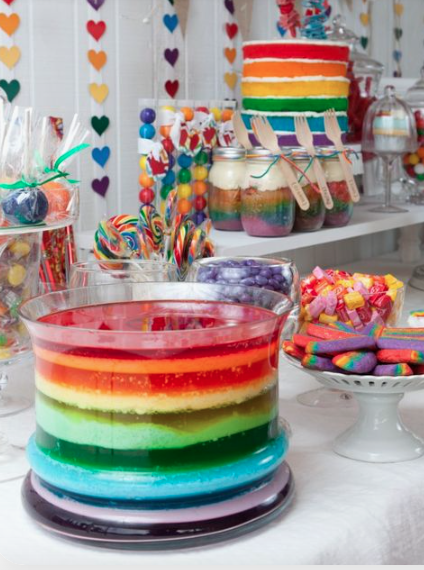
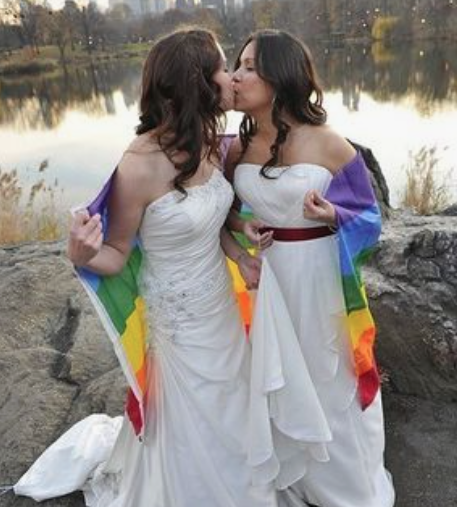
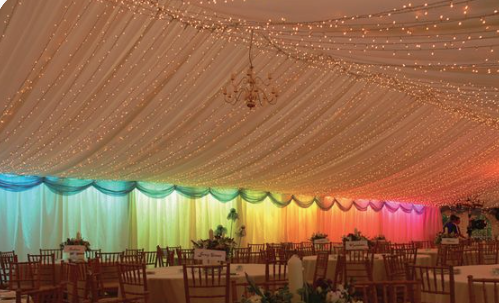
Here are some ideas on how the flag can be incorporated into you PROUD wedding:
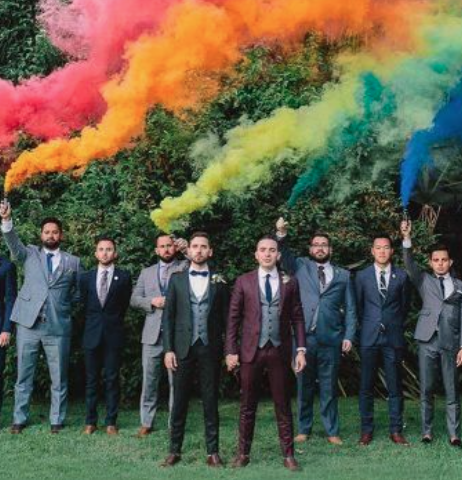
Feature image: Pinterest
Across the US, protests against racial injustice and police brutality have been widespread after the unlawful killing of George Floyd. In most cases, protesters prefer not to stand…
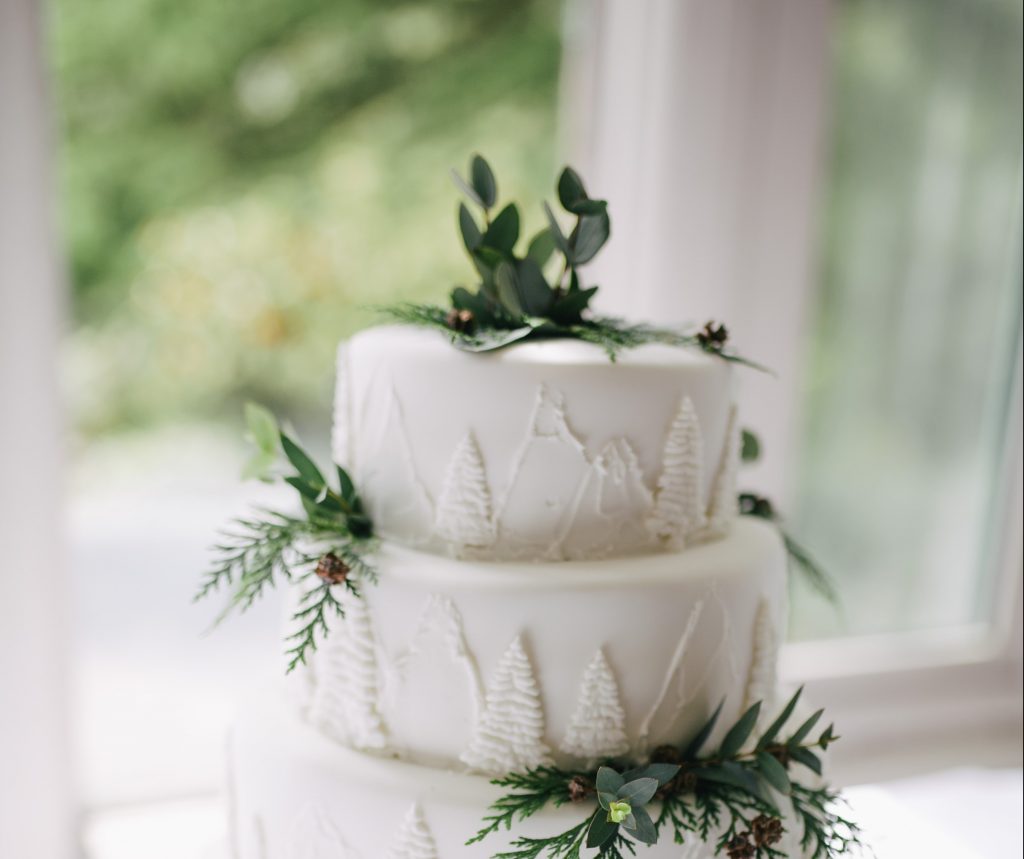
If you’re planning a winter wedding, you’ll want every aspect of your day to fit the theme. From the decor all the way to your cake, your day can easily be transformed into a winter wonderland.
White cakes are pretty fitting for a winter wedding, but your cake does not have to be boring. Get inventive with simple additions like texture, lace and pearl detailing and chocolate ‘icicles’ to bring life to your dessert.
Here are some cakes that will fit your winter wonderland:
https://www.instagram.com/p/B8Pig1Bg3_Y/?utm_source=ig_web_copy_link
https://www.instagram.com/p/B7ZjdxTjDjg/?utm_source=ig_web_copy_link
https://www.instagram.com/p/B724UJSBqff/?utm_source=ig_web_copy_link
https://www.instagram.com/p/BbtpclHnrPw/?utm_source=ig_web_copy_link
https://www.instagram.com/p/CAIVd-kBuer/?utm_source=ig_web_copy_link
https://www.instagram.com/p/B9X593KnsKY/?utm_source=ig_web_copy_link
https://www.instagram.com/p/BwQAdWYFpOc/?utm_source=ig_web_copy_link
https://www.instagram.com/p/B8_dknGH4oY/?utm_source=ig_web_copy_link
https://www.instagram.com/p/B-5Anjlp8cA/?utm_source=ig_web_copy_link
https://www.instagram.com/p/B-KPtsThXwI/?utm_source=ig_web_copy_link
Feature image: Unsplash
Fruit isn’t just for eating! Apples, oranges, lemons and berries are full of benefits beyond what they do for your body. Using fruit on your wedding day is…
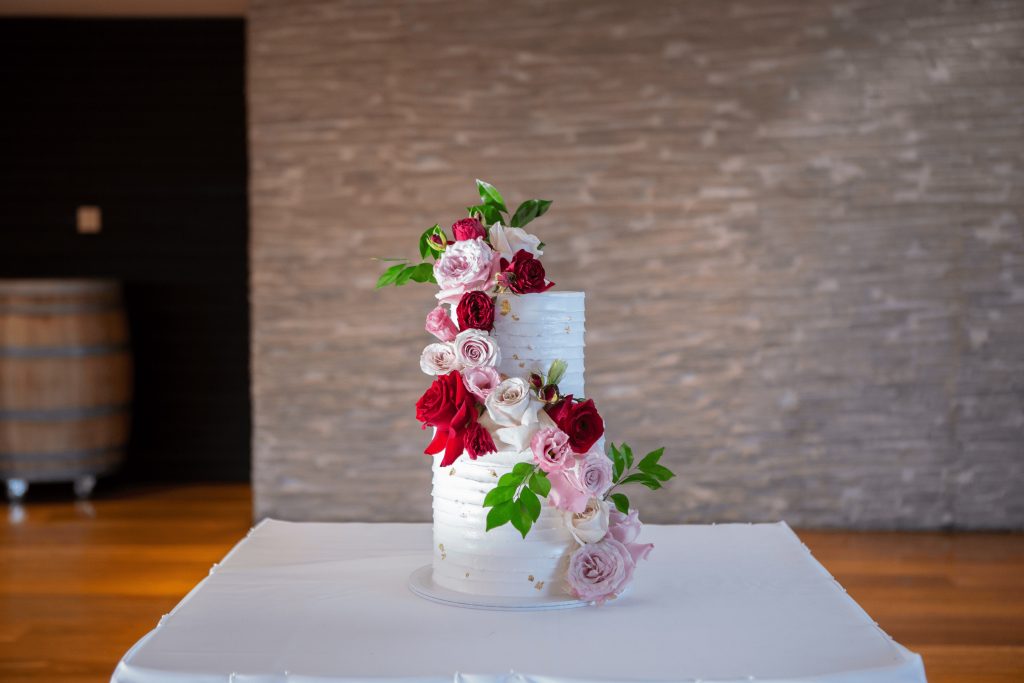
Having trouble choosing your perfect wedding cake? Why not turn to the stars?
Astrology helps many people across the world make big decisions on a daily basis. Whether or not you believe in it, it’s always interesting to see if your horoscope matches up with reality.
These cakes have been perfectly designed to reflect your astrological sign.
Aries (March 21–April 19)
Aries individuals are trend-setters. Being the first sign in the zodiac, they love to lead the way and rarely go with the status quo.
The bold and adventurous Aries deserves a cake to match. We suggest turning the concept of a wedding cake on its head, literally, by going for an upside down cake. Hang it from an ornate chandelier for even more lavishness.
https://www.instagram.com/p/BeKItlXHJAQ/?utm_source=ig_web_copy_link
Taurus (April 20–May 20)
This sign is all about the finer things in life. Taurus individuals are ruled by Venus, the enchanting planet that governs love, beauty, and money. As such, they’re all about luxury and perfection.
A marble wedding cake is perfect to show off your luxe design aesthetic. This cake is put together and glamorous but not over-the-top, just like a Taurean.
https://www.instagram.com/p/B8KmAJtDU53/?utm_source=ig_web_copy_link
Gemini (May 21–June 20)
Gemini’s are notorious for having conflicting personality points. They are energetic, youthful and versatile yet quiet and contemplative.
The best bet is to go for a cake that offers the best of both worlds. A two tier wedding cake that mixes edgy with classy will speak to your Gemini personality.
https://www.instagram.com/p/B5ZxQIjJDqV/?utm_source=ig_web_copy_link
Cancer (June 21–July 22)
Cancers are highly emotional and passionate beings. They’re often hopeless romantics who just love love.
Considering their love for all things romance, a Valentines Day cake seems especially fitting for Cancereans. Go for reds, pinks and whites, and throw in some heart details to really get the lovey-dovey feels going.
https://www.instagram.com/p/B8jDnvXBe-M/?utm_source=ig_web_copy_link
Leo (July 23–August 22)
Like their spirit animal, the lion, leo’s tend to see themselves as the king of the jungle. They are bold personalities who like to make a statement.
With such an out-there personality, why bother with a traditional cake at all? we suggest an alternative like a cheese cake, a fruit cake or a cookie tower!
https://www.instagram.com/p/CAnJui2nj1A/?utm_source=ig_web_copy_link
Virgo (August 23–September 22)
Virgo’s are practical perfectionists. Logical and dependable, this Earth sign is known for taking a systematic approach to life. Their style tends to be modest, simple, and polished, just like they are.
We suggest a simple wedding cake with detail that focuses on symmetry and clean lines.
https://www.instagram.com/p/B-KPtsThXwI/?utm_source=ig_web_copy_link
Libra (September 23–October 22)
Libra’s are all about balance, much like their symbolic zodiac sign, the scale. They love symmetry and harmony. Like Taureans, Libra’s are also ruled by Venus, the planet that governs love, beauty, and money, and are thus big fans of luxury and beauty.
A cake that uses simple design in a bold way is key for the Libra individual. Adding texture creates that extra oomph and provides a sense of grandeur.
https://www.instagram.com/p/B_Hpt_fBghT/?utm_source=ig_web_copy_link
Scorpio (October 23–November 21)
There is no sign more passionate than Scorpio. This water sign is the most closely linked to sex, seduction and pleasure. They are also detail oriented and mysterious.
We suggest taking a walk on the dark side with a black cake that exudes sophistication, mystery and romance.
https://www.instagram.com/p/B4Al8T1pJWN/?utm_source=ig_web_copy_link
Sagittarius (November 22–December 21)
Sagittarius individuals are typically fun-loving and free spirited. They love to roam free and explore the various facets of the world and life.
A bo-ho aesthetic works well for this sign. Think dried botanicals and macrame in unruly shapes and sizes.
https://www.instagram.com/p/B_z0YIuABN7/?utm_source=ig_web_copy_link
Capricorn (December 22–January 19)
Capricorns are the classy sign. They are typically very grounded and thoughtful, preferring the simpler things in life.
We suggest a traditional cake with stunning floral detail that will appeal to your Capricorn senses.
https://www.instagram.com/p/B9aZSizhsvG/?utm_source=ig_web_copy_link
Aquarius (January 20–February 18)
Aquarians are represented by the water bearer, the mystical healer who bestows water, or life upon the land. They are graceful yet bold, and stand firm to their beliefs.
Stick to the sign’s water theme with a wedding cake that subtly references the ocean. A blue marble effect with pearl detailing is sweet, unique and makes a gentle statement.
https://www.instagram.com/p/BxeWpoJloL3/?utm_source=ig_web_copy_link
Pisces (February 19–March 20)
Pisces individuals are dreamers, often at odds with fantasy and reality. They tend to be empathetic, compassionate and sensitive.
Pisces individuals deserve a whimsical cake to match their personalities. Go for unusual detail and lots of texture to create a dream come to life.
https://www.instagram.com/p/B87_I6THVbJ/?utm_source=ig_web_copy_link
Feature image: Pexels
Nancy and Eric Kingston from Somerset, South West England recently celebrated their 80th wedding anniversary. If this isn’t enough of a feat, they are also the longest surviving…
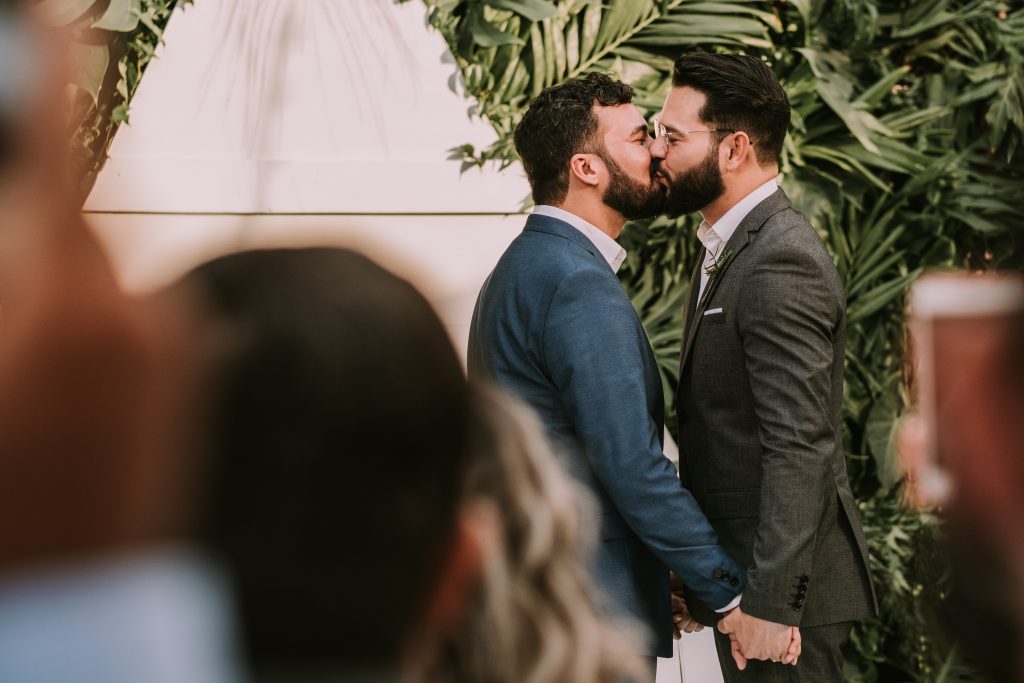
June is Pride Month in the United States. This month has been set to recognsie and uplift the important history and contributions LGBTQI+ individuals have made in American history.
To honour the LGBTQI+ community, we want to highlight the love they have for each other. Same-sex marriage is legal in South Africa, and Wedding ETC is a firm supporter of LGBT rights.
LGBTQI+ love is real and it is valid. To prove it, here are some stunning images that will give you all the feels.
https://www.instagram.com/p/B_QwXddjV-0/?utm_source=ig_web_copy_link
https://www.instagram.com/p/B_e37HKnyc3/?utm_source=ig_web_copy_link
https://www.instagram.com/p/B9HnY62qmTz/?utm_source=ig_web_copy_link
https://www.instagram.com/p/B-uw1c8FzPU/?utm_source=ig_web_copy_link
https://www.instagram.com/p/B86j8ykH7cp/?utm_source=ig_web_copy_link
https://www.instagram.com/p/B_-iIr7HH_t/?utm_source=ig_web_copy_link
https://www.instagram.com/p/B5JEfPolDf-/?utm_source=ig_web_copy_link
https://www.instagram.com/p/B8mJIzOKciU/?utm_source=ig_web_copy_link
https://www.instagram.com/p/B_XIB6rHkc1/?utm_source=ig_web_copy_link
https://www.instagram.com/p/B9mkW7cHkvj/?utm_source=ig_web_copy_link
https://www.instagram.com/p/B_OS2llpFe2/?utm_source=ig_web_copy_link
https://www.instagram.com/p/B9T-hanDvgh/?utm_source=ig_web_copy_link
Feature image: Pexels