
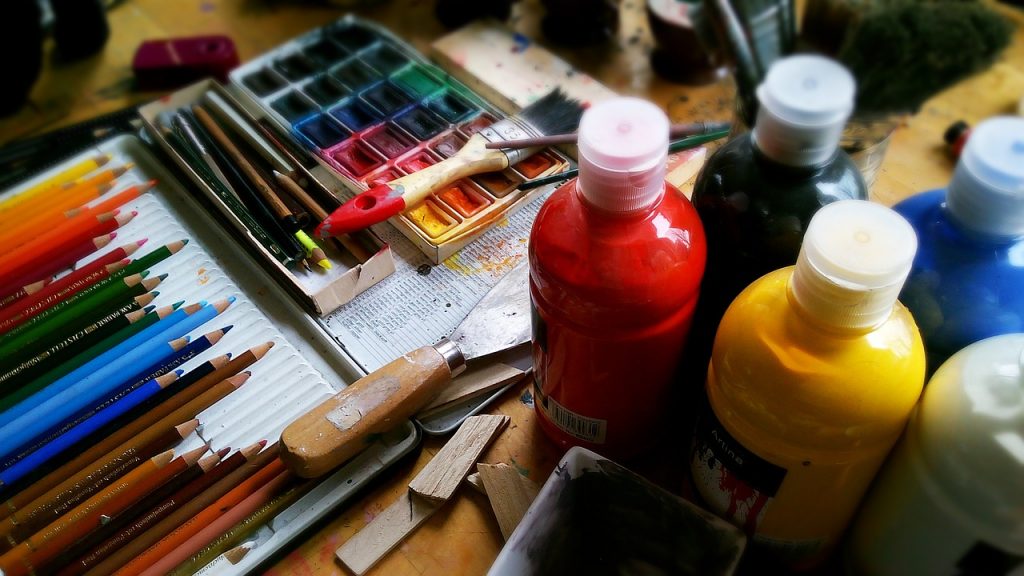
If you and your partner are inclined towards arts and crafts activities, honeymooning in SA will be a blast. Those who can’t see themselves going the mainstream tourist route and are looking for something different, keep an eye out for South Africa’s many art studios, creative classes and markets for a fun alternative.
Get your creative juices flowing with these arty activities across the country.
Paint something
https://www.instagram.com/p/Bnn7RWjnwCp/
If you’re looking for a delightful day out, paint something together. It might even be something useful like a coffee mug, plate or flower planter that will be a special addition to your home. Many studios offer ready-made items for you to paint, and we adore the Clay Cafe in Cape Town.
Take a ceramic class
https://www.instagram.com/p/Bu7UL0YhQNq/
Making something with your hands is always a rewarding experience. If you are looking for a bit of a challenge other than just painting something, go for a ceramics class together! Get down and dirty with pottery, sculpting or any other clay work and make something you’ll cherish forever. We love Kim Sacks School of Ceramics in Johannesburg.
Visit an arts & crafts market
https://www.instagram.com/p/B9bw4zZpqhR/
If you’re feeling less like making and more like buying, visit one of South Africa’s many arts and crafts markets to browse some outstanding local art. Look for unique pieces perfect for your home and keep an eye out, the artist may be right there at the stall! For an all-in-one with delicious food on top, go to the Neighbourgoods market in Johannesburg.
Look at street art
https://www.instagram.com/p/B-xNTNFJeK2/
Getting out and about is the best way to explore a city and many of SA’s cities are known for spectacular street art. Look up some places with street art and research the history and meaning behind it. Then go browse and of course, persuade your partner to execute an elaborate photoshoot for the ‘Gram. Woodstock in Cape Town has some amazing street art.
Visit an art gallery
https://www.instagram.com/p/B8bQIlvDnrP/
For a more sophisticated art experience, visit one of the top notch art galleries in the country. You and your partner might have favourite artists, styles or eras of art history. Look up the galleries in your destination, pack your best dress and heels and observe the splendour. We love State of the ART gallery in Cape Town.
Image: Pixabay
Winter is upon us, bringing with it chilly temperatures and unpredictable weather. Winter can be an incredibly romantic and practical time to have a wedding, it just requires…
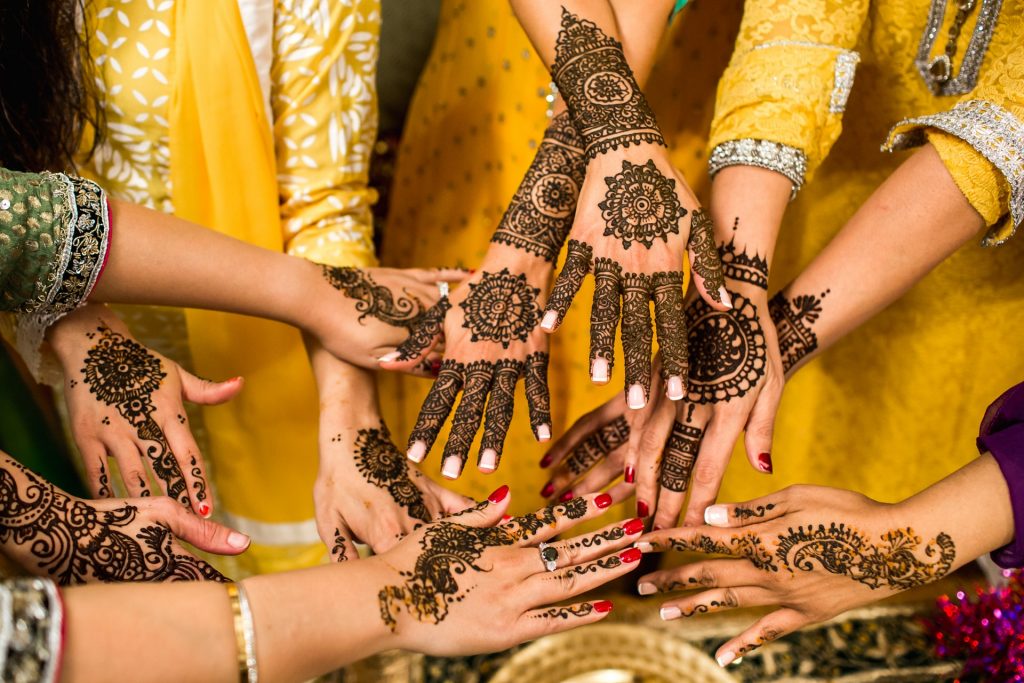
In many parts of the world, there are more celebrations than just the wedding day itself. In some Indian cultures, particularly Hinduism, one of these traditions is the Mehndi party.
At this pre-wedding celebration, all the women closest to the bride come together in celebration of the upcoming nuptials. The bride has Mendhi (or henna) applied to her palms, the back of her hands, and feet, and guests can opt to have some henna done too.
Mehndi is an ancient form of body art, which originated in India and across South Asia and The Middle East. It is often red, after being applied and having set, and the bride and guests can choose from a variety of designs.
The paste used to create the body art is made of a plant which has leaves that contain a dying agent called Tannis.
https://www.instagram.com/p/CBScRhng24h/
The colour and patterns are significant. According to tradition, the deeper the colour of the bride’s mehndi, the more likely it is for her to have a happy marriage. Designs and patterns often symbolise luck, joy, love, and blessings and the bride commonly hides her groom-to-be’s name somewhere in the pattern.
In an interview with Byrdie, henna tattoo expert explains patterns and placements thereof in more detail. She said that henna applied to palms allows the person to receive good luck, adding that the application itself is what helps.
“Henna has a natural cooling effect when applied, which is said to have nerve-calming properties before the wedding day when placed on the hands and feet,” she explained, adding that “Commonly, the designs people get on their palms are the most intricate, and sometimes draw out a story using symbols and illustrations of the bride and groom”
Henna applied to the top of the hand specifically indications protection.
The exact history and origin of this tradition have been difficult to trace, due to migration and cultural integration. It is, however, commonly argued that the application of henna has happened for more than 5 000 years. Some suggest it comes from ancient India, while others say it was brought to India by Egyptians.
According to Aroha International, evidence shows that the civilisation of Babylonia made use of henna to decorate women on special occasions. They claim that the earliest text which speaks of henna, with regards to marriage and fertility, is from the Ugaritic legend of Baal and Anath.
Others, including the Huffington Post, have reported that its use was made popular by Cleopatra in Ancient Egypt, as she adorned her body with it. According to the publication, henna was used to paint the nails of mummies before they were buried.
Despite its unclear origins, henna is still very popular today. Have a look at some modern henna designs, to help you understand what it’s all about.
https://www.instagram.com/p/CBi68M2BxwE/
https://www.instagram.com/p/CAdCi-0J6db/
Image: Unsplash
Alex Guarnaschelli, the no-nonsense chef and Food Network star who rose to fame as a judge on cooking competition Chopped, is newly engaged to partner Michael Castellon. Castellon,…
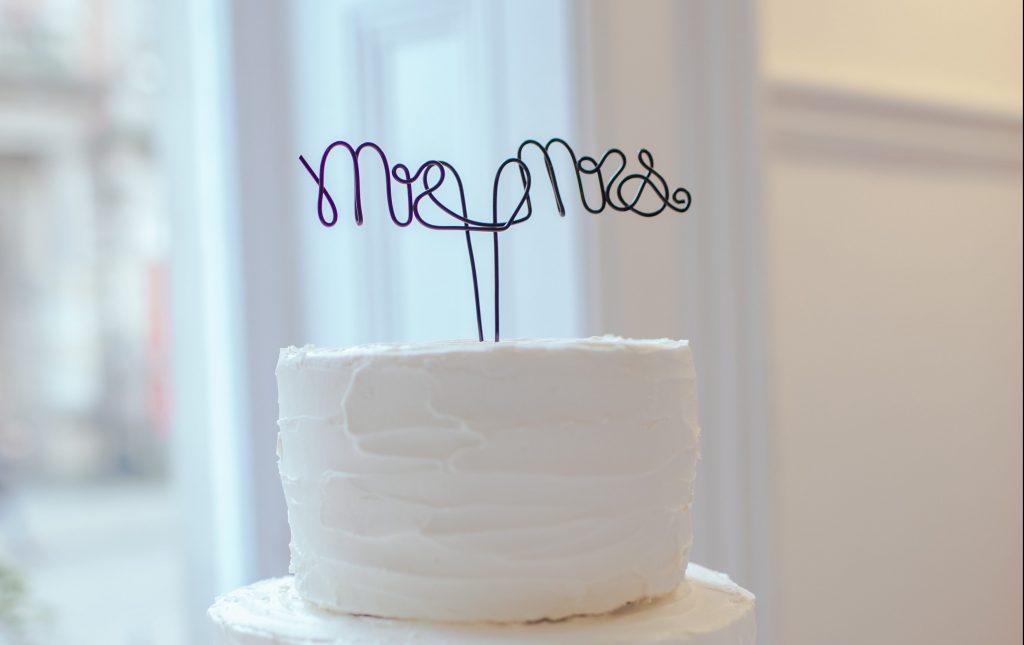
Not one for big designs and loud colours? You might just be a minimalist. This design aesthetic focuses on living with only the things you need and that support your purpose. By removing the distractions of loud design, it allows you to focus on what matters most.
Extending this aesthetic to your wedding day produces a simplified yet stunning finish. Your wedding cake can echo this style by only focusing on one crucial design element, be it a simple bow or a subtle deckle edge. A minimalist cake will never overtake the day, only enhance it.
Here are some simplistic cakes to inspire you:
https://www.instagram.com/p/B6LUShBnhFj/?utm_source=ig_web_copy_link
https://www.instagram.com/p/BpORtXHHtCT/?utm_source=ig_web_copy_link
https://www.instagram.com/p/BxxEcZ6ho_y/?utm_source=ig_web_copy_link
https://www.instagram.com/p/CAakfTUAkOL/?utm_source=ig_web_copy_link
https://www.instagram.com/p/BE910O-Q0aP/?utm_source=ig_web_copy_link
https://www.instagram.com/p/CAOAFuPHNEH/?utm_source=ig_web_copy_link
https://www.instagram.com/p/B5S2eQLp1gL/?utm_source=ig_web_copy_link
https://www.instagram.com/p/B7LDiYTBLsp/?utm_source=ig_web_copy_link
https://www.instagram.com/p/B2psnUaHONY/?utm_source=ig_web_copy_link
https://www.instagram.com/p/B7ttCxfjo_w/?utm_source=ig_web_copy_link
Feature image: Unsplash
Much has changed in respect to Saudi Arabian weddings. In the past, they were more private, low-key affairs. These days things are different. Saudi Arabian weddings are splendid…

Ricky Martin wants to go big to celebrate his marriage with partner Jwan Joseph. The pair already tied the knot in 2018, and are now planning a massive celebration with family and friends that may take place over multiple days.
Speaking to Mexican show Ventaneando, the singer explained that he wants a four-day wedding that will involve all four of the couple’s children. The twins, Matteo and Valentino witnessed their first nuptials but now Martin wants newest additions Renn and Lucía to see their parents marry.
https://www.instagram.com/p/B3Afz2bnEkr/?utm_source=ig_web_copy_link
The couple have been together since 2016 and spontaneously tied the knot in 2018.
“Two madmen have gotten together! Months passed and we said, ‘What are we waiting for? This is meant to be,” said Martin in the interview. “It just so happened that my parents were here in Los Angeles, and his parents were as well, so I said, ‘We have no other reason to wait, call the judge!’ It was super improvised.”
They are now passionate about having a large, public event to showcase their love.
“It’s going to be a great event. And people will be talking about it. We’re a modern family, and I think people need to see, and I want to normalise the beauty of our family. That’s why I’m making it public and I’m going to share my wedding with the world.”