• Author

    Kirsten Jacobs

    Browsing

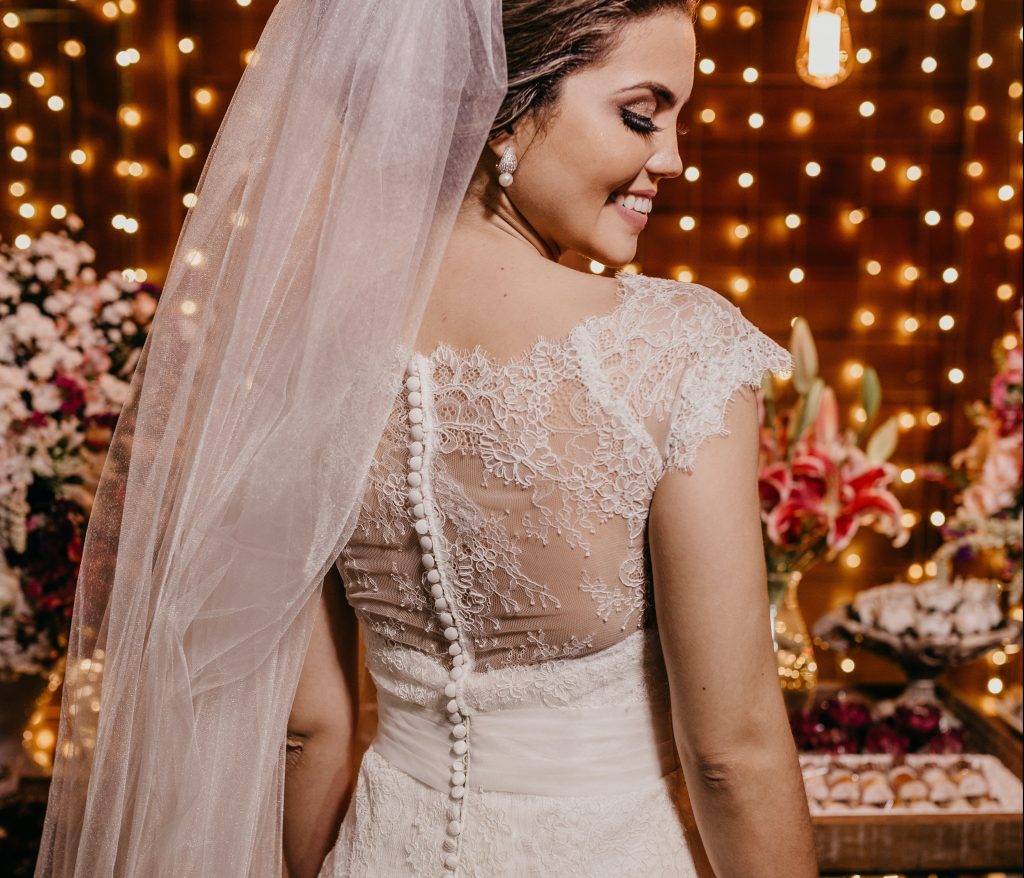
    Classic and stylish, buttons have been a popular trend in the wedding world for decades. Grace Kelly famously rocked buttons down her bodice to connect the delicate lace of her wedding dress when she married Prince Ranier of Monaco in 1952.

    Channel the Princess of Monaco and incorporate buttons into your bridal look. The most common way brides choose to do this is down the length at the back of the gown in place of a zipper closure. You can also add buttons to your sleeves for a Victorian feel if you opt for long sleeves.

    Here are some brides looking cute as a button with this trend:


    View this post on Instagram


    A post shared by BestValueButtons (@bestvaluebuttons)


    View this post on Instagram


    A post shared by Diana Belle (@knotsandbelles)

    Picture: Pexels

    Just said ‘Yes’? Congratulations! What is typically an exciting moment is somewhat dampened by the global pandemic, as we cannot celebrate with one another as we used to.

    If you still want to honour your big news, fear not. There are still ways to celebrate with your closest friends and family without putting them at risk amid the pandemic.

    Here are a few ideas:

    Hold a (virtual) celebration:

    Just because you can’t be together physically does not mean you cannot celebrate! Host your festivities via online platforms like Facetime, Skype or Zoom.

    You can still make it fun by decorating your home and having your ‘guests’ dress up. Planning a themed event makes it extra special and gives your friends and family something to dress up for. For an extra sweet touch, have small thank you gifts delivered to your guests’ homes after the celebration.

    Drive-by party:

    Your loved ones can attend your event from the safety of their cars, ensuring that all safety precautions are met while still giving you the feeling of their presence.

    When choosing the location of the drive-by, ensure that it is a wide-open, public space. This will mean that everyone driving by will be able to clearly see you. You could even do it in your front yard if you have space and don’t have walls.

    Set up a spot to show yourselves off, for example, you can decorate fancy chairs as thrones for you to sit on as your parade drives by. Assign a close relative or friend the role of head driver. This ensures that there is somebody leading the cars to your location, and allows for some sort of order for the drive-by.

    Take engagement photos:

    You’ll want to remember this moment for the rest of your life, so it makes sense to document your engagement. Photographers were hit hard by the pandemic, and hiring one is a great way to give back to small business.

    Keep COVID-19 protocols in mind by having your photographer work from a safe distance with a mask on and have sanitiser on hand.

    After you receive your pictures, have them printed and framed or emailed to your friends and family so that they can feel like they are a part of your special moment.

    Picture: Pexels

    Residents are encouraged to comment on a new discussion paper on the possible adoption of a single marriage statute for South Africa.

    Current South African law around marriage is fragmented due to the multitude of religions and cultures recognised under the Constitution, each with its own rules around marriage. Beyond this, there are separate pieces of legislation for same-sex civil unions and opposite-sex marriages.

    The South African Law Reform Commission (SALRC) drafted two bills as alternative options to unify laws under a single piece of legislation based on the Constitution. The first option is the ‘Protected Relationships Bill’. The second option is the ‘Recognition and Registration of Marriages and Life Partnerships Bill’.

    The Bills seek to:

    – provide for the recognition of protected relationships or of marriages and life partnerships, entered into by parties regardless of the religious, cultural or any other beliefs of the parties, or the manner in which the relationship was entered into

    – provide for the requirements for entering into a protected relationship or a marriage or a life partnership

    – provide for the registration of protected relationships or marriages and life partnerships

    – provide for the legal consequences of entering into protected relationships or marriages and life partnerships

    – provide for matters incidental thereto.

    There are a number of proposals that fall underneath the Protection Relationships Bill, including a shift in the definition of a monogamous protected relationship. Under this bill,  a ‘‘monogamous marriage or life partnership’ means the relationship of two people regardless of their sex, sexual orientation, or gender identity, to the exclusion of all others, unless dissolved by divorce or death of one or both parties

    The Protected Relationships Bill refers to a ‘protected relationship’ as

    – any subsisting marriage concluded in terms of the Marriage Act, 1961 (Act No. 25 of 1961) or any old order marriage legislation or any other prior legislation before the commencement of this Act

    – any subsisting marriage or union concluded in terms of the Civil Union Act, 2006 (Act No. 17 of 2006) before the commencement of this Act

    – and any subsisting customary marriage concluded in terms of the Recognition of Customary Marriages Act, 1998 (Act No. 120 of 1998)

    – any subsisting monogamous or polygynous marriage or relationship concluded or entered into in terms of the tenets of any religion or culture before or after the commencement of this Act

    – any life partnership, where the parties cohabit and have assumed permanent responsibility for supporting each other

    In terms of option two in the Recognition and Registration of Marriages and Life Partnerships Bill ‘marriage or life partnership’ means

    – any subsisting marriage concluded in terms of the Marriage Act, 1961 (Act No. 25 of 1961), old order marriage legislation or any other prior legislation before the commencement of this Act;

    – any subsisting union or marriage concluded in terms of the Civil Union Act, 2006 (Act No. 17 of 2006) before the commencement of this Act;

    – any subsisting customary marriage concluded in terms of the Recognition of Customary Marriages Act, 1998 (Act No. 120 of 1998;

    – any subsisting monogamous or polygynous marriage or relationship concluded or entered into in terms of the tenets of any religion or culture before or after the commencement of this Act;

    – any life partnership, where the parties cohabit and have assumed permanent responsibility for supporting each other.

    The minimum age to enter into a protected relationship or marriage or life partnership is 18 years, without exception.

    Respondents are requested to submit written comment, representations or submissions to the Commission by 31 March 2021 for the attention of Pierre van Wyk to the following address: The Secretary South African Law Reform Commission Private Bag X668 Pretoria 0001 E-mail: [email protected]

    Read the full proposal here: dp152-prj144-SingleMarriageStatute-Jan2021

    Picture: Pexels

    Videography will be one of your biggest expenses and considering that it will last a lifetime, you can’t afford not to take the time to do your homework.
    We’ve already highlighted a list of introductory questions you should ask your videographer before booking them. Once you’ve settled on one, there are a few more questions to ask to help finalise your perfect day. Here are some more questions to ask them before you walk down the aisle:

    Have you shot a wedding at my venue before?

    A good videographer will be able to efficiently identify the spots with beautiful lighting or figure out where to position themselves to get the best angle. Nevertheless, if your videographer has shot at a specific location before, they’ll know their way around and will get the job done more effectively than a videographer who has not. If your videographer has never worked at your venue before, suggest visiting the venue with them before the big day so that they have a chance to become familiar with it.

    Which parts of the occasion will you shoot?

    Videographers regularly specify the number of hours that they’ll shoot, but which sections of your wedding fall within those hours, isn’t always clear. It’s practically a given that major events, such as your ceremony and first dance will be shot, but if you’d like the pre-drinks gathering or a session with your photographer to be included, ask if they’ll cover that as well. If you don’t have clarity on what’ll be shot from the get-go, you may end up with a video you’re not particularly fond of.

    Which equipment do you use?

    Videographers arriving at weddings with colossal cameras on wheels or other equally obtrusive tools is a thing of the past. Nowadays, most videography apparatus simply consists of a camera and a tripod. You want to ensure that your guests don’t feel intruded on, so check the size and types of equipment that’ll be used.

    If these are large, ensure your venue is able to accommodate this without any interruption to the celebrations taking place. It’s also a good idea to find out whether the videographer will make use of a wireless mic as wires all over the place could be hazardous while no mic could mean your vows and speeches aren’t audible.

    How do you edit the footage?

    You’d naturally want an exquisite final product and this can only be achieved with high-quality editing methods. Ask your videographer to describe the procedure they follow when editing. The most reliable way of editing is to upload the film negative on a computer and then make the necessary adjustments on-screen. Some videographers use an in-camera editing method that involves attempting to get flawless shots the first time around to lower production time and costs. This could, unfortunately, result in a second-rate product.

    Which music will you use?

    The ideal music will blend seamlessly with the visuals to inject energy and stir great emotion. Be upfront with your videographer about the kind of music you’re crazy (and not so crazy) about, so that your video is a reflection of your personal tastes. Nonetheless, bear in mind that your videographer will have a firm understanding of the type of music that will be suitable so you need to have faith in their judgment. Don’t forget to ask whether they’ll use licensed music as the use of unlicensed music could mean getting into trouble with the law.

    Will the video be in high definition (HD)?

    In this day and age, HD television is becoming increasingly popular. Some might even say that it’s become a norm. A video in HD will have sharper visuals that display finer detail – something you shouldn’t compromise on, especially if you’re blowing your budget on one of the best videographers in the business.

    When will the final video be ready?

    Apart from a skilled videographer and top-notch equipment, another necessity for producing a stellar wedding video is sufficient time. After all the footage has been placed in a suitable order, music needs to be added and colours corrected, which can be time-consuming. Each videographer will work according to a unique timeline but the entire process could take roughly eight weeks, with some videographers taking as long as a year! If you’re itching to see the final product, ask your videographer if they’ll put together a trailer so you can get a sneak peek.

    Picture: Pexels

    Your wedding day is all about the love, but having a delicious spread of food doesn’t hurt. I mean, who can pass up a good plate?

    There are so many factors that go into determining your wedding menu but before all of that, you need to settle on a specific caterer. Before making your decision, make sure you ask them these important questions.

    What does your schedule look like on the date of my wedding?

    Occasionally, caterers will prepare food for more than one wedding per day or weekend. This doesn’t necessarily mean that you shouldn’t consider them, although you need reassurance that your wedding won’t be deprived of the time and attention it deserves.

    If your caterer runs a large firm with an abundance of staff, they’ll more likely have the capacity to handle multiple weddings at once. If a smaller firm has another wedding to attend to at the same time as yours and you are doubtful of whether they’ll be able to accommodate yours as well as you would like, you best look at other caterers.

    How do your preset packages work?

    Caterers typically offer preset packages which could involve a variety of services apart from simply whipping up your wedding meal. These range from stocking the bar and baking your wedding cake to supplying waitrons and cleaning up.

    It’s crucial that you take note of what they do and don’t offer. Anything that is important to you that isn’t included in their packages will have to be sourced elsewhere. This can be rather pricey, so if your needs are vast, try getting more bank for your buck by contacting caterers who offer all-inclusive packages.

    Are all menus fixed or can you design a personalised menu?

    Opting for a fixed menu can make your planning process simpler and less time-consuming as there are less decisions to be made. This can be ideal if you’re planning your wedding on a tight time frame or have many other commitments besides wedding planning.

    On the other hand, having a personalised menu means that your precise requirements will be catered for. This will be a major advantage if your guests (or you!) are very particular about what types of food they enjoy. It might also give you the opportunity to match your food to your wedding theme.

    Can you cater for guests with special dietary requirements?

    Catering for guests with special dietary requirements is often possible, but will usually be done for an added fee. If you find this fee to be too high or have a large number of guests with a specific requirement, a caterer who specialises in meeting that requirement may be a more budget-friendly alternative. In the event that you can’t find such a caterer, costs will need to be cut in other areas of your wedding in order for you to feed all of your guests.

    Picture: Pexels

    After the stress of planning your big day, the honeymoon is the perfect time to sit back and relax while you enjoy your first days as a newlywed couple.

    Your honeymoon is about romance, adventure, and intimate time with your new spouse. Naturally, you don’t want to have a care in the world besides what outfit you’re gonna wear and to remember to wear sunscreen when out and about.

    For stress-free honeymoon planning and a trip that’s nothing short of perfect, follow this easy checklist.

    Allocate a captain

    Consider electing one person to be responsible for the majority of the travel details. While both views are valid and considered, things are more streamlined if one person handles the reigns. This might be the partner who is handling fewer of the wedding details.

    Set a budget

    Work out what you can afford to pay first, then make plans around it. This will gauge the destinations, hotels, transport and activities you can include in your trip. Although a lavish trip may be exceptional, keep in mind that life goes on after the honeymoon so be wise about funds and make sure you have something to come back to.

    Consider the season

    You may get married on a hot, South African summer’s day but if you’re heading north to the likes of Europe it’s likely to be significantly cooler (or the other way round). Take note of rainy seasons – you don’t want to get caught in a three-day cyclone in the tropics.

    Book early

    For tourist hot spots, try to reserve flights and accommodation at least six months prior to departure. Trips closer to home – two months in advance is suitable.

    Don’t lose the maiden name (just yet)

    If you’ve decided to change your name after marriage, make sure to use your maiden name when booking flights as you won’t actually be able to use your partner’s name until after the wedding. Make sure to book with the same name as what’s on your passport or ID book.

    Rather be safe than sorry

    Opt for travel insurance to give you both peace of mind. Compare rates and policies online, with sites like Insure My Trip, or go to your nearest Travel Agent to find out more.

    Print out proof; keep it charged

    Keep online printouts with you – email confirmations, a copy of your ID or passport and any necessary documents you might need. Don’t forget your camera charger (and an electricity converter if necessary). Have fun!

    Picture: Unsplash

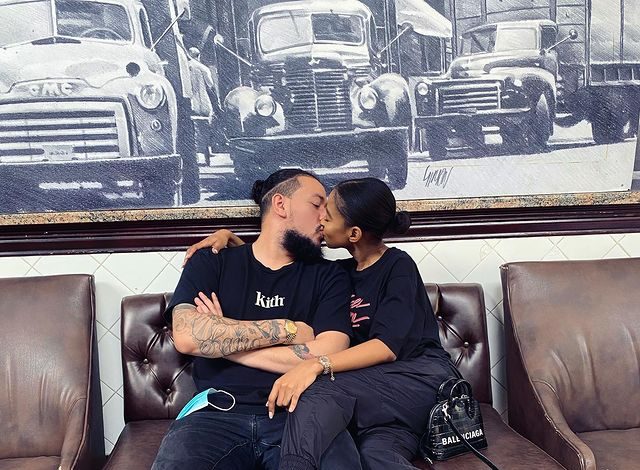
    Rapper AKA has taken the next step and popped the question to girlfriend Nelli Tembe.

    AKA took to Instagram on Monday to announce the exciting news, sharing an image of his future wife’s sparkler with the caption, “21/02/21 – love of my life said Yesssss.”


    View this post on Instagram


    A post shared by AKA (@akaworldwide)

    The pair have been together for over a year but have been relatively private with their relationship. They appear quite loved up, with the musician writing songs Cross My Heart and Mr Perfect about their relationship.


    View this post on Instagram


    A post shared by AKA (@akaworldwide)

    Before Tembe, AKA famously dated presenter and businesswoman Bonang Matheba as well as DJ Zinhle, with whom he shares a child. This is the rapper’s first confirmed engagement.

    Congratulations to the happy couple!

    Picture: Instagram / AKA

    Yes, we know she gave birth to the love of your life but to be perfectly honest, your mother-in-law’s (MIL) antics surely do- at least sometimes- drive you up the wall. Planning your wedding, what with never-ending expenses and countless vendor appointments, can be chaotic enough without her causing drama. When she does, life can be simply too much to handle.

    Like it or not, she’s about to be family so you need to learn how to handle the issues that may come up. Here is some advice.

    Give her some responsibility:

    It’s always nice to involve your MIL in some kind of way. If you know she’s crafty get her to make something, whether it’s wedding favours, a stationery element, a welcome board, etc. If she’s not crafty, think of something you can put her in charge of like placing the name cards on the table or checking that the minister’s on time.

    Even if you know your wedding coordinator is already taking care of this, she won’t know and will still feel that she has an important task. Remember, this is a big day for her as too and most of the time she only means well. She also likes telling her friends what her involvement was on the day.

    It’s also important to communicate from the start how the planning process is going to work and who is in charge of what. Communication is key at all times! Let your MIL know how you feel before a big explosion happens. Tell her that advice is always welcome, but this is your special day and she must please respect your final decisions.

    This is also where a wedding coordinator becomes very handy. Tell your wedding coordinator to relay a message over to your MIL without her knowing the message comes from you.

    The money issue:

    If your MIL is contributing a large amount of money to your wedding, that does not mean you must stand back and let her take over. This day is 100% about you and your fiancé, and later on in life you want to look back on your photos and still be wowed by the amazing day you had. You don’t want to look back and see your MIL’s style on your best day ever.

    To ensure that your wedding is a true reflection of who you and your fiancé are as a couple, you could cut your guest list in half, and have a small and simple wedding for your absolute nearest and dearest, which you can afford to pay for yourselves. Rather do this than have a wedding including things that your MIL wants, yet which you don’t want at all.

    Change of plans:

    If your mother-in-law goes behind your back to arrange or change plans with a wedding vendor, you need to act quickly to end this. Make sure to inform the vendor that you had no knowledge of the order and it was done behind your back, but that they can cancel the order as it’s not going through. Once again: this is where a wedding coordinator comes in handy!

    To prevent this from happening again, let your MIL know that if she sees something or would like something to be at the wedding, she needs to talk to you first. The two of you can then decide together whether it will fit in at your wedding or not.

    Uninvited guests:

    Unfortunately, there is only so much you can do if people were formally invited to your wedding without your permission. To avoid this situation, make sure you and your fiancé are in charge of sending out the wedding invitations.

    If you do find yourself in this predicament it looks worse to uninvite people, so it may be best to inform your wedding coordinator that there are going to be guests who you didn’t know were invited, and they could place these guests at a table right at the back.

    Picture: Pexels

    Want to be smooth and stubble-free come wedding day? If you hate shaving and waxing then laser hair removal may just be for you.

    Laser hair removal is a form of hair removal that uses advanced laser light technology to target the melanin within hair follicles. The laser light is absorbed into the root of the hair and destroys the hair cells, thus stunting regrowth.

    This treatment is considered safe and effective and causes no damage to the surrounding skin. However, as with any procedure it is imperative to do your research before booking your appointments. Here are some things to consider before you make your decision.

    Pros:

    It is a long-lasting hair removal option

    While it is not entirely permanent, laser hair removal forces your hair into a longer state of dormancy than other forms of hair removal like waxing and shaving. It essentially slows down your regrowth which means you will need to remove your hair far less frequently than normal. It also makes the hairs lighter, finer, and fewer in number and thus more easy to manage.

    It is (relatively) painless

    Pain tolerances differ, but many will attest to the fact that laser hair removal is not painful. It feels similar to being tickled and the only discomfort is when the laser head heats up upon occasion, but it is not unbearable at all.

    It lightens discoloured/uneven skin and helps with ingrown hairs

    A major draw for laser hair removal is that it is highly effective in resolving ingrown hairs, as the laser destroys the hair follicle’s ability to produce hair. It also helps to alleviate any skin discoloration often caused by ingrown hairs.

    Cons:

    It is costly

    Out of all the hair removal options, laser hair removal is probably the most expensive. A single session can start from R350-R1000 depending on the area you are targeting. For example, the leg area or the bikini area is typically more expensive than doing your underarms. You also have to multiply the cost by 8 or 12, as that is how many sessions you will need to complete a full course.

    If you do plan on getting laser hair removal, Deluxe Laser in South Africa often offers specials like four for two on all courses, so best capitalise on those to save some coin.

    It takes a while to complete a full course

    While results are visible as soon as the second session, customers typically require eight to 12 sessions to see the full impact. This process works best when your hairs are in the anagen hair growth cycle. However, hairs in any one area are never in this stage simultaneously therefore you need multiple treatments to catch all the hairs in this growth cycle.

    Since sessions are spaced a month apart it can take about a year to complete a course. You must abstain from waxing/sugaring in between these sessions, which may be hard for those who hate shaving.

    You may not be the ideal candidate

    Laser hair removal is ideally suited to people with dark hair. It is less effective on people with lighter hair as the laser cannot target grey, white, red hair and is limited to lightly pigmented hair.

    Picture: Pexels

    Comfort is key during your wedding, and what’s comfier than a pair of sneakers? Bend the rules and rock your favourite pair on your big day

    Wedding sneakers are all the rage right now. You have the option of wearing them all day or styling some dress shoes for the ceremony before swapping out for your favourite sneakers to dance all night long during the reception.

    For an extra special touch, you can even have your sneakers customised to match your suit. Go matchy-matchy with your partner and have ‘husband’ and ‘wife’ or ‘husband’ and ‘husband’ written on the back for an epic picture.

    Check out these awesome gents rocking cool kicks:


    View this post on Instagram


    A post shared by When At Last (@whenatlast)


    View this post on Instagram


    A post shared by Black Wedding (@blackwedding)


    View this post on Instagram


    A post shared by Groove Events (@grooveevents)


    View this post on Instagram


    A post shared by THE WEDDING BLISS (@theweddingbliss)


    View this post on Instagram


    A post shared by 方浩明 Victor Fong (@vfo5)

    Picture: Pexels