• Tag

    wedding planning tips

    Browsing

    Durban knows how to throw a wedding – but if there’s one thing local couples know too well, it’s that weather can change plans faster than a seating chart can. Which is exactly why indoor wedding venues are having a moment.

    From grand ballrooms and elegant blank-canvas spaces to hidden gems that work beautifully for intimate celebrations, indoor venues offer the kind of predictability that still feels magical. Think air-conditioning, backup power, flexible styling and spaces that photograph beautifully regardless of what’s happening outside.

    If you’re venue hunting in Durban and dreaming of a celebration that feels polished, practical and unforgettable, here are some indoor wedding venues worth adding to your shortlist.

    1.  Sky Venue – For city glamour and ocean views

    Perched within Durban’s beachfront hotel strip, this venue is ideal for couples wanting a polished, hotel-style wedding without leaving the city.

    Location: Southern Sun Elangeni & Maharani, Snell Parade, Durban
    Estimated pricing: From approximately R45 000–R90 000+ depending on guest count, catering and package selection
    Best for: Elegant receptions, destination weddings, formal evening celebrations
    Contact: +27 31 362 1300 / [email protected]
    Website:  Southern Sun Elangeni & Maharani

    Why we love it: The indoor setting means uninterrupted celebrations, while the beachfront location delivers that iconic Durban feeling without relying on outdoor weather.

    2. The Stamford – For couples who want a blank canvas

    One of Durban’s more versatile event spaces, this venue works especially well for couples who already have a strong décor vision.

    Location: Greyville, Durban
    Estimated pricing: Around R20 000–R45 000 venue hire (varies by guest count and inclusions)
    Best for: Modern weddings, cultural celebrations, custom décor concepts
    Contact: +27 67 577 9326 / [email protected]
    Website: The Stamford

    Why we love it: Spacious interiors, full air-conditioning and flexibility make this one a strong option for couples wanting to build the wedding around their own aesthetic.

    3. 20 On Barham – For intimate luxury

    If your Pinterest board is filled with understated elegance and garden-party energy (without depending entirely on the outdoors), this Westville favourite deserves attention.

    Location: Westville, Durban
    Estimated pricing: Approximately R35 000–R75 000+ depending on package and guest count
    Best for: Boutique weddings, refined receptions, intimate celebrations
    Contact: +27 31 465 1716 / [email protected]
    Website: 20 On Barham 

    Why we love it: It feels intimate without feeling small – something increasingly popular with modern Durban couples.

    4. The Bond Shed – For industrial-chic weddings

    Warehouse-inspired spaces continue trending and this one delivers a more contemporary wedding atmosphere.

    Location: Point Waterfront, Durban
    Estimated pricing: Around R30 000–R70 000+ depending on setup requirements
    Best for: Editorial-style weddings, contemporary receptions, statement décor
    Contact: +27 63 887 9865 / [email protected]
    Website: The Bond Shed

    Why we love it: High ceilings and a clean architectural backdrop make décor transformations feel dramatic.


    View this post on Instagram


    A post shared by The Bond Shed (@thebondshed_events)

    5. Nour Venues – For modern celebrations with elevated styling

    This venue has been quietly building a reputation among couples wanting a polished indoor setup.

    Location: Durban North
    Estimated pricing: Approximately R25 000–R60 000+ depending on package
    Best for: Nikah celebrations, receptions, contemporary weddings
    Contact: +27 72 677 7770 / [email protected]
    Website: Nour Venues

    Why we love it: It already carries a styled-event feel, which can reduce décor pressure elsewhere in the budget.


    View this post on Instagram


    A post shared by Nour Venues (@nourvenues)

    6. The Venue Shongweni – Shongweni Valley – For couples wanting countryside romance indoors

    Technically outside central Durban but firmly worth the drive.

    Location: 1 Bushbuck Rd Outer West Durban 3701
    Estimated pricing: Approximately R45 000–R85 000+ depending on season and package
    Best for: Couples wanting indoor comfort with scenic surroundings
    Contact: +27 64 908 9556 / [email protected]
    Website: The Venue Shongweni

    Why we love it: It gives destination wedding energy without asking guests to travel too far.

    What Durban couples should ask before booking

    Before paying a deposit, ask:

    • Is backup power included?
    • Is there air-conditioning?
    • Are tables, chairs and staffing included?
    • Is catering in-house or external?
    • What happens in case of weather disruptions?
    • Is setup and breakdown included in venue hire?

    Note: Durban wedding venue pricing changes quickly depending on season, guest count and package inclusions – so treat these as realistic starting estimates and always request a formal quotation before committing.

    Choosing a Space that Holds the Day

    Indoor wedding venues in Durban aren’t just a practical backup plan – they’re what give you control in a city where weather, timelines and logistics don’t always play along. But beyond that, they shape the atmosphere of your entire day.

    The right space won’t just “host” your wedding. It will hold it – the noise, the nerves, the laughter, the soft in-between moments you don’t plan for but remember most.

    So instead of asking which venue is the most impressive, ask which one still feels like you when the room is full, the music is playing, and everything else fades out for a second.

    That’s the one worth booking.

    ALSO SEE: City Chic: The Most Beautiful Urban Wedding Venues Across South Africa 

    City Chic: The Most Beautiful Urban Wedding Venues Across South Africa

    Featured image: Pinterest

    Some wedding regrets are expensive. Others only show up months later when you’re scrolling through your gallery thinking: Wait… did we never take a photo of that?

    Because while everyone remembers the first kiss, confetti toss and dramatic sunset portraits, the photos couples often treasure most are usually the quieter, less obvious moments.

    Wedding photographers consistently say the same thing: couples rarely regret taking too many photos – they regret forgetting the meaningful ones.

    Before you finalise your shot list, save this.

    1. The moment before everything begins

    There’s something cinematic about the anticipation before the ceremony – but more importantly, it captures emotions you won’t recreate later.

    Think:

    • The dress hanging up
    • Your suit being buttoned
    • Final makeup touches
    • Deep breaths
    • Last hugs before walking out

    Those in-between moments often become emotional favourites because they capture who you were before becoming newlyweds.

    2. A photo with every immediate family member (yes, individually)

    This sounds obvious until timelines run tight.

    One of the biggest wedding photo regrets couples report is realising afterward they never got a proper photo with a parent, sibling, grandparent or child.

    Create a short family list beforehand and assign someone to gather people quickly.

    Future you will be grateful.

    3. Your guests arriving and interacting before the ceremony

    You planned the flowers, stationery and seating for months – but the energy before the ceremony often disappears undocumented.

    Capture:

    • Guests greeting each other
    • People reading signage
    • Kids running around
    • Quiet anticipation

    These photos tell the story of the day, not just the highlights.

    4. A full-room photo before guests enter

    Reception styling gets a few minutes of perfection before people sit down.

    Don’t forget:

    • Tablescapes
    • Place settings
    • Candles lit
    • Floral installations
    • Wide-angle room shots

    This is especially important if décor was a major investment.

    5. The reaction photos during your vows

    Most couples focus on getting the kiss.

    The real magic?
    Everyone watching.

    Ask your photographer to capture:

    • Parents’ reactions
    • Friends crying
    • Guests laughing
    • Your partner’s face while you speak

    These often become the most emotional images in the gallery.

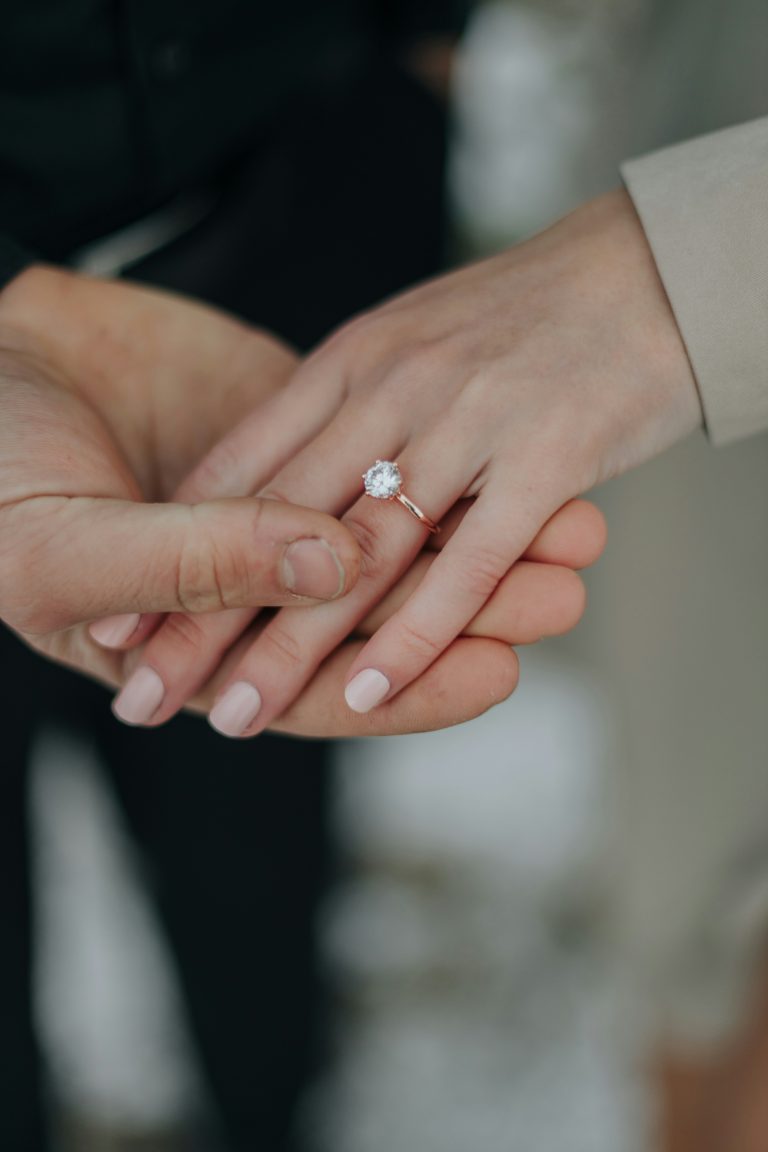
    6. A proper photo of your hands and rings

    Tiny detail. Huge regret.

    Hands appear in more wedding photos than couples realise – and your rings deserve more than one close-up.

    Get:

    • Ring shots before the ceremony
    • Natural hand moments
    • Close-ups during vows

    7. The “we actually got married” just-married moment

    Not posed portraits.

    That first minute after the ceremony.

    The walking.
    The laughing.
    The “did that really just happen?” expression.

    Some photographers call this the emotional exhale – and it often produces the most natural images of the day.

    8. Your outfit from the back

    You’ll probably have dozens of front-facing portraits.

    But details people often forget:

    • Veil length
    • Dress train
    • Suit tailoring
    • Buttons
    • Embellishments

    Especially if you spent months choosing the outfit.

    9. A private couple portrait away from everyone

    Take 10–15 minutes.

    No bridal party.
    No phones.
    No audience.

    Those quieter portraits often feel the most intimate because they capture the only part of the day that truly belongs to the two of you.

    10. Photos with the people who helped make the day happen

    Not vendors – your people.

    The friend who fixed your veil.
    The sibling who held everything together.
    The aunt who coordinated family.
    The parent who quietly carried the stress.

    These photos age beautifully.

    11. Movement shots

    Perfection is overrated.

    Ask for:

    • Walking
    • Twirling
    • Laughing
    • Dancing
    • Running through confetti

    Movement creates photographs that feel lived in instead of staged.

    12. The final photo of the night

    Everyone remembers the entrance. Almost nobody remembers the ending.

    Whether it’s a sparkler exit, empty dance floor, takeaway coffee or one last quiet hug – take one final image.

    Because endings deserve documenting too.

    The takeaway:

    Your wedding gallery shouldn’t just show what your wedding looked like.

    It should remind you what it felt like.

    And the photos couples regret forgetting are almost never the dramatic ones – they’re usually the moments that seemed too ordinary to capture at the time.

    ALSO SEE: 12 South African wedding photographers every couple should know 

    12 South African wedding photographers every couple should know

    Featured image: Isaac Naph / Pexels

    There is something incredibly moving about watching a wedding and realising you are witnessing more than a celebration.

    You are watching inheritance.

    In South Africa, weddings have never simply been about two people falling in love. They’ve always been about family, community, spirituality, identity and belonging. And in a country with 11 official languages, countless cultural lineages and deeply rooted faith traditions, there is no such thing as one “South African wedding.”

    Instead, our weddings are layered.

    A bride might wear a sleek modern gown for one ceremony and traditional attire for another. A couple might sign legal documents in the morning and gather for ancestral blessings that afternoon. One family might dance to amapiano at the reception while another begins celebrations with prayer and tea.

    And while trends come and go (yes, even the rise and fall of champagne towers), some traditions deserve a permanent place at the table.

    Here are the South African wedding traditions worth keeping alive.

    Lobola: Because marriage has always been bigger than two people

    Possibly one of South Africa’s most recognised traditions, lobola (known by different names across cultures) is often misunderstood – especially online.

    Contrary to the tired “buying a bride” narrative, lobola traditionally symbolises respect, gratitude and the formal joining of families. Historically paid in cattle and more commonly negotiated financially today, the process remains deeply symbolic across many South African communities.

    What makes this tradition worth preserving isn’t necessarily the format – it’s the intention.

    The conversations.
    The meeting of families.
    The acknowledgement that marriage creates community.

    Modern couples are adapting the process in ways that feel authentic to them while keeping the spirit intact.

    The art of doing both: Traditional ceremony and white wedding

    If there is one thing South Africans do exceptionally well, it’s refusing to choose.

    Many couples today celebrate both a customary ceremony and a religious or Western-style wedding – sometimes days, weeks or months apart.

    And honestly? There’s something beautiful about that.One day may centre family customs and heritage. The other may focus on personal vows, faith or aesthetics.

    It’s not duplication – it’s layering meaning.

    South African weddings continue proving that tradition and modernity don’t have to compete.

    Umabo: The tradition that reminds us marriage is an arrival, not just a ceremony

    Within Zulu tradition, Umabo remains one of the most visually striking and emotionally meaningful celebrations.

    Traditionally held at the groom’s family home, Umabo symbolises the bride’s formal welcome into her new family and often includes gift-giving, celebration, singing and ceremonial rituals that acknowledge both families and ancestry.

    In a world obsessed with aesthetics, Umabo reminds us that symbolism still matters.

    Nikah ceremonies and faith-led beginnings

    South African Muslim weddings continue to show that elegance and meaning can exist in the same space.

    A Nikah (Islamic marriage ceremony) centres consent, witnesses, a marriage contract and spiritual intention. While celebrations vary across Cape Malay, Indian Muslim and broader Muslim communities in South Africa, hospitality, family involvement and intentional gathering remain central.

    Many couples today are beautifully blending heritage details with contemporary wedding design – proving that faith-led weddings never have to feel outdated.

    Mehndi nights, colour and pre-wedding celebration

    Across many South African Indian weddings (whether Hindu, Muslim or culturally blended celebrations), pre-wedding traditions remain incredibly alive.

    Think:

    • Mehndi (henna) ceremonies
    • Music-filled family evenings
    • Gifting rituals
    • Multiple outfit changes (arguably one of humanity’s greatest inventions)

    These gatherings create something modern weddings often loose: anticipation.

    The wedding becomes more than one event.
    It becomes a season.

    Family blessings and elder involvement

    Across cultures and religions in South Africa – whether Christian, Muslim, Hindu, African customary traditions or mixed-faith weddings – one thing appears again and again: Elders matter.

    • Blessings
    • Advice
    • Prayers
    • Being formally welcomed

    There is something deeply grounding about recognising the people who helped shape you before stepping into marriage.

    It doesn’t need to look traditional to carry meaning.

    Traditional dress changes (because one look is rarely enough)

    South African weddings understand something the rest of the world is only starting to catch onto:

    the outfit change is part of the storytelling.

    From Xhosa beadwork and Umbhaco influences to Ndebele patterns, Sotho blankets, Indian bridalwear, Cape Malay influences and contemporary African couture – changing into cultural attire isn’t just a fashion moment.

    It’s identity made visible.

    Dancing that feels like celebration – not performance

    South Africans don’t arrive quietly.

    Whether it’s ululation, coordinated entrances, cultural dance traditions, spontaneous singing or an entire family treating the reception like a live concert, movement remains part of the language of celebration.

    And maybe that’s one tradition we should protect at all costs.

    Not every wedding needs choreography, But every wedding deserves joy.

    Final thoughts

    If there’s one thing South African weddings continue to teach us, it’s this: Tradition doesn’t survive because people preserve it exactly as it was.

    It survives because people keep finding new ways to mean it, and perhaps that’s the real tradition worth keeping alive.

    ALSO SEE: Thank-you gifts: outdated tradition or wedding must-have? 

    Thank-you gifts: outdated tradition or wedding must-have?

    Featured image: Pinterest

    For years, wedding colour palettes played it safe – endless beige, muted blush and “timeless neutrals” that started blending into one another.

    But this season? Couples are bringing colour back.

    Not in a loud, chaotic way – but in a richer, more intentional way. Wedding palettes are becoming warmer, moodier and more personal, with couples choosing colours that create atmosphere rather than simply match décor.

    If you’re planning your big day (or building a Pinterest board that changes weekly), these are the wedding colours set to dominate the season.

    1. Sage green & soft stone: the new neutral

    If there’s one colour refusing to leave the wedding group chat, it’s sage green.

    But this season’s version feels more elevated than the sage-overload of previous years. Instead of pairing it with crisp white and stopping there, couples are layering tonal greens with warm stone, ivory, oatmeal and textured natural finishes.

    Think:

    • Organic floral installations
    • Linen-heavy tablescapes
    • Garden-inspired ceremonies
    • Bridesmaid dresses in mixed green tones
    • Soft candlelight over high-contrast décor

    The result? Romantic without trying too hard.

    WeddingETC tip: Add antique gold accents and layered florals to keep sage from feeling overdone.

    1. Butter yellow: the unexpected bridal favourite

    Soft yellow is quietly becoming the cool-girl wedding colour of the season.

    Butter yellow sits somewhere between classic cream and playful pastel — warm, optimistic and surprisingly elegant. Brides are using it for florals, bridesmaid dresses, stationery and sunset receptions.

    It works especially beautifully for:

    • Summer weddings
    • Coastal celebrations
    • Garden venues
    • Modern editorial aesthetics

    Pair it with ivory, champagne, soft olive or muted blue for a polished finish.

    WeddingETC tip: If full yellow feels intimidating, introduce it through florals, menus or reception details instead.

    1. Cherry red & deep burgundy: romance gets dramatic

    After years of whisper-soft palettes, bold reds are making a serious comeback.

    Not bright Valentine’s Day red – think cherry, merlot, oxblood and rich burgundy.

    This palette creates depth instantly and photographs beautifully, especially in candlelit spaces.

    Where we’re seeing it:

    • Bridal bouquets
    • Statement floral runners
    • Velvet details
    • Fashion-forward bridesmaid looks
    • Luxe black-and-red receptions

    WeddingETC tip: Balance rich reds with cream, espresso or soft pink instead of stark white.

    1. Mocha mousse & warm earth tones

    Warm browns are officially having their wedding moment.

    Influenced by the rise of earthy luxury and fashion’s obsession with edible-inspired tones, mocha, caramel, terracotta and mushroom neutrals are becoming the sophisticated alternative to grey and cool taupe.

    This palette feels:

    • Expensive without being flashy
    • Modern but timeless
    • Minimal while still feeling warm

    Perfect for:

    • Destination weddings
    • Autumn celebrations
    • Editorial city weddings
    • Couples who want neutral without looking plain

    WeddingETC tip: Mix matte textures with glass and metallic finishes to stop earth tones from falling flat.

    1. Jewel tones: colour with confidence

    Minimalism isn’t disappearing – but maximalist colour is definitely pushing back.

    Emerald, deep plum, sapphire and forest green are showing up in layered, luxurious wedding design.

    Instead of using one statement shade, couples are building full colour stories with contrast and texture.

    Expect to see:

    • Saturated florals
    • Coloured glassware
    • Tonal bridesmaid styling
    • Dramatic evening receptions

    WeddingETC tip: Keep the venue neutral and let colour do the heavy lifting.

    The takeaway?

    This season’s wedding colours aren’t about following one aesthetic.

    They’re softer where needed, bolder where it counts and rooted in personality over perfection.

    Translation: if your dream palette isn’t trending yet – use it anyway.

    ALSO SEE: Wedding Fashion: Mini Dresses, Gender‑Neutral Looks & Bold Colour 

    Wedding Fashion: Mini Dresses, Gender‑Neutral Looks & Bold Colour

    Featured image: Eugenia Remark / Pexels

    For years, bridal nails have lived in a very specific world: pale pink, soft nude, maybe a French tip if you’re feeling adventurous.

    And while there’s nothing wrong with a classic manicure, today’s brides are proving that timeless doesn’t have to mean predictable.

    Wedding beauty in 2026 is leaning into something far more interesting: elevated details, subtle texture, thoughtful colour and nail designs that still feel elegant in photos years later. Think pearl embellishments, luminous finishes, rich reds and modern takes on old favourites.

    If “your nails but better” feels a little too safe for your wedding day, these are the bridal nail trends worth saving.

    1. Pearl details are the bridal upgrade everyone wants

    If one trend is quietly dominating bridal beauty right now, it’s pearls.

    Not oversized embellishments or full 3D nail art – but delicate pearl accents placed intentionally. A single pearl at the cuticle. Tiny scattered micro-pearls. A pearl-lined French tip.

    It feels romantic, luxurious and bridal without trying too hard.

    The beauty of pearl nails is that they work across aesthetics: old-money elegance, coastal weddings, modern city ceremonies or soft romantic garden celebrations.

    Try:

    • Milky nude base + one pearl accent per hand
    • Micro pearls on French tips
    • Pearl clusters on ring fingers only
    • Sheer blush base with scattered pearl detailing

    Styling note: Pair with pearl jewellery or satin textures for a beautifully cohesive finish.

    1. Red bridal nails are officially back (and they look expensive)

    This is your sign to stop assuming bridal nails have to be pale.

    Classic red is quietly making its way back into bridal beauty – and honestly? It makes sense.

    Red nails instantly create contrast against white gowns, photograph beautifully with rings and bouquets, and feel unexpectedly sophisticated.

    The trick is choosing the right red.

    Skip:

    • Neon reds
    • Heavy glitter
    • Overly bright cherry tones

    Instead look for:

    • Deep tomato red
    • Soft ruby
    • Cherry lacquer
    • Jelly red finishes
    • Blue-based classic reds

    Short almond or soft squoval shapes keep the look elegant rather than dramatic.

    Especially beautiful for winter weddings, heritage ceremonies or brides wanting a touch of fashion energy.

    1. Glazed pearl nails have replaced high-shine chrome

    Remember the ultra-reflective glazed donut era?

    Bridal versions have softened.

    Now it’s all about pearlescent finishes layered over sheer pinks, milky whites and champagne tones. The result is luminous rather than metallic – almost like silk catching light.

    It’s subtle enough to remain timeless but gives your nails dimension in close-up wedding photos.

    Ask your nail artist for:
    “Soft pearl chrome over a sheer milky base.”

    Trust us – the difference is stunning.

    1. Modern French tips (without the bridal cliché)

    French manicures never actually disappeared – they just got better.

    This season’s versions feel softer, cooler and far less obvious.

    Trending updates include:

    • Micro French tips
    • Ombré French (“frombré”)
    • Champagne French edges
    • Soft white veil finishes
    • Reverse French detailing

    The result feels polished but doesn’t scream traditional bridal manicure.

    1. Sculptural details are replacing heavy nail art

    Brides still want detail – but cleaner.

    Instead of crystals and maximalism, we’re seeing subtle dimension:

    • Raised gel swirls
    • Tiny floral detailing
    • Velvet textures
    • Tone-on-tone sculptural accents
    • Barely-there 3D effects

    Think texture you notice up close – not from across the room.

    Because sometimes elegance isn’t about less – it’s about choosing details that feel intentional.

    Final thoughts

    Your wedding nails don’t need to disappear into the background.

    Minimal can still have personality. Classic can still feel current.

    Whether that means a pearl moment, a glossy bridal red or a soft chrome finish, the best bridal nails right now all have one thing in common: they still look like you – just dressed up for the occasion.

    ALSO SEE: Nail inspo for the minimalist bride: Elegant trends we’re loving right now   

    Nail inspo for the minimalist bride: Elegant trends we’re loving right now

    Featured image: rangga ispraditya / Pexels

    Finding the one is one of the most exciting parts of wedding planning – but for many brides, the search for the perfect wedding dress can also feel overwhelming. Between boutique appointments, fittings, budgets and timelines, it’s no surprise that more brides are looking beyond traditional bridal stores.

    Buying a wedding dress online has become increasingly popular, offering brides access to thousands of styles, international designers and more affordable options. But while the convenience is tempting, ordering your dream gown from a screen comes with its own set of considerations.

    So, should you buy your wedding dress online? Here’s everything you need to know before clicking “add to cart”.

    The pros of buying your wedding dress online

    1. It can be more budget-friendly

    One of the biggest reasons brides consider buying online is cost. Online retailers often have lower overheads than traditional bridal boutiques, which can mean more affordable gowns.

    For brides working with a specific budget, online shopping can open the door to styles that may have been out of reach in-store – from minimalist satin gowns to detailed lace designs.

    However, remember that the listed price is not always the final price. Factor in possible import duties, shipping fees, alterations and professional steaming before comparing costs.

    2. More variety & access to global styles

    Shopping online means you are no longer limited to the designers or styles available locally. Brides can browse thousands of gowns from international retailers, independent designers and made-to-order brands.

    Whether you’re searching for a modern wedding dress, a vintage-inspired gown, a destination wedding look or something completely unique, online platforms offer endless inspiration.

    3. You can shop from the comfort of your home

    Wedding planning is already a busy process. Between venue decisions, guest lists and vendor meetings, finding time for multiple bridal appointments can be challenging.

    Online shopping allows brides to explore options at their own pace, save favourites and compare styles without the pressure of making a decision during a boutique appointment.

    4. It’s easier to find non-traditional options

    Not every bride dreams of a traditional ball gown. Online shopping has made it easier to find fashion-forward options, including sleek slip dresses, short wedding dresses, bridal separates and modern designs.

    For brides wanting something different (or even a second outfit for the reception) – online retailers can be a great place to explore.

    The cons of buying your wedding dress online

    1. You can’t try it on before buying

    The biggest challenge with buying online is the unknown.

    A dress may look perfect in photos but feel completely different when it arrives. Fabric quality, colour, structure, fit and finishing details can be difficult to judge through a screen.

    A wedding dress is also a garment that relies heavily on fit – and even small differences in measurements can affect how the gown sits.

    2. Sizing can be complicated

    Wedding dress sizing often differs from everyday clothing sizes, and international sizing charts can vary significantly.

    Always check the brand’s measurement guide carefully and compare your measurements against their chart rather than relying on your usual dress size.

    It’s also worth remembering that most brides will need alterations, whether they purchase online or from a boutique.

    3. Alterations may be necessary (and they can add up)

    A gown arriving in your size does not always mean it will fit perfectly.

    Common alterations include:

    • Adjusting the length
    • Taking in or letting out the bodice
    • Adding support
    • Adjusting straps or sleeves
    • Reshaping certain areas for a better fit

    For more complex gowns, alterations can become a significant additional cost – so include this in your wedding budget from the beginning.

    4. Returns may be difficult

    Before ordering, always read the return policy carefully.

    Some online bridal retailers do not accept returns on made-to-order gowns, personalised dresses or items that have been altered.

    If the dress arrives and it is not what you expected, you need to know what options you have before committing.

    If you decide to buy your wedding dress online

    1. Order early

    Unlike buying a dress off the rack, online gowns can involve production and shipping times.

    Give yourself enough time for:

    • Delivery delays
    • Customs/import processes
    • Alterations
    • Unexpected changes

    Ideally, avoid leaving your wedding dress purchase until the last minute.

    2. Research the seller thoroughly

    Before buying, look beyond the beautiful photos.

    Check:

    • Verified customer reviews
    • Real bride photos
    • Fabric details
    • Return policies
    • Shipping information
    • Company reputation

    A dress with thousands of likes is not necessarily a dress with thousands of happy brides.

    3. Request fabric samples if possible

    If the retailer offers fabric samples, take advantage of this.

    Seeing and feeling the material can help you understand the quality before committing to the full gown.

    4. Don’t ignore alterations

    Even if the dress looks perfect online, budget for professional alterations.

    A skilled bridal seamstress can often transform a good dress into one that feels custom-made for you.

    5. Be careful with unrealistic expectations

    One of the biggest mistakes brides make is expecting a budget online gown to look identical to a designer runway piece.

    Pay attention to the details:

    • Fabric type
    • Construction
    • Boning and structure
    • Beading quality
    • Lining
    • Finishing

    The more realistic your expectations, the happier you’ll be with your choice.

    So, is buying a wedding dress online worth it?

    For the right bride, absolutely.

    Buying online can be a fantastic option if you are budget-conscious, comfortable with some uncertainty and willing to allow time for alterations.

    However, if trying on dresses, experiencing the boutique moment and having expert guidance are important parts of your bridal journey, a traditional appointment may still be the better choice.

    At the end of the day, your wedding dress should not only look beautiful – it should make you feel confident, comfortable and completely yourself when you walk down the aisle.

    Whether you find it hanging in a bridal boutique or arrive at your door in a carefully packaged box, the perfect dress is the one that feels like you.

    ALSO SEE: How wedding dress trends have changed through the decades 

    How wedding dress trends have changed through the decades

    Featured image:  Kindel Media / Pexels

    One of the first questions many brides ask after setting a wedding date is surprisingly simple: When should I start shopping for my wedding dress?

    The answer? Probably sooner than you think.

    While it may be tempting to leave dress shopping until closer to the big day, modern bridal fashion operates on timelines that can stretch for months. Between finding the one, ordering, shipping, fittings and alterations, a wedding gown often takes far longer to arrive than brides expect. Industry experts generally recommend beginning the process between 9 and 12 months before the wedding, with some designer and custom gowns requiring even longer lead times.

    The good news? Knowing the timeline upfront can help you avoid unnecessary stress and make the dress-shopping experience far more enjoyable.

    The Ideal timeline: 12 months before the wedding

    If your wedding is a year away, you’re in the sweet spot.

    Starting your search around the 12-month mark gives you plenty of time to explore different silhouettes, visit bridal boutiques, compare designers and make decisions without feeling rushed. It also allows for production delays, shipping times and alterations that may arise later in the process. Experts increasingly recommend shopping between 12 and 18 months before the wedding, especially if you’re considering a designer gown, customisations or a made-to-order dress.

    At this stage, focus on inspiration, budgeting and understanding what styles make you feel most confident.

    9–10 months before: Time to say yes to the dress

    Once you’ve found your gown, aim to place your order around 8 to 10 months before the wedding. Most made-to-order dresses require several months for production and delivery, with many designers quoting lead times of four to six months or longer.

    Ordering within this window ensures you’ll have access to a wider range of styles, sizes and customisation options while avoiding costly rush fees.

    2–3 months before: Alterations begin

    Even the most perfectly chosen dress usually needs some tailoring.

    Most bridal alteration specialists recommend beginning fittings approximately eight to ten weeks before the wedding. This allows enough time for adjustments to hems, bodices, sleeves, trains and bustles, as well as multiple fitting appointments if necessary.

    Remember to bring your wedding shoes and undergarments to every fitting to ensure the final result is flawless.

    What if your wedding is less than six months away?

    Don’t panic.

    While a shorter timeline may limit your options, many brides successfully find beautiful gowns with just a few months to spare. Off-the-rack dresses, sample sales, ready-to-wear collections and certain local designers can often accommodate tighter deadlines. Some retailers also offer expedited production services, although additional fees may apply.

    The key is to be upfront about your wedding date from your very first appointment so consultants can guide you toward realistic options.

    Trends are changing how brides shop

    Today’s brides are approaching dress shopping differently than previous generations. Personalisation, versatility and sustainability are shaping bridal fashion in 2026, with many brides opting for convertible gowns, detachable elements, vintage-inspired pieces and even pre-loved dresses. Others are choosing multiple outfits for different parts of the celebration, from the ceremony to the after-party.

    These choices can affect your timeline too, making early planning even more valuable.

    Your wedding dress timeline at a glance

    12–18 months before: Start researching styles and booking bridal appointments.
    9–12 months before: Choose and order your dress.
    8–10 weeks before: Begin alterations and fittings.
    1–2 weeks before: Final fitting and collection.
    Wedding Day: Step into your dream dress with confidence.

    The final stitch

    Finding your wedding dress should feel exciting, not stressful. By starting early, you give yourself the freedom to explore, dream and make decisions without pressure. Whether you’re falling for a couture masterpiece, a modern minimalist gown or a vintage-inspired treasure, the best dress is the one that makes you feel unmistakably like yourself.

    And when it comes to timing? The earlier you start, the more options you’ll have waiting at the end of the aisle.

    ALSO SEE: Practical tips to find your perfect wedding gown 

    Practical tips to find your perfect wedding gown

    Featured image: Los Muertos Crew / Pexels

    For decades, wedding parties followed a familiar formula: bridesmaids stood beside the bride, groomsmen stood beside the groom, everyone wore matching outfits, and the numbers on each side were perfectly balanced.

    Today, that picture looks very different.

    Modern couples are increasingly choosing wedding parties that reflect their real relationships rather than tradition. From mixed-gender bridal parties and uneven numbers to “bridesmen”, “groomswomen” and even no bridal party at all, wedding celebrations are becoming more personal, inclusive and authentic than ever before. Industry experts note that couples are placing greater emphasis on meaningful connections and less on following outdated wedding rules.

    Why couples are moving away from tradition

    At the heart of the trend is a simple idea: people want the people they love most standing beside them, regardless of gender, titles or expectations.

    As weddings become more personalised, couples are questioning long-standing traditions that no longer fit their lives. Rather than choosing attendants based on convention, they’re choosing them based on genuine support, friendship and family bonds. This shift has contributed to the growing popularity of mixed-gender wedding parties and alternative attendant roles.

    For many couples, it also removes unnecessary pressure. The expectation of matching numbers, identical outfits and rigid bridal party duties can feel restrictive in an era where individuality is celebrated.

    Bridesmen, groomswomen and mixed-gender wedding parties

    One of the most visible changes is the rise of mixed-gender wedding parties.

    It’s becoming increasingly common to see a bride’s brother serving as her “Man of Honour” or a groom’s sister standing beside him as his “Best Woman”. Couples are choosing the people who matter most to them instead of assigning roles based on gender.

    The result often feels more genuine and representative of modern friendships and family dynamics.

    Styling these wedding parties has also evolved. Rather than forcing everyone into matching attire, many couples are creating cohesive looks through colour palettes, fabrics or accessories while allowing each person to wear something that suits their personality and comfort level.

    The decline of perfectly matching bridal parties

    The era of identical bridesmaid dresses and uniform groomsmen attire is steadily fading.

    Wedding planners report that couples are gravitating towards a more editorial, fashion-forward aesthetic that allows attendants to express their individual style. Instead of everyone wearing the same outfit, bridal parties are often dressed in complementary colours, varying silhouettes or coordinated textures.

    The trend not only creates more visually interesting wedding photos but also helps attendants feel comfortable and confident throughout the day.

    Smaller bridal parties are becoming the norm

    Another major shift is the move towards smaller wedding parties.

    According to recent wedding industry reporting, bridal parties have become noticeably smaller as couples seek to reduce costs, simplify logistics and focus on their closest relationships. Wedding professionals say today’s couples are less concerned with large entourages and more interested in creating meaningful experiences.

    Smaller bridal parties can also ease the financial burden often associated with being a bridesmaid or groomsman, from attire and travel costs to pre-wedding celebrations.

    The rise of the “no bridal party” wedding

    Perhaps the boldest departure from tradition is the growing number of couples who are skipping the bridal party entirely.

    Wedding planners have identified the “no wedding party” approach as one of the most significant wedding trends in recent years. Rather than having attendants stand beside them during the ceremony, couples are inviting their closest friends and family to participate in other meaningful ways throughout the celebration.

    Friends may still join the couple while getting ready, participate in speeches, witness the marriage licence or feature in special photographs, but without the formal titles and responsibilities traditionally associated with bridesmaids and groomsmen.

    For some couples, this approach creates a more intimate atmosphere while eliminating the stress of choosing who makes the cut.

    What this trend says about modern weddings

    The rise of non-traditional bridal parties reflects a broader shift happening across the wedding industry.

    Couples are increasingly prioritising authenticity over obligation. Whether that means having a bridesman, a groomswoman, mismatched attire, uneven numbers or no bridal party at all, today’s weddings are less about following a prescribed formula and more about telling a personal story.

    Ultimately, the most memorable weddings aren’t defined by tradition. They’re defined by the people who stand beside you – whatever title they happen to have.

    WeddingETC’s take

    If there’s one wedding trend that’s here to stay, it’s personalisation. Non-traditional bridal parties allow couples to celebrate the relationships that have genuinely shaped their lives, rather than squeezing those relationships into outdated categories.

    Whether you’re planning a mixed-gender wedding party, choosing a single best friend to stand beside you or skipping attendants altogether, the modern approach is refreshingly simple: make the day feel like yours.

    ALSO SEE: Standing by Her Side: The Role of the Maid of Honor & Bridesmaids 

    Standing by Her Side: The Role of the Maid of Honor & Bridesmaids

    Featured image: Francisco Sanchez / Pexels

    A beautiful wedding day doesn’t happen by chance. Behind every seamless ceremony, perfectly timed sunset photo, and packed dance floor is one thing most guests never see: a well-planned wedding timeline.

    While it may not be the most glamorous part of wedding planning, your timeline is the framework that keeps everything moving smoothly. It ensures vendors know where to be, gives your photographer enough time to capture key moments, and helps you stay present rather than worrying about what’s happening next.

    The good news? Building a wedding timeline doesn’t have to be complicated.

    Start with the non-negotiables

    Before you schedule anything else, identify the fixed points of your day. These are the moments that can’t easily move and will form the backbone of your timeline.

    These typically include:

    • Ceremony start time
    • Venue access time
    • Reception start time
    • Dinner service
    • Sunset (especially for outdoor weddings and golden-hour portraits)
    • Venue closing time

    Wedding planners recommend building your timeline around these anchor points first before filling in the details. This approach creates a realistic framework rather than trying to squeeze important moments into an already crowded schedule.

    Work backwards from the ceremony

    One of the biggest mistakes couples make is underestimating how long getting ready actually takes.

    Hair and makeup are often the first events to run behind schedule, which can create a domino effect throughout the day. Experts recommend building your morning timeline by working backwards from the ceremony and allowing extra time for delays.

    For example, if your ceremony begins at 3pm:

    • 2:30pm – Arrive at venue
    • 2:00pm – Get dressed
    • 12:00pm – Hair and makeup
    • 11:00am – Photographer arrives for detail shots
    • 10:00am – Wedding party preparations begin

    Starting earlier than you think you need to, creates breathing room and helps keep the morning calm.

    Decide whether you’re having a first look

    A first look can significantly impact your timeline.

    For couples choosing a first look, many portraits, bridal party photos, and even some family photos can happen before the ceremony. This often means spending more time with guests during cocktail hour instead of disappearing for photographs.

    If you’re skipping the first look, you’ll need to reserve additional time immediately after the ceremony for:

    • Couple portraits
    • Family formals
    • Bridal party photographs

    This can take anywhere from 60 to 90 minutes depending on the size of your wedding party and family.

    Schedule photography with intention

    Photography often determines the flow of the entire day.

    Professional photographers consistently advise couples to discuss timelines well in advance and ask exactly how much time is needed for:

    • Couple portraits
    • Family photographs
    • Bridal party images
    • Detail shots
    • Sunset portraits

    Rather than guessing, let your photographer guide these timing decisions. They know how long each session realistically takes and can help prevent rushed photos or missed moments.

    Don’t forget golden hour, either. The hour before sunset offers some of the most flattering natural light of the day and is worth reserving 10 to 15 minutes for if possible.

    Build buffer time into everything

    If there’s one piece of advice nearly every planner and photographer agrees on, it’s this: add buffer time.

    A timeline without flexibility leaves no room for reality.

    Hair and makeup may run late. A family member may be hard to find for photos. Traffic might take longer than expected. Small delays are normal, but buffer time prevents them from affecting the rest of the day.

    As a general rule:

    • Add 15 to 30 minutes between major events
    • Add extra travel time between locations
    • Allow additional time for family portraits
    • Schedule short breaks for touch-ups, refreshments, and regrouping

    Think of buffer time as insurance for your timeline.

    Keep your reception flowing

    Most successful receptions follow a natural rhythm that keeps guests engaged while allowing plenty of time for celebrating.

    A typical reception flow includes:

    1. Cocktail hour
    2. Grand entrance
    3. First dance
    4. Dinner service
    5. Speeches and toasts
    6. Parent dances
    7. Cake cutting
    8. Open dancing
    9. Late-night snack or send-off

    While every couple will customise this order to suit their celebration, having a clear structure helps vendors coordinate seamlessly behind the scenes.

    Share the timeline with everyone

    Your timeline only works if everyone has it.

    At least two weeks before the wedding, distribute a final version to:

    • Photographer
    • Videographer
    • Planner or coordinator
    • Caterer
    • Florist
    • DJ or band
    • MC
    • Bridal party

    When everyone is working from the same schedule, communication improves and the day runs far more smoothly.

    The bottom line

    The best wedding timelines aren’t packed down to the minute. They’re realistic, flexible, and designed around your priorities.

    Start with your non-negotiable moments, build backwards, trust your vendors’ expertise, and leave plenty of room for the unexpected. When the logistics are taken care of, you’ll be free to focus on what truly matters: celebrating one of the most meaningful days of your life.

    ALSO SEE: 5 Ways to practice self care while planning your wedding

    5 Ways to practice self care while planning your wedding

    Featured image: www.kaboompics.com / Pexels

    Winter weddings have a way of feeling like they belong in a storybook. There’s a quiet kind of magic to the season that’s difficult to replicate at any other time of year. It invites people to slow down, draw closer and savour each moment a little more deeply. While summer celebrations often steal the spotlight, winter offers something softer and undeniably romantic – the kind of beauty that lingers long after the day has passed.

    The setting plays an important role in creating this atmosphere. Across South Africa, many venues find that winter naturally lends itself to a more intimate style of celebration, with indoor spaces, crackling fireplaces and cosy gathering areas encouraging guests to spend more time together.

    One of the most beautiful things about a winter wedding is how it naturally brings people closer. Guest lists often feel more intentional and personal, creating a sense that every person in the room truly matters. In that closeness, something special happens. Conversations linger longer, laughter feels warmer and shared moments become even more meaningful. It’s not about scale; it’s about presence. Every embrace, every glance and every toast feels more heartfelt because nothing is rushed.

    Indoor ceremony spaces also take on added significance during winter weddings. The contrast between the cold outdoors and a warm, welcoming interior creates a sense of intimacy that encourages guests to be fully present during the ceremony. There is a comforting feeling of enclosure, as though the world outside has gently faded away. The focus shifts inward – to the couple, the vows being exchanged and the people gathered to witness a deeply personal moment.

    Beyond the wedding day itself, accommodation can play an important role in shaping the overall experience. Rather than guests arriving for a few hours and heading home, overnight stays allow celebrations to unfold at a gentler pace. Families and friends have more time to connect, whether over a relaxed breakfast, a stroll through the gardens or a late-night conversation long after the formalities have ended.

    This growing preference for wedding weekends has made destination venues particularly appealing, especially in winter when the focus naturally shifts towards comfort, connection and shared experiences. In the KwaZulu-Natal Midlands, Granny Mouse Country House & Spa offers exactly this sense of retreat, with accommodation that allows couples and their guests to settle in and truly savour the occasion rather than rush through it.

    There is also a certain romance in the slower pace of winter. Without the pressure of long daylight hours or outdoor scheduling, everything feels a little softer. The day unfolds gently, allowing couples to absorb each moment as it comes. There is space to pause before walking down the aisle, to breathe in the stillness before saying “I do”, and to hold onto each second just a little longer.

    Ultimately, winter weddings are not about grand gestures or extravagant displays. They are about connection. About closeness. About the kind of romance that doesn’t need to be loud to be unforgettable. With its combination of cosy interiors, countryside surroundings and charming accommodation, Granny Mouse Country House & Spa is one example of how winter weddings can transform a special day into a memorable shared experience.

    To find out more, contact the team at [email protected] and start planning your perfect winter wedding celebration.

    ALSO SEE: Wow-worthy winter wedding dresses

    Wow-worthy winter wedding dresses

    Feature image and information supplied by MyWord PR & Communications.