Few wedding decisions spark debate quite like the kid-free wedding conversation. For some couples, an adults-only celebration feels obvious. For others, the idea comes with guilt, pressure or the fear of upsetting family members.
And honestly? Neither side is wrong.
Modern weddings are becoming increasingly intentional, with couples prioritising atmosphere, budget and personal experience over tradition for tradition’s sake. That shift has made child-free weddings far more common – and far more socially acceptable than they once were. But just because it’s acceptable doesn’t mean it’s automatically right for your wedding.
The real question isn’t “Will people be offended?”
It’s: What kind of celebration are you actually trying to create?
Be honest about the vibe you want
A formal black-tie reception with candlelit tables, flowing champagne and a dance floor that carries into the early hours feels very different to a relaxed family-centred garden wedding where children running barefoot through the grass adds to the charm.
Neither is superior. They’re simply different experiences. Many couples opt for adults-only weddings because they want:
- A quieter ceremony
- A more elevated or formal atmosphere
- A late-night party environment
- Fewer logistical complications
- A smaller guest count
- More flexibility in the budget
And realistically, children do affect the flow of a wedding day. Crying during vows, early guest departures, overwhelmed parents and venue restrictions are all practical considerations – not personal attacks on parenthood.
At the same time, if your dream wedding centres around family, community and generational connection, excluding children may leave the celebration feeling emotionally incomplete. This decision is less about etiquette and more about alignment.
Your budget matters more than people admit
Weddings in 2026 are trending toward intentional guest lists and more intimate experiences. And the reality is: children still count toward catering, seating, venue capacity and staffing.
When you’re paying premium per-head costs, adding 20 children can significantly impact your budget – sometimes at the expense of inviting other adults you genuinely want there. That doesn’t make you selfish. It makes you financially aware.
Couples are increasingly moving away from the pressure to accommodate everyone equally, especially when they’re funding weddings themselves. Still, if many of your VIP guests are parents of young children, a child-free wedding may also mean more declined invitations. That’s the trade-off many couples underestimate.
You cannot ask people to leave their children behind and resent them for being unable to attend. Both things have to coexist fairly.
Consider your venue before making the decision
Sometimes the venue decides for you. Luxury estates, wine farms, rooftop venues and smaller boutique spaces often aren’t particularly child-friendly to begin with. Think open water features, breakable décor, steep staircases or receptions designed entirely around adult dining experiences.
On the flip side, destination weddings and weekend weddings can become difficult for parents if childcare options are limited. The most practical approach is to assess:
- Safety
- Space
- Timing
- Noise levels
- Accessibility
- Whether children would realistically enjoy the experience
Because children being invited and children having a good time are not necessarily the same thing. Ironically, many kids don’t even enjoy adult-heavy weddings unless there are activities or other children around.
There’s also a middle ground
A kid-free wedding doesn’t have to mean an anti-child wedding.
Many couples are now choosing hybrid approaches, including:
- Children at the ceremony only
- Immediate family children only
- Babies under 1 allowed
- Kids invited until a certain hour
- On-site childcare or kids’ tables
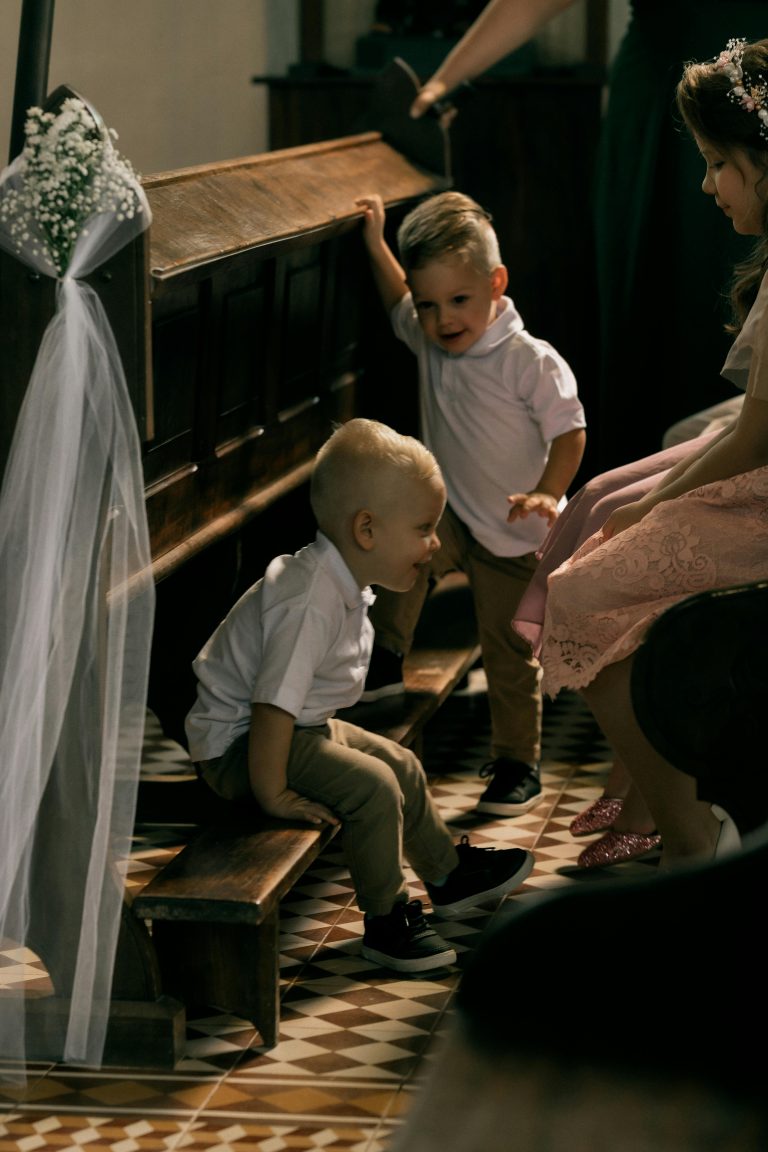
- Flower girls and ring bearers included, but no additional children
This tends to work best when the boundaries are clear and consistently applied. Because once exceptions start appearing randomly, things can get messy fast.
The biggest mistake couples make? Avoiding clarity
If you decide to go child-free, own the decision politely and confidently. Don’t bury it in tiny invitation text. Don’t make guests guess. And definitely don’t change the rules midway through planning because you feel pressured.
Clear communication matters far more than perfection.
Modern wedding etiquette increasingly supports adults-only weddings when they’re communicated respectfully. But guests are also allowed to decline if childcare, travel or finances make attendance difficult.
That’s not disrespect either. A wedding invitation is not a summons.
So… is a kid-free wedding right for you?
If your ideal wedding feels intimate, editorial, late-night, highly curated or adult-focused, then yes – a child-free celebration may genuinely suit your vision.
If your happiest moments involve big family tables, children dancing badly to ABBA and cousins running around while aunties gossip near the dessert table, then including kids may actually make the day feel more like you.
The answer isn’t hidden in etiquette trends or internet debates. It’s in whether the atmosphere you’re creating reflects your relationship honestly.
Because the best weddings (kid-free or not) are the ones that feel intentional rather than performative.
ALSO SEE: Kid-friendly wedding favours little ones will love
Featured image: Alexander Mass / Pexels