• Tag

    wedding gown

    Browsing

    Wedding dresses have always been a reflection of their time. Bridal fashion has shifted with culture, politics, and pop-culture icons shaping what brides wear down the aisle. Here’s how the look of “the modern bride” has evolved decade by decade.

    1920s: Flapper-inspired glamour and beaded detail

    The 1920s bride embraced freedom in silhouette and movement. Waistlines dropped, fabrics softened, and dresses took on a loose, straight shape that felt modern for the time.

    Intricate beadwork, embroidery, and lace detailing defined the era, adding texture and elegance. Brides often completed the look with statement headpieces (think tiaras, floral accents, and decorative hairpins), usually paired with a soft, flowing veil.


    View this post on Instagram


    A post shared by Vintage minds (@vintage_minds0)

    1930s: Elegant silhouettes and Hollywood-inspired

    By the 1930s, wedding dresses became more refined and understated. Influenced by Hollywood glamour, brides favoured long, streamlined silhouettes with subtle waist definition.

    Satin and silk were popular fabrics, often styled with long sleeves and minimal embellishment. Soft detailing like embroidery or appliqué added sophistication, while dramatic “shower bouquets” (long, trailing floral arrangements) became a signature bridal accessory.


    View this post on Instagram


    A post shared by Pomona & Flora (@pomonayflora)

    1940s: Wartime simplicity and practical bridalwear

    The 1940s brought practicality into bridal fashion. With wartime restrictions and limited resources, many brides wore suits, borrowed dresses, or reworked garments they already owned.

    Looks were simple and functional, with little decoration. Even so, brides still added meaningful details like veils, corsages, or small floral touches to signal the occasion and elevate everyday pieces.


    View this post on Instagram


    A post shared by Ula (@lulu_from_honolulu)

    1950s: Full skirts, cinched waists and fairytale glamour

    After the war, bridal fashion returned to grandeur. The 1950s bride embraced feminine, structured silhouettes with fitted bodices and full, voluminous skirts.

    Inspired by Hollywood icons and Dior’s “New Look,” dresses were often dramatic and ultra-feminine. Tea-length gowns also gained popularity, layered with petticoats, lace, satin, and structured detailing that created a distinctly romantic feel.

    1960s: Mod minis, structured dresses and style experimentation

    The 1960s brought contrast. Early in the decade, brides favoured structured gowns with clean lines, high necklines, and shorter veils, often influenced by Jacqueline Kennedy’s timeless elegance.

    As the decade progressed, fashion became more experimental. Mini dresses, bold silhouettes, and even coloured gowns emerged. Flower crowns, headbands, and natural styling began replacing traditional veils.


    View this post on Instagram


    A post shared by Country Rebel (@countryrebel)

    1970s: Boho brides, bell sleeves and relaxed silhouettes

    The 1970s bridal look was relaxed, expressive, and deeply influenced by bohemian style. Flowing fabrics, bell sleeves, and soft silhouettes defined the decade.

    Brides moved away from traditional formality, often opting for hats, ribbons, or loose natural hair instead of veils. Some even chose tailored suits or unconventional white ensembles, embracing individuality over tradition.


    View this post on Instagram


    A post shared by @daughterofthe70s

    1980s: Statement sleeves, volume and maximalist bridal fashion

    The 1980s was the era of “more is more.” Bridal gowns became dramatic with puffed sleeves, full skirts, and long cathedral trains.

    Lace, taffeta, and structured fabrics dominated, while oversized silhouettes created a bold, high-impact look. Influenced heavily by royal weddings and pop culture, this decade defined the iconic “princess bride” aesthetic.


    View this post on Instagram


    A post shared by VintageDreams80s (@vintageddreams80s)

    1990s: Minimalist silhouettes and sleek bridalwear

    The go-big-or-go-home trend seeped over into the 90s. However, as we drew closer to the 2000s, it shifted toward simplicity. Brides embraced clean lines, understated elegance, and pared-back silhouettes.

    Slip dresses, satin fabrics, and fitted gowns became popular, often paired with minimal accessories. The focus moved away from volume and embellishment and toward effortless, modern refinement.


    View this post on Instagram


    A post shared by vintage bridal (@bridal.iconic)

    2000s: Strapless gowns and structured glamour

    The early 2000s were defined by strapless wedding dresses. Corset-style bodices, crystal embellishments, and full skirts dominated bridal fashion.

    As the decade progressed, designs began to soften, with more classic and vintage-inspired gowns entering the mainstream alongside the still-popular structured silhouettes.


    View this post on Instagram


    A post shared by Elissar Bridal (@elissarbridal)

    2010s–present: Modern minimalism and personalised bridal style

    Today’s bridal fashion is less about following a single trend and more about personal expression. Minimalist gowns, lace sleeves, and modern tailoring all sit side by side.

    Brides are now choosing looks that reflect their personality, whether that’s sleek and simple, vintage-inspired, fashion-forward, or dramatically detailed. The modern wedding dress is no longer defined by one rule, but by individuality.


    View this post on Instagram


    A post shared by Reema Molla (@reema.molla)

    ALSO SEE: Wedding dress inspo for autumn and winter brides

    Wedding dress inspo for autumn and winter brides

    Feature image: Pexels
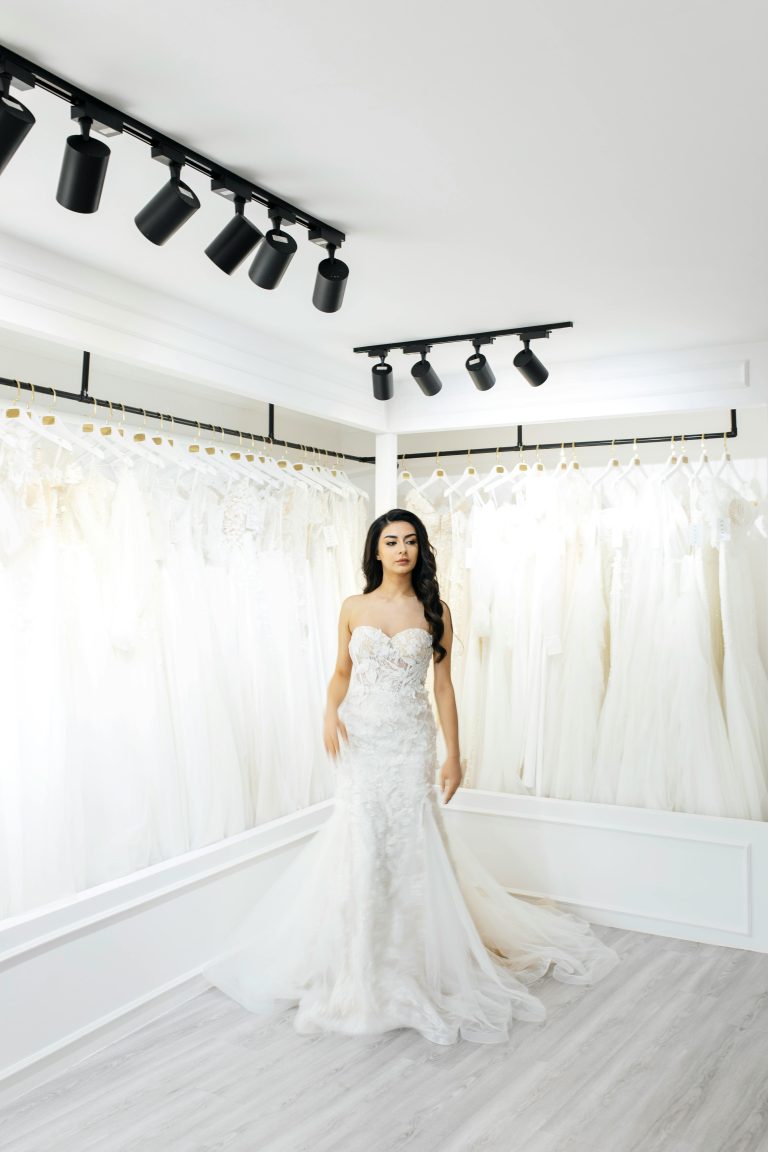
    Most women know what style of wedding dress they want. But have you considered the practicalities of finding your dream frock that have nothing to do with how it looks? Renowned local dress designer Janita Toerien lets us in on the little things you may overlook when shopping for your dress.

    WEAR THE RIGHT UNDERWEAR
    You head into the changing area with a pile of gorgeous dresses, you try on the first one and it is just so… anti-climactic. Why doesn’t it look like you imagined? Well, for one, you’re wearing a bright blue thong that throws off the whole look. Wear the right underwear so the G-string doesn’t make a shadow on the dress or you stress about panties that cut into your bum, says Janita. Fitting consultants won’t judge you on your granny panties or boy shorts! Wearing undies that match your skin tone and shape, and suck in where necessary, help smooth out the silhouette so you can see exactly how the dress is meant to fit.

    FACTOR IN WHERE YOU’RE GETTING MARRIED
    Janita says this is often forgotten: Is the dress practical for your wedding? Consider the physical aspects of where you’re getting married and how your dress will fit into that. For example, a heavy lace-trimmed train and veil will pick up little twigs and dirt as you walk down the aisle of a forest wedding. Or a heavy duchess satin dress will be uncomfortable hot at a midday beach wedding. Choose a dress in the style you love, but that will still allow you to be as comfortable as possible.

    THINK ABOUT THE GIRLS
    Don’t overlook the importance of your boobs: Too much cleavage can distract from your overall look; too covered up can look matronly, not to mention ensuring there’s no accidental spillage. Big busts always look great in a lower neckline, Janita says, but not too low – just enough to open up the chest and shoulder area. This can be a V-neck, off-the-shoulder or scooped neckline. But stay away from strapless, she pleads: “I could write a whole page about why, but for now just heed my advice.” For our flatter-chested sisters, your choices are much wider, but if you want your bust to appear larger, raise the neckline of the dress, she says. Whether it’s a halterneck, V-neck, boat or round neck, simply lift that line a few centimetres.

    WALK, SIT, CROUCH, BEND, DANCE!
    Standing in front of a mirror for 10 minutes isn’t going to give you the full effect of how a dress really wears. Does the top slip down? Do the straps fall off your shoulders? Does the bodice cut into your stomach when you sit? Do you trip on the hem? Get a feel for the dress by sitting, crouching, hugging your mom and busting out a move with your hands in the air. If at any point you have to readjust it, imagine doing that a couple of hundred times on the big day. If it can be fixed with alterations, get them done. If not, it’s probably best to move on.

    ASK ABOUT FABRICS
    Will it crease badly? Show sweat patches? Make you itchy? Don’t assume all dresses are made equal. Every kind of fabric has its own characteristics, Janita says, so a dress designer worth their salt will take the time to explain the different options and their pros and cons. Take bride fabric shopping to discuss exactly this. Does the fabric feel good on her skin? Does she perspire easily when under stress or does she have sensitive skin? These are all things to take into consideration.

    BUY FOR YOUR CURRENT SIZE, NOT YOUR IDEAL SIZE
    Many brides go on a weight-loss mission before the wedding. If you’re one of them, it’s best to try lose the weight (or close enough) before you start shopping around. You never know if you’re going to lose the weight in time, so don’t buy around what might happen. The last thing you want is an ill-fitting dress on your big day. It’s much easier to take a dress in with alterations than it is to let out, with much less risk of losing the dress completely.

    CLOSE YOUR CIRCLE
    What dress-shopping mistakes does Janita see brides making all the time?
    “They bring too many people with them, and do far too much shopping. First rule: when you start shopping, make sure you don’t want to have any more than three brides in your bridal party. Choose only two or three designers/boutiques to visit, and if you feel exhausted and overwhelmed at some point, take a step back, regroup and really think about what you want – ignore everyone else’s opinions.”

    EMERGENCY KIT:
    What should you pack for the day of the wedding?
    • Needle and thread
    • Double-sided tape
    • A pair of good scissors (Cut that train off if it gets in the way of dancing! Janita says)

    ALSO SEE: High-neck wedding dresses we love

    High-neck wedding dresses we love

    Written by Andrea Robertson for Wedding Etc. Summer 2019

    Feature image: Pexels

    One of the biggest features of any wedding is the fairytale wedding dress. Whether you’ve been dreaming of your quintessential gown since you were a little girl or the minute you got engaged, finding the perfect fit can be an exciting and stressful business.

    Another stressor? Finding the perfect wedding designer. Thankfully, we’re taking at peek at five South African wedding gown designers that we’re loving right now.

    The Wedding Collective

    The Wedding Collective isn’t exactly a designer, but they’re a wedding boutique with a twist. They offer a range of incredible designers with wedding gown designs you will not find anywhere else in South Africa.

    Janita Toerien

    Janita is an immensely talented designer that offers custom designs that will leave your jaw hanging on the floor. From simple to extravagant, this designer can do it all.


    View this post on Instagram


    A post shared by Janita Toerien (@janitatoerien)

    Maggie Sottero  

    Quality designs that are classic and romantic, Maggie Sottero knows exactly what they’re doing with nearly 24 years of design experience behind them with each design inspired by your love story.

    Kobus Dippenaar

    Synonymous with panache, Dippenaar’s designs aim to enhance the bride’s natural beauty. If you’re interested in grabbing a one-of-a-kind corset for your big day, he is exceptionally skilled at creating detailed pieces that you’ll fall in love with.

    Robyn Roberts 

    Robyn Roberts has been around for 25 years and provides elegant designs that suit every bride. They offer a range of couture designs, but they specialise in minimalism – offering incredible yet simple designs for the minimalistic bride.


    Picture: Vera Wang

    Wedding dress shopping can be stressful. With so many cuts and styles available, brides can easily become overwhelmed by the options. To make things easier, here’s our wedding gown 101 guide to the most popular wedding dress silhouettes.


    Ball gown:

    Also known as princess style, this wedding dress silhouette is characterised by a full skirt, fitted bodice and natural waist. It is the most traditional of the silhouettes, often considered the most romantic and feminine due to its fairytale-esque shape. This cut works well on most body types, especially more straight figures as it creates shape. However, more petite brides might get lost in the fullness of the skirt.

    Famous brides that have worn this look include Mariah Carey, Serena Williams and Diana, Princess of Wales.


    Mermaid:

    This silhouette is for the daring bride. This curve-hugging cut is fitted to the brides body from the chest to the knees, where it flares out. It works best on brides that want to enhance their curvy shape.

    Kim Kardashian, Melania trump and Khloe Kardashian stunned in this wedding dress style.


    A-line:

    While similar to a ballgown, the A-line silhouette skirt is more flowy in style. The fitted bodice flows into the skirt forming an upperclass ‘A’ shape.

    Priyanka Chopra, Duchess Kate Middleton, and Allison Williams have worn this style.


    Trumpet:

    Also known as fit-and-flare, this style is fitted on the bodice and flares out mid thigh, making it a blend of an A-line and mermaid silhouette. It is typically easier to move around in than a mermaid dress. This style works best on brides wanting to accentuate their waists.

    Beyonce, Ciara, and Michelle Kwan all wore this style on their Big Day.


    Empire waist:

    This wedding dress silhouette it fitted and flares out underneath the bust. They are flattering for most body shapes and are comfortable to wear.

    Celebrity brides that have worn this style include Kelly Clarkson and Priscilla Presley.


    Drop waist:

    The drop waist silhouette is essentially an A-line gown with a lower waistline. Instead of flowing from the natural waist, drop waist gowns begin to flow from the hips. This style hugs your waist and hips, making it perfect for brides wanting to accentuate these parts of their body.

    Caroline Kennedy and Poppy Delevigne have worn this style for their wedding day.


    Sheath:

    This classic style features a narrow shape that flows  straight down from the neckline to the hemline. Brides with more athletic or lean builds look best in this style. It also works well on petite brides as the straight lines work to elongate bodies.

    Celebrity brides that have donned this silhouette include Jada Pinkett Smith and Princess Charlene of Monaco.


    Picture: Unsplash