• Tag

    planningadvice

    Browsing

    The confetti has settled, the honeymoon photos have been posted, and your wedding dress is finally back from the cleaners. But before you fully slip into married life, there’s one final task on your newlywed to-do list: the paperwork.

    While it may not be nearly as exciting as planning your big day, taking care of important administrative updates can save you a significant amount of time and frustration later. From obtaining the correct marriage certificate to updating your banking details and beneficiaries, here’s everything South African newlyweds should tick off after saying “I do.”

    Start with your marriage certificate

    Once your marriage has been registered, you’ll receive a handwritten marriage certificate from your marriage officer. This serves as immediate proof of marriage, but many couples later require an official certificate from the Department of Home Affairs for legal and administrative purposes.

    An official marriage certificate may be required when:

    • Applying for visas
    • Updating bank records
    • Registering on medical aid
    • Purchasing property jointly
    • Changing a surname
    • Handling estate or insurance matters

    If you anticipate international travel, immigration applications or legal processes abroad, it is worth requesting the appropriate certificate from Home Affairs as soon as possible.

    Decide what you’re doing about your surname

    One of the first questions many newlyweds face is whether to change their surname, keep their existing surname or adopt a double-barrelled surname.

    South African law allows spouses to choose how they wish their surname to be recorded following marriage. The choice is entirely personal and there is no legal requirement to change your surname after getting married.

    If you do decide to update your surname, you’ll need to ensure that the change is reflected across all your official documents and accounts. This often becomes the most time-consuming part of the post-wedding admin process.

    Apply for a new ID if necessary

    If your surname has changed, you’ll need to apply for a new South African ID document or Smart ID card reflecting your updated details. Your marriage certificate will usually be required as supporting documentation.

    This is an important step because many other institutions will require your updated ID before processing changes to their own records.

    Check your passport before booking international travel

    Planning a honeymoon abroad? Make sure the name on your passport matches your travel bookings.

    If you’ve changed your surname, consider whether you need to update your passport immediately or wait until after upcoming travel plans. Mismatched names across documents can create unnecessary complications when travelling internationally.

    Update your bank accounts

    One of the most commonly forgotten tasks is updating your banking information.

    Contact your bank to update:

    • Personal details
    • Surname changes
    • Joint account information (if applicable)
    • Debit orders linked to your account

    You’ll typically need your updated ID and marriage certificate when making these changes.

    Review your medical aid and insurance policies

    Marriage is a good opportunity to reassess your healthcare and insurance coverage.

    Remember to update:

    • Medical aid membership
    • Life insurance beneficiaries
    • Gap cover policies
    • Short-term insurance policies
    • Income protection cover

    Failing to update beneficiary details can create unnecessary complications in the future.

    Revisit your will

    This is perhaps the least romantic item on the list – but arguably one of the most important.

    Major life events, including marriage, should prompt a review of your will and estate planning documents. If you already have a will, ensure it reflects your current wishes and circumstances. If you don’t have one yet, now is the ideal time to create one.

    Update your employer records

    Notify your employer’s HR department of any changes to your marital status or surname.

    This may affect:

    • Payroll records
    • Pension and provident funds
    • Group life cover
    • Emergency contact details
    • Employee benefits

    A quick update now can prevent future administrative headaches.

    Don’t forget your digital paperwork

    In today’s world, some of your most important records live online.

    Take a few minutes to update:

    • SARS details
    • Investment accounts
    • Loyalty programmes
    • Subscription services
    • Utility accounts
    • Mobile phone contracts

    While these updates may seem minor, keeping your information consistent across platforms can save a surprising amount of frustration later.

    Create a newlywed admin folder

    One of the smartest things you can do after getting married is create a dedicated digital folder containing:

    • Marriage certificate copies
    • Certified documents
    • Updated identification
    • Insurance paperwork
    • Medical aid records
    • Beneficiary forms

    Trust us – future you will be grateful.

    The best weddings are built on thoughtful planning, and the same can be said for married life. Once the last champagne glass has been cleared and the thank-you notes have been sent, taking care of these essential updates will help ensure a smooth transition into your next chapter as a married couple.

    After all, a strong marriage isn’t only about celebrating milestones – it’s also about laying the foundations for the future you’ll build together.

    ALSO SEE: Already married? Have a wifelorette! 

    Already married? Have a wifelorette!

    Featured image: Hugo Martínez / Pexels
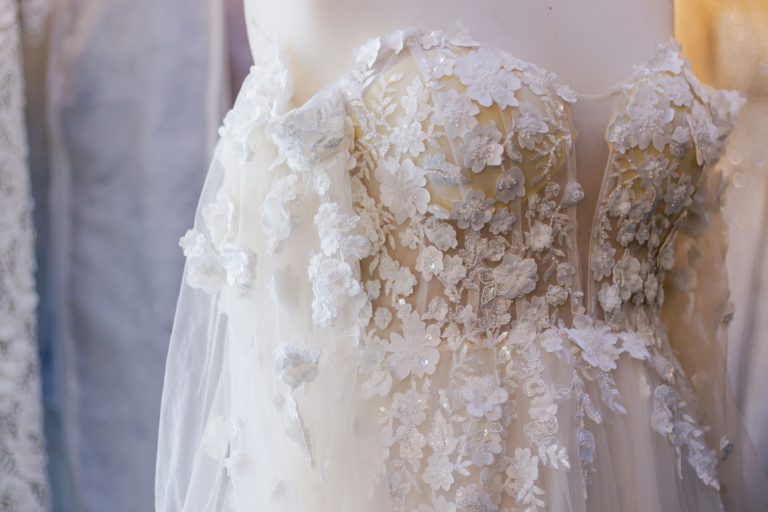
    Your wedding dress isn’t just another line item on your budget – it’s the emotional centrepiece of your entire wedding story. But in South Africa right now, brides are asking a very practical question alongside the emotional one: Do I buy it… or do I hire it?

    And the answer isn’t as simple as it used to be.

    With bridal fashion evolving, budgets shifting, and more flexible options available than ever before, the decision now sits somewhere between sentiment, strategy, and style.

    Here’s how to figure out what actually makes sense for you in 2026.

    What it really costs in South Africa right now

    Before you decide, you need clarity on pricing – because the gap between buying and hiring isn’t always as wide as people think.

    Recent South African bridal market insights show:

    • Buying a new wedding dress: ± R14,000 – R60,000+ depending on designer, fabric, and detail
    • Average boutique gowns: around R13,000 – R30,000
    • Pre-loved/sample dresses: from ± R6,500 – R15,000
    • Hiring a dress: typically around R14,000 – R22,000 (sometimes up to 75% of retail value)

    Here’s the truth most brides only realise later: hiring is not always the “cheap option” – it’s often just the “short-term option.”

    Buying your wedding dress: the emotional investment

    Buying a dress is about ownership – but also control.

    Why brides choose to buy:

    • Full freedom for custom alterations and fit
    • Ability to preserve it as a keepsake or heirloom
    • More styling options (especially for modern trends like detachable sleeves or second looks)
    • Ability to resell or rewear for future events

    In 2026, we’re also seeing a shift toward multi-use bridal gowns – dresses designed with removable elements so brides can transform their look from ceremony to reception without changing outfits entirely.

    The reality check:

    • Higher upfront cost
    • Alterations and cleaning add extra budget
    • Storage and preservation become your responsibility

    Buying makes sense when your dress is part of your identity – not just your outfit.

    Hiring your wedding dress: the practical luxury option

    Hiring has evolved a lot. It’s no longer “basic budget brides only” – it’s now a structured bridal service, often with designer gowns available.

    Why brides choose to hire:

    • Lower upfront commitment
    • Access to designer or luxury gowns at a fraction of retail price
    • No storage or preservation stress after the wedding
    • Cleaning often included

    But here’s what you need to know:

    • Alterations are usually limited
    • You’re restricted by availability and booking dates
    • Costs can still climb to 50–75% of retail price

    Hiring works best when you prioritise convenience over long-term ownership.

    The 2026 bridal shift: why this decision is changing

    Bridal fashion is no longer just about tradition it’s about identity.

    Across global and South African bridal trends, we’re seeing:

    • A rise in personalised, fashion-forward gowns
    • More brides choosing pre-loved and sustainable options
    • A move away from rigid “white only” tradition into soft tones and expressive silhouettes
    • Increased demand for versatile dresses that can transform during the day

    In other words: brides are no longer choosing between “buy or hire” in a vacuum they’re choosing how much permanence they want in a fashion moment that is increasingly expressive and fluid.

    So… how do you actually decide?

    Ask yourself these 4 questions:

    1. Do I want to keep my dress after the wedding?

    If yes → buying is your lane.

    1. Is my priority budget flexibility or long-term value?

    If short-term ease matters more → hiring works.

    1. Do I want full control over fit and design?

    If yes → buying wins by a mile.

    1. Will I regret not owning it?

    Be honest here – this is usually the deciding factor.

    Final thought

    There is no “correct” choice anymore only what aligns with your priorities, your budget, and the story you want your wedding to tell.

    Some brides want a dress they can keep forever. Others want a designer moment without long-term responsibility.

    Both are valid. What matters is choosing intentionally, not emotionally pressured or financially rushed.

    ALSO SEE: Transforming your mom’s wedding dress 

    Transforming your mom’s wedding dress

    Featured image: Rewan Ahmed / Pexels

    So you’re engaged, and although it’s an exciting and thrilling time for both you and your significant other, conflict is bound to arise, often in the form of your soon-to-be family-in-law. Some cases may be worse than others, but we’d like to help you lessen the load. Read on for some practical tips and thoughts on how to keep them happy, and, appropriately involved.

    Acceptance

    First of all, you need to make peace with the fact that your wedding planning journey will come with a fair share of stress, drama and mishaps, but all of this could be managed easily by not stressing about the things you cannot change. That goes for the family you’re marrying into as well. If you’ve known the person you’re marrying for a good amount of time, you probably know their family too – including their habits and preferences. Just because you’re getting married doesn’t mean those things will change, so make it easier for yourself by making peace with it – you’d want your S.O to do the same for you.

    You marry the family, too.

    That said, your new spouse’s family is accepting a new member into theirs, as your family is too, so be mindful about including them in the planning process. Your wedding is a celebration of not only two people coming together, but two families uniting, so they need to feel that their opinions matter too. This doesn’t mean that you have to take every suggestion they make to heart, but they’ll feel much more included if you make an effort to hear them out and make some compromises.

    Take a stand

    Sometimes, keeping the peace means taking a stand. It’s extremely difficult to avoid hurting the feelings of someone who simply wants to help, but sometimes their need to help is greater than your need for it. Don’t allow yourself to get into a situation too deep before realising that you’re allowing things to happen that will ultimately make you unhappy. Say no when you need to, but explain your feelings and reasoning behind it so that a mutual understanding can be reached.

    Same page

    You and your S.O absolutely need to be on the same page when it comes to making the decisions in your planning process. This will allow you to adequately explain your reasoning to your families, without throwing anyone under the bus. However, if your parents are paying for some parts of the wedding, you need to be on the same page with them too. Be open about what you want, your visions and expectations to avoid unnecessary conflict, especially if you’re not the one paying for it.

    Lessen the load

    Just because it’s your wedding doesn’t mean you have to plan, take care of and do everything. Make your vision clear and allow your mother-in-law, father-in-law or whoever-in-law to help you out with making calls, DIY projects, collections or whatever it is you may need. This will allow them to feel involved, but not in an overwhelming way where they have the ability to make decisions for you. However, looking at the other side of the spectrum could be just as tricky. Maybe your father-in-law is great at building things with his hands, but up until now you haven’t been getting along that well. Take the plunge and ask him for help with your DIY projects – it might be the starting point for the relationship you’ve been looking for.

    ALSO SEE: 8 guidelines for father of the groom

    8 guidelines for father of the groom

    Feature image: Pexels