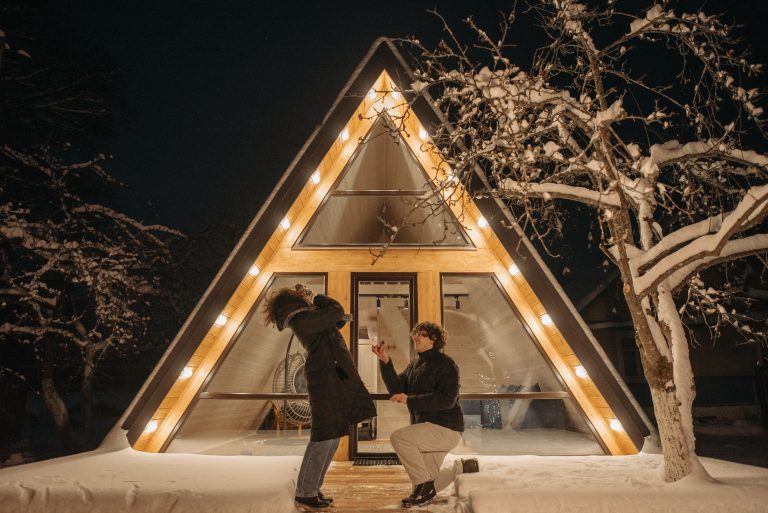
There’s something undeniably romantic about winter. The crisp air, golden sunsets, cozy evenings and slower pace create the perfect atmosphere for one of life’s biggest questions: Will you marry me?
While summer proposals often steal the spotlight, winter offers something equally special – intimacy. Think candlelit dinners, mountain views, fireplace moments, misty landscapes and unforgettable getaways made for two.
Modern proposals are becoming less about grand gestures for the sake of spectacle and more about creating a moment that feels personal, intentional and true to the couple’s story.
Whether you’re planning a private proposal or a once-in-a-lifetime destination moment, these winter proposal ideas are guaranteed to inspire.
A romantic mountain escape
Few settings feel as magical as the mountains during winter. Imagine waking up somewhere quiet, surrounded by dramatic landscapes, spending the day exploring together and ending it with a proposal as the sun sets behind the peaks.
For South African couples, winter mountain escapes offer the perfect balance of adventure and romance.
Think:
- A cozy cabin with a fireplace
- A private picnic overlooking the mountains
- A sunrise proposal after a weekend away
- A surprise photographer capturing the moment
Destinations like the Drakensberg or a winter escape in the Cederberg create naturally breathtaking backdrops.
A wine estate proposal in the Cape Winelands
There’s a reason the Cape Winelands remain one of South Africa’s most romantic destinations. Winter brings a different kind of charm – quieter vineyards, misty mornings, roaring fireplaces and intimate dinners.
A winter proposal idea: Book a weekend away, arrange a private wine tasting, and pop the question among the vines or after a candlelit dinner.
The beauty of a wine estate proposal is that the experience doesn’t end with the “yes” – it becomes an entire engagement celebration.
Popular areas include:
- Franschhoek
- Stellenbosch
- Constantia
The cozy fireplace proposal
Not every unforgettable proposal needs a dramatic location. Sometimes the most meaningful moments happen somewhere private.
A winter-inspired at-home proposal can be just as beautiful:
- Transform your home with candles and flowers
- Recreate your first date
- Cook your partner’s favourite meal
- Create a timeline of your relationship through photos
- End the evening with the ring and a heartfelt speech
The focus is not the production – it’s the story behind it.
A beach proposal (with a winter twist)
Winter beaches have a quiet beauty that summer crowds often take away.
A windswept coastline, dramatic skies and an empty beach can create a cinematic proposal moment.
Consider:
- A sunrise walk
- A blanket picnic overlooking the ocean
- A hidden beach location
- A surprise photographer waiting nearby
For Cape Town couples, locations along the coastline can offer unforgettable winter scenery without needing an international trip.
A destination proposal abroad
For couples who love travelling, a winter proposal abroad turns the engagement into an entire adventure.
Some romantic winter proposal destinations include:
- Paris, France: Classic, timeless and effortlessly romantic. Winter brings fewer crowds and a magical city atmosphere.
- Iceland: For couples wanting something extraordinary, Iceland’s landscapes and northern lights create a once-in-a-lifetime backdrop.
- Venice, Italy: Quiet canals, candlelit dinners and old-world charm make winter in Venice feel like stepping into a love story.
- A European Christmas market escape: Cities like Vienna or Prague offer fairytale streets, festive lights and romantic winter experiences.
The “just us” proposal
One of the biggest shifts in modern proposals is choosing authenticity over performance. Couples are increasingly planning moments that reflect who they are – whether that means a private dinner, an adventurous getaway or a sentimental location that holds meaning.
Ask yourself:
- Are they someone who loves attention or privacy?
- Would they prefer a crowd or a quiet moment?
- Is there a place that already tells your story?
The best proposal location is not always the most famous one – it’s the one that feels like yours.
Final Thoughts
A winter proposal has a special kind of magic. It’s slower, more intimate and filled with opportunities to create a moment that feels completely personal.
Whether it happens beside a fireplace, overlooking a mountain range or during a once-in-a-lifetime getaway, the most memorable proposals are the ones that tell your love story.
Because the perfect proposal isn’t about creating a picture-perfect moment – it’s about creating the moment you’ll both remember forever.
ALSO SEE: 8 Romantic engagement ideas to help you pop the question!
Featured image: Pavel Danilyuk / Pexels