• Tag

    emotionaladvice

    Browsing

    Wedding budgets have a way of growing quietly. One upgraded menu. A few extra centrepieces. Another twenty guests because “we can’t leave them out.” Before long, couples find themselves spending thousands on details they barely notice on the day or remember afterwards.

    The good news? Most wedding regrets follow familiar patterns.

    Three experienced South African wedding planners shared the expenses couples most commonly wish they’d approached differently, along with the investments that consistently create a more memorable celebration.

    1.Oversized guest lists

    Almost every planner agrees: guest lists are where budgets disappear fastest. Louise from Runaway Romance says many couples later regret inviting distant relatives, acquaintances or colleagues simply because they felt obligated.

    “Just because you went to their wedding doesn’t mean you have to return the favour.”

    A smaller guest list doesn’t just reduce catering costs. It also lowers expenses across the board – from furniture hire and stationery to flowers, favours and beverages.

    Current wedding trends continue to favour more intimate celebrations where couples can spend quality time with the people who matter most.

    2. Wedding favours that guests leave behind

    Personalised gifts can seem like a thoughtful finishing touch, but planners say they’re often one of the least memorable expenses.

    Melissa from Pretty in Stains says elaborate favours frequently remain on reception tables at the end of the evening.

    Instead of spending hundreds – or thousands – on keepsakes, that budget could be redirected towards something guests actually experience, whether that’s exceptional food, live entertainment or an unforgettable dance floor.

    3.Decorative details over meaningful experiences

    Pinterest-worthy styling certainly has its place, but it’s easy to prioritise aesthetics over atmosphere.

    Melissa says thoughtful lighting, excellent food, quality entertainment and professional photography generally leave a far bigger impression than adding another decorative installation.

    Modern weddings are becoming increasingly experience-driven, with couples focusing on how the celebration feels rather than simply how it photographs.

    4. Imported flowers that only last a day

    Luxurious floral installations remain a popular trend, but they’re also one of the easiest areas for costs to escalate.

    Louise recommends thinking carefully before investing heavily in imported blooms that are discarded after a single day.

    Seasonal, locally sourced flowers often achieve a similarly beautiful result while reducing costs – and many couples are now choosing arrangements that can be donated or taken home after the celebration.

    5. Large bridal parties

    More bridesmaids often mean more dresses, hair appointments, makeup, gifts and transport.

    Louise says some couples later realise they would have preferred keeping their bridal party smaller and giving close friends different roles throughout the day instead.

    A more intimate wedding party also tends to simplify logistics and reduce planning stress.

    6. Chasing social media trends

    Wedding inspiration is more accessible than ever, but planners warn that endless scrolling can quickly become expensive.

    Louise says spending too much time on Instagram, TikTok and Pinterest often creates confusion as couples continuously change direction or try to recreate trends that don’t suit them.

    Rebecca Glen, founder of The Wedding Fairy, believes many couples spend money on traditions simply because they feel they should.

    “If something doesn’t reflect who you are or doesn’t add to the experience you want to create, it’s worth questioning whether it’s necessary at all.”

    7. Designing before planning

    Choosing flowers, colour palettes and décor before finalising the bigger decisions can lead to costly changes later.

    Melissa recommends establishing a realistic budget before anything else, followed by securing your venue, date and key suppliers.

    Rebecca agrees, noting that design naturally evolves throughout the planning process and is best tackled once the logistical foundations are firmly in place.

    8. Choosing vendors based on price alone

    Everyone loves a bargain – but your wedding isn’t always the place to chase the cheapest quote. All three planners stress the importance of looking beyond beautiful Instagram feeds.

    Communication, professionalism, backup plans, reviews and reliability are often better indicators of the experience you’ll receive.

    As Melissa points out, the way a supplier communicates from your very first enquiry often says more than their portfolio alone.

    9. Skipping photography and videography

    While decorative elements fade, your memories become more valuable over time.

    Melissa recalls one groom who insisted a videographer was non-negotiable after losing his father at a young age.

    His parents’ wedding film had become one of the few moving memories he still had of them together. Stories like these are why planners consistently recommend prioritising photography and videography over temporary décor upgrades.

    10. Spending to impress instead of spending intentionally

    Perhaps the biggest regret isn’t one particular purchase – it’s spending money to meet other people’s expectations. Guest pressure, family opinions and social media can easily distract couples from what actually matters.

    Rebecca says there is no perfect wedding budget formula.

    “The key is to prioritise what genuinely matters to you as a couple and give yourself permission to skip anything that doesn’t. Nothing is truly compulsory.”

    As South African weddings continue shifting towards smaller celebrations, boutique venues, destination weekends and experience-led planning, intentional spending is becoming one of the biggest luxury trends of all.

    What today’s couples are choosing instead

    Across the industry, planners are noticing a clear change in priorities. Couples are increasingly investing in immersive guest experiences rather than oversized celebrations. Smaller guest lists, boutique venues, destination weekends, signature cocktails, meaningful food experiences and longer celebrations are replacing the pressure to create a wedding that simply looks expensive online.

    Many are also choosing intimate legal ceremonies followed by larger celebrations later, while others are embracing elopements that allow them to redirect their budget towards travel or a dream honeymoon.

    The common thread isn’t spending less – it’s spending with purpose.

    More than a budget

    Every wedding will have expenses that matter deeply to one couple and not at all to another. The secret isn’t following someone else’s checklist – it’s knowing what will still feel meaningful years after the flowers have wilted and the trends have faded. When every decision reflects your priorities rather than outside expectations, your budget naturally starts working harder for the memories that truly last.

    ALSO SEE: The wedding planning apps every modern couple should know about 

    The wedding planning apps every modern couple should know about

    Featured image: Zeynep / Pexels
    The excitement of getting engaged often comes with one unavoidable question: Where do we even begin?

    Between Pinterest boards, TikTok trends and endless Instagram inspiration, it’s easy to jump straight into choosing colour palettes or saving floral installations before you’ve even decided on a venue. But according to experienced wedding planners, the most successful weddings rarely start with aesthetics – they start with a plan.

    Whether you’re dreaming of an intimate celebration or a lavish weekend affair, getting the order right from the beginning can save you money, reduce unnecessary stress and make every decision that follows feel far more intentional. Here’s how the experts recommend approaching wedding planning.

    Take a moment to enjoy being engaged

    It may sound counterproductive, but one of the first pieces of advice from planners is to simply – pause.

    Rebecca Glen, founder and lead planner at The Wedding Fairy, encourages couples to enjoy this chapter before diving headfirst into logistics.

    “The first step is actually to pause and enjoy being engaged. That season is short, and it’s worth taking it in before jumping straight into logistics.”

    Wedding planning can easily become a months-long project filled with deadlines and decisions. Giving yourselves space to celebrate this milestone before opening spreadsheets and comparing venues can make the journey feel far more enjoyable.

    Start with your budget – not your Pinterest board

    Every planner interviewed agreed on one thing: the budget should come first. Before browsing venues or saving inspiration online, sit down together and decide what you’re realistically comfortable spending, how many guests you’d like to invite and which parts of the day matter most to you.

    Melissa from Pretty in Stains says this conversation creates the foundation for every decision that follows.

    “Before looking at venues or Pinterest boards, couples should establish what they’re comfortable spending, who they genuinely want to celebrate with, and what matters most to them as a couple.”

    Social media has made luxury weddings more accessible than ever – but not necessarily more attainable. Without a realistic budget, it’s easy to fall in love with ideas that simply don’t fit your finances.

    If you’re hiring a planner, book them early

    If a wedding planner is part of your vision, don’t leave them until later. Both Louise from Runaway Romance and Rebecca Glen recommend making this one of your very first bookings.

    A planner doesn’t simply organise suppliers – they help shape the entire planning process. From setting realistic budgets and timelines to recommending trusted vendors and managing expectations, involving them early can prevent costly mistakes later.

    Secure your venue before anything else

    Once your budget and guest count are established, it’s time to find your venue.

    Your venue determines far more than just where you’ll celebrate – it influences your wedding date, guest capacity, style, catering options and even which suppliers are available. Booking the venue first also gives you a confirmed date, allowing the rest of your planning to fall into place.

    Lock in your priority suppliers

    Some suppliers can only take on one wedding a day – and they’re often booked months, if not years, in advance. Photography and videography consistently top planners’ priority lists, but they’re not the only professionals couples should secure early.

    Louise from Runaway Romance says one supplier is surprisingly overlooked.

    “People often leave the marriage officer too late – they’re the most important vendor because without them you’re not legally married.”

    Once your venue is confirmed, prioritise booking your:

    • Marriage officer or officiant
    • Photographer
    • Videographer
    • Hair and makeup artists
    • Wedding planner (if you haven’t already)

    Everything else can usually follow afterwards.

    Leave the décor decisions until later

    One of the biggest planning mistakes? Choosing flowers, décor and styling too early. As exciting as mood boards can be, planners say design naturally evolves throughout the planning process. Your tastes may change, seasonal flower availability can shift and trends come and go.

    Rebecca Glen explains that design is far easier to tackle once the major logistical decisions have already been finalised.

    Similarly, Louise advises against locking in floral choices too early, noting that seasonal availability and pricing often change.

    Think about experiences – not just aesthetics

    While beautiful décor photographs well, it’s rarely what couples remember most after the wedding. Instead, planners are seeing a noticeable shift towards experience-driven celebrations, where guest connection takes priority over extravagant styling.

    Melissa from Pretty in Stains says today’s couples are increasingly choosing smaller guest lists and creating meaningful experiences rather than simply focusing on how the wedding looks. That also changes where your budget has the greatest impact.

    Instead of spending thousands on elaborate wedding favours that guests often leave behind, planners recommend investing in exceptional food, entertainment, photography, videography and thoughtful touches that create lasting memories.

    Melissa recalls one groom who refused to compromise on hiring a videographer because one of the few moving memories he had of his late father was his parents’ wedding film.

    “Some investments become more valuable with time.”

    Keep your guest list intentional

    If there’s one expense planners repeatedly hear couples question afterwards, it’s an unnecessarily large guest list. Many people feel obligated to invite distant relatives, old acquaintances or colleagues simply because they attended someone else’s wedding.

    Louise says many former clients later wished they’d kept their celebrations smaller and more personal, redirecting that money towards experiences like an unforgettable honeymoon, meaningful food and drink moments or personalised guest experiences.

    Smaller guest lists also allow couples to spend more intentionally on the people who matter most.

    Don’t plan a wedding for social media

    Across all three planners, one theme emerged repeatedly: don’t let trends dictate your wedding. Whether it’s the latest TikTok aesthetic, viral reception trend or Pinterest-perfect tablescape, today’s trends can quickly become tomorrow’s dated photos.

    Instead, planners encourage couples to focus on authenticity. Rebecca believes every decision should support the experience you genuinely want to create – not what you think your wedding should look like online.

    Melissa echoes this sentiment, “Keep your marriage as your north star.”

    Whenever a decision feels overwhelming, ask yourselves one simple question: Does this reflect who we are as a couple?

    If the answer is yes, you’re probably making the right choice.

    Choose your suppliers carefully

    Instagram portfolios only tell part of the story. Every planner emphasised the importance of reading reviews, meeting suppliers beforehand and paying attention to how they communicate from the very first enquiry.

    Good suppliers don’t simply send a quote – they ask questions, understand your priorities and offer guidance throughout the process.

    If possible, arrange engagement shoots, hair and makeup trials, food tastings or floral mock-ups before making final commitments. Sometimes, how someone works is just as important as the work itself.

    The bottom line

    Wedding planning doesn’t have to feel overwhelming. Starting with the right foundations – your budget, priorities, guest list and trusted suppliers – makes every decision afterwards far easier.

    The biggest takeaway from the experts isn’t about following a perfect checklist or chasing every trend. It’s about creating a celebration that reflects your relationship, feels authentic to the two of you and leaves space to actually enjoy the journey.

    Long after the flowers have wilted and the décor has been packed away, the moments you’ll treasure most are the ones that felt unmistakably yours.

    ALSO SEE: The wedding planning decisions that cause the most tension (and how to handle them) 

    The wedding planning decisions that cause the most tension (and how to handle them)

    Featured image: Pinterest

    There’s a version of wedding planning that exists online where every decision feels effortless. The moodboards match, the budgets magically stretch and nobody’s aunt suddenly remembers three cousins who “must” be invited.

    Reality? It’s usually a little messier.

    For most couples, wedding planning isn’t where relationships fall apart – it’s where communication patterns become impossible to ignore. The pressure of money, expectations, timelines and trying to create a meaningful day can turn even small decisions into emotional negotiations.

    And according to wedding professionals, that’s completely normal.

    We spoke to a wedding planner about the biggest points of tension couples experience during planning – and more importantly, what actually helps.

    The guest list battle: when numbers become emotional

    If there’s one disagreement almost every planner sees coming, it’s this one. Guest lists sound practical until they stop being practical.

    Suddenly, every name carries emotion, obligation, family politics and budget implications.

    “Guest lists and budgets are by far the biggest areas of tension,” our wedding planner explains.

    “A lot of couples start with a vision that doesn’t quite match their budget, or a guest list that continues to grow every time someone mentions another family member or colleague.”

    Wedding experts consistently point to guest count as one of the biggest drivers of overall wedding cost because it affects almost every category – venue, catering, décor, rentals and logistics.

    What tends to work:

    • Create a non-negotiables list together before involving family
    • Decide on a guest cap early
    • Categorise guests into priority tiers
    • Agree upfront on plus-one rules and family allocations

    The question worth returning to: If we remove everyone else’s expectations – what matters most to us?

    Because once couples agree on priorities, decisions become significantly easier.

    Budget disagreements: the wedding you imagined vs the wedding you’re funding

    Budget conversations rarely start with numbers; they usually start with vision. One person imagines an elevated destination-style celebration. The other wants financial breathing room after the honeymoon.

    That disconnect can quietly create resentment. Recent wedding research shows couples are becoming more intentional with spending, moving away from “bigger is better” and prioritising experience, meaning and financial sustainability instead.

    The planner’s advice?

    • Come back to shared values.
    • If photography matters more than florals – spend there.
    • If food matters more than entertainment – shift accordingly.

    A wedding budget isn’t just a spreadsheet. It’s a reflection of priorities.

    Family expectations: the pressure nobody warns you about

    Families can bring love, support – and opinions. Especially when financial contributions enter the conversation.

    Parents may have different ideas about traditions, guest numbers or what a wedding should look like. And while compromise has its place, trying to make everyone happy usually leaves couples feeling disconnected from their own celebration.

    “Our wedding planner says the couples who navigate this best are the ones who continually come back to one question: ‘What matters most to us?’”

    Boundaries become easier when expectations are discussed early, that doesn’t mean excluding people.

    It means creating clarity, because a wedding should feel like an extension of the couple – not a committee decision.

    The vendor trust issue: why too much research can become the problem

    There’s a point in wedding planning where information stops being helpful. Today’s couples have endless access to reviews, TikTok opinions and Pinterest inspiration – but that can create decision fatigue.

    “If I had to give couples one golden rule,” our planner says, “it would be this: trust the professionals you’ve chosen.”

    Too often, couples spend months researching only to second-guess every decision after booking.

    The result?

    • Stress.
    • Micromanagement.
    • And less enjoyment of the engagement period.

    Choose suppliers whose work genuinely aligns with your vision. Communicate clearly and allow the experts to do what they do best.

    How to spot vendor red flags before booking

    One of the biggest planning mistakes?

    Booking purely based on aesthetics.

    Beautiful Instagram feeds don’t automatically mean strong communication, organisation or wedding-day execution.

    Our planner recommends couples ask:

    • How long have you worked in weddings?
    • Can I see recent reviews?
    • What does your communication process look like?
    • What happens if timelines shift?
    • What’s included – and what isn’t?

    Red flags to watch:

    • Slow responses
    • Vague contracts
    • Avoiding practical questions
    • Overpromising without realistic delivery timelines

    Clear expectations now prevent difficult conversations later.

    The couples who enjoy wedding planning most usually aren’t the couples who control everything

    They’re the ones who stay connected to each other and remain focused on the point. Who make decisions based on their future together – not social media, not pressure and not perfection.

    Wedding planning will probably bring disagreements; that isn’t the warning sign.

    Learning how to move through them together might be one of the most valuable parts of the process.

    ALSO SEE: Hidden wedding costs couples forget to budget for 

    Hidden wedding costs couples forget to budget for

    Featured image: Lilen Diaz / Pexels

    There’s something poetic about the final moments of a wedding.

    Long after the vows have been exchanged, the speeches have wrapped and the dance floor has emptied, your grand getaway becomes the closing scene – the moment guests remember driving home and the one that often ends up in the final frames of your wedding album.

    Yet strangely, it’s also one of the most overlooked parts of wedding planning.

    Back in the day, a decorated getaway car and a handful of tied-on tins felt like enough. Today’s couples are approaching their exits differently. The trend isn’t necessarily bigger or louder – it’s more intentional, more personal and designed to feel like an extension of the celebration rather than an afterthought.

    Here’s how to leave your wedding in a way that feels unforgettable.

    Match the exit to the energy of your day

    The most memorable exits aren’t random. A black-tie city wedding may call for a vintage car moment under glowing streetlights, while a vineyard celebration might feel better suited to a lantern-lit walk through the vines.

    Think of your exit as the final sentence of your wedding story. If your celebration leaned playful and social, your send-off should feel high-energy. If your day felt intimate and romantic, choose something quieter and cinematic.

    The goal isn’t to impress guests – it’s to create emotional continuity.

    Reimagine the classic getaway car

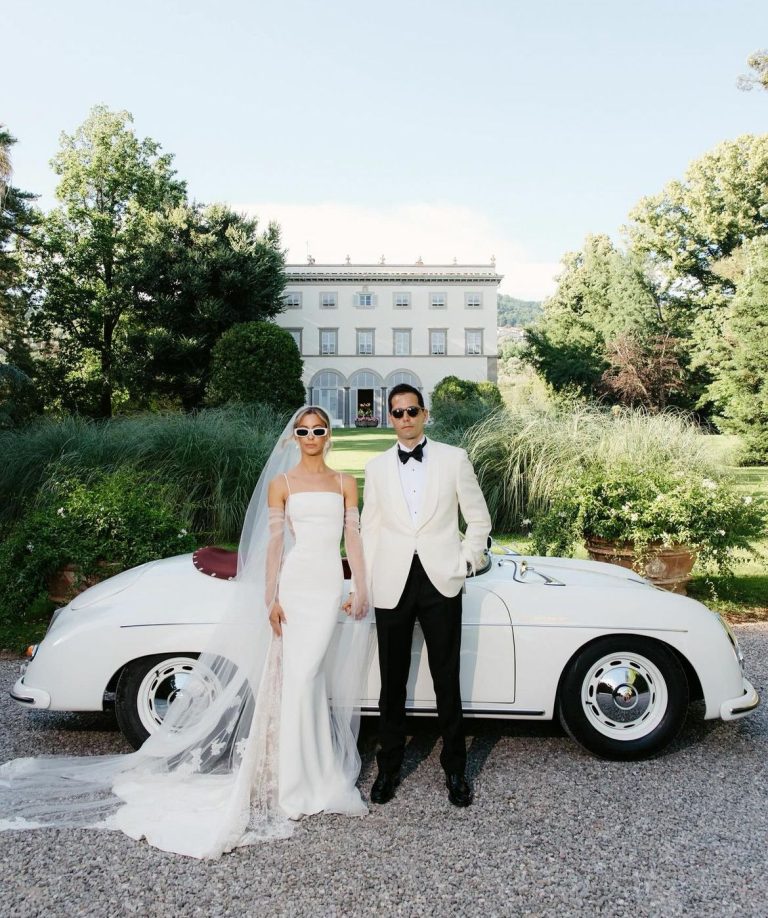
    The vintage car exit remains timeless for a reason. But couples are styling them differently now: personalised signage, monochrome ribbon details, florals that mirror the tablescape and editorial-style photography that feels more fashion campaign than tradition.

    For destination weddings, local transport is becoming part of the storytelling too – whether that’s a coastal vehicle, a retro bus or something tied to the setting itself.

    Your transport doesn’t need to be extravagant. It just needs to feel considered.

    The sparkler exit still works – but smarter

    Few wedding moments photograph as beautifully as a sparkler tunnel. But today’s couples are making practical adjustments: longer sparklers for timing, coordinated guest positioning and designated organisers to keep the moment smooth instead of chaotic.

    Before committing, confirm venue policies and fire restrictions. And if flames aren’t practical? There are alternatives.

    Think:

    • Bubbles
    • Ribbon wands
    • Glow sticks
    • Biodegradable confetti
    • Dried flower petals
    • Streamers

    Eco-conscious send-offs are becoming increasingly popular, especially as couples prioritise lower-waste celebrations.

    The private last dance is quietly becoming the luxury move

    One of the most talked-about shifts in modern weddings isn’t actually an exit at all. It’s the private last dance.

    Once guests move outside to prepare for the send-off, couples stay behind for one final song together in an empty reception space – no cameras in your face, no hosting duties, no timeline pressure. Just a minute to absorb what just happened.

    It feels cinematic. And for couples who spent months planning, it creates something rare on the wedding day: stillness.

    Outfit changes are changing the getaway moment too

    The rise of second bridal looks has created a whole new category of grand exits.

    Mini dresses, tailored white sets, sleek satin silhouettes and comfortable statement shoes are increasingly becoming the final look of the night – especially for couples heading into after-parties.

    Your exit outfit doesn’t need to replace your dress. It simply gives your wedding a final chapter.

    Remember: your guests want a moment, not a production

    Interestingly, couples are moving away from exits that feel performative and towards moments that feel emotionally memorable. Weddings in 2026 are leaning into experiences that prioritise connection over spectacle.

    That means the best getaway isn’t necessarily fireworks.

    Sometimes it’s walking hand in hand through your favourite people while they cheer. Sometimes it’s sneaking away quietly. Sometimes it’s one final dance before the lights come up.

    The final send-off

    You spend months thinking about how to arrive – but how you leave deserves equal attention.

    Your grand getaway is more than transport. It’s the final feeling your guests take home and your first moment stepping into married life together.

    Make it feel like an ending worth remembering.

    ALSO SEE: Ten creative ways to exit your wedding 

    Ten creative ways to exit your wedding

    Feature image: Pinterest

    Changing your surname to your partner’s last name is often a custom that is expected and not discussed until someone questions why. In a shift away from tradition, it is becoming more common for partners to keep their own surnames and ditch the admin that comes with changing your name.

    Where the tradition stems from

    Historically, it all started in medieval England where people were known by their Christian names – just a first name. It started to go pear-shaped when names were recycled and there were more than one person with the same name. To distinguish between individuals as well as families, a second name, or surname rather, was chosen for the familial ‘group’ according to occupation or location. It was only later that women who got married had to take on the surname of the man purely based on superiority and patriarchy. This meant the woman had no legal identity apart from the man, and of course the same went for a newborn baby girl who automatically took her father’s surname. Women couldn’t vote, sign a contract, be independently recognised or even start a business if they did not take their husband’s surname.

    Changing your name

    Our identity is intimately linked to our names. Letting go of that name is hard – it feels like you’re letting go of a part of yourself, even though it won’t change who you are. For example, you could have an Indian surname but marrying a German might make you feel like you can’t identify with your heritage anymore.

    Let’s be honest, it’s a shlep. In most cases it’s the woman who will change her maiden name or opt for a hyphenated version of her surname and her husband’s surname. In same-sex marriages it’s the same situation, but it all comes down to the legal aspect of changing every single account or legal document of your entire existence. In South Africa, as of 1992 it is legal for a woman to use her maiden surname, her husband’s surname or, as of 1977, a double-barreled surname after she is married. It’s a lengthy process but it’s not impossible, just be prepared to stand in a few queues.

    Keeping your maiden name

    For women who have a professional career or a namesake business, it will make things much easier should you wish to keep your maiden name. If you are also the last female family member in line holding onto your specific surname, you might want to keep it.

    With that said, changing your surname to match you husband’s means you will pass it on to your children, so that everyone in your immediate family shares the the same surname. This traveling easier for everyone and it creates a feeling of unity.

    The bottomline is…

    It is totally up to you. It is no longer a law that a wife absolutely has to take her husband’s surname, you have to consider what it means to you. More often than not the decision will be purely emotional, rather than practical.

    ALSO SEE: Get creative with your wedding dress after the big day

    Get creative with your wedding dress after the big day

    Feature image: Unsplash