
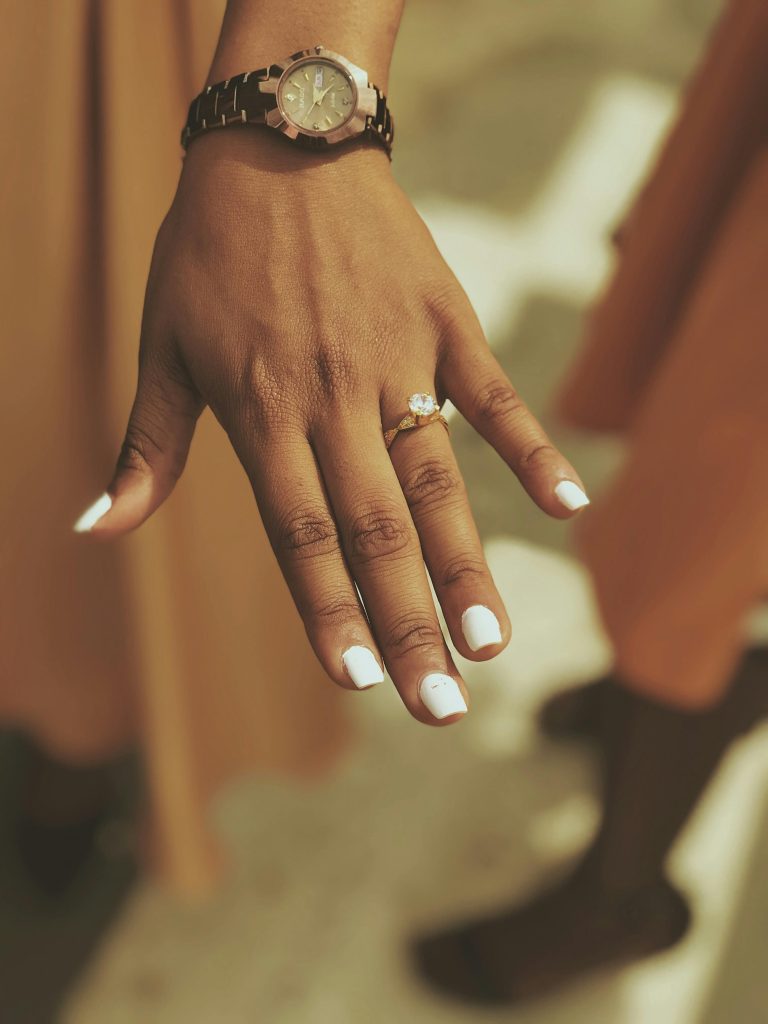
While your ring may be built to last a lifetime, it still needs a bit of love along the way. Proper engagement ring care isn’t just about keeping it shiny for Instagram photos. It’s also about protecting a piece of jewellery that carries enormous sentimental value.
Luckily, a few smart habits can help keep your sparkler safe, secure and dazzling for years to come.
Take it off more often than you think
It might feel strange removing your engagement ring after getting used to wearing it every day, but there are certain situations where it’s much safer off your finger than on it.
Heavy lifting at the gym, gardening, cleaning with harsh chemicals and even sleeping can put unnecessary pressure on the setting and metal. Over time, this can loosen prongs, scratch the band or cause tiny stones to fall out without you even noticing.
When you shouldn’t wear your engagement ring
Your engagement ring is designed for everyday wear, but there are some situations where jewellers strongly recommend taking it off.
At the gym
Weights, resistance machines and even certain yoga poses can bend bands, loosen stones and scratch metal. Pavé settings are especially vulnerable during workouts because tiny diamonds can shift under pressure.
In the shower
Soap, shampoo and conditioner create buildup that leaves stones looking dull and cloudy. There’s also the very real possibility of your ring slipping off and disappearing down the drain.
While cleaning
Household cleaning products often contain harsh chemicals that can damage metals and gemstones over time. Bleach and chlorine are particularly harsh on jewellery.
At the beach or pool
Cold water causes fingers to shrink, making rings easier to lose without noticing. Sand can also scratch metal and get trapped underneath settings, while chlorine and salt water may weaken certain metals over time.
While sleeping
Sleeping with your ring on can create unnecessary wear from friction against bedding, and overnight swelling can sometimes make rings uncomfortable or difficult to remove.
During gardening or DIY projects
Soil, tools and rough surfaces can easily scratch or dent your ring, while dirt buildup underneath stones can dull sparkle surprisingly quickly.
When applying skincare or beauty products
Lotions, oils, sunscreen, perfume and fake tan can all leave residue behind that affects shine. It’s best to put your ring on after finishing your beauty routine.
During certain holidays or travel
Adventure holidays, hiking trips and busy tourist destinations can increase the risk of damage, loss or theft. Some brides-to-be choose to wear a travel ring instead for peace of mind.
If there’s ever doubt, jewellers tend to follow one simple rule: if an activity could scratch, loosen, bend or expose your ring to chemicals, it’s safer off your finger than on it.
Put your ring on last
When getting ready, your engagement ring should be the finishing touch.
Perfume, hairspray, fake tan, moisturiser and makeup can leave residue on your stone over time, dulling its sparkle much faster than you’d expect. Jewellery experts often recommend applying all beauty products first and slipping your ring on just before heading out the door.
Keep a ring dish nearby
One of the easiest engagement ring care habits to adopt? Ring dishes.
Place one next to your bed, another in the bathroom and maybe even one in the kitchen. Having designated safe spots around your home means you’re far less likely to leave your ring balanced precariously on a sink edge or wrapped in a tissue somewhere.
And yes, everyone thinks they’ll remember where they put it. Until they don’t.
Clean your ring regularly
Even the most brilliant diamond can start looking dull thanks to lotions, soap, makeup, sunscreen and the natural oils on your hands.
Thankfully, you don’t need anything fancy for at-home engagement ring care. A small bowl of warm water with a drop of mild dish soap works perfectly. Let the ring soak for a few minutes, then gently clean around the setting with a soft toothbrush before drying it with a lint-free cloth.
A gentle clean every few weeks can make a noticeable difference to your ring’s sparkle.
Book professional check-ups
Just like your car needs a service, your engagement ring benefits from a professional once-over too.
Jewellers can check that the prongs are still secure, inspect the setting for wear and professionally polish the metal to restore its shine. Tiny issues that you might never notice yourself can often be caught early before they become expensive problems.
If your ring suddenly starts snagging on jerseys, blankets or towels, don’t ignore it. That can sometimes be a sign that the claws or prongs have lifted slightly and need attention.
Know your metal
Different metals require slightly different care.
White gold rings, for example, are usually coated in rhodium plating to achieve that bright silvery finish. Over time, the plating naturally wears away and may need refreshing every few years.
Make sure your ring actually fits properly
A ring that’s too loose is risky, while one that’s too tight can become uncomfortable and difficult to remove.
Finger sizes naturally fluctuate throughout the year depending on temperature, lifestyle changes and even hydration levels. In colder weather especially, fingers can shrink enough for rings to slip off more easily.
If your ring constantly spins, slides or feels uncomfortably snug, it may be worth visiting a jeweller for resizing or sizing beads.
Proper engagement ring care starts with making sure your ring fits securely in the first place.
Consider jewellery insurance
It’s not the most glamorous part of being engaged, but insuring your ring can save a lot of stress later on.
Insurance can help cover theft, accidental damage or loss, particularly if you travel often or wear your ring daily. Many jewellers provide valuation certificates that make the process much easier.
It’s also smart to keep clear photographs of your ring, along with any certificates or valuation documents, in a safe place.
Hopefully you’ll never need it — but having that peace of mind is worth it.
Not all gemstones are created equal
While diamonds are famously durable, other gemstones require a gentler approach.
Emeralds, opals, pearls and softer stones can be more vulnerable to knocks, heat, chemicals and even sudden temperature changes. If your engagement ring features a coloured gemstone, it’s worth asking your jeweller about the best cleaning and care methods specifically for that stone.
Don’t panic about taking it off
There’s an old superstition that removing your engagement ring is somehow “bad luck”. Thankfully, that’s exactly what it is: a superstition.
Looking after your ring properly doesn’t say anything about your relationship. If anything, careful engagement ring care simply means you want this sentimental piece to stay beautiful for decades to come.
ALSO SEE: (Don’t) put a ring on it
Feature image: Pexels