• Tag

    how to choose a wedding ring

    Browsing

    For decades, diamonds came with one assumed origin story: deep beneath the earth, formed over billions of years, mined, cut and eventually slipped onto someone’s finger.

    Now? That story has changed.

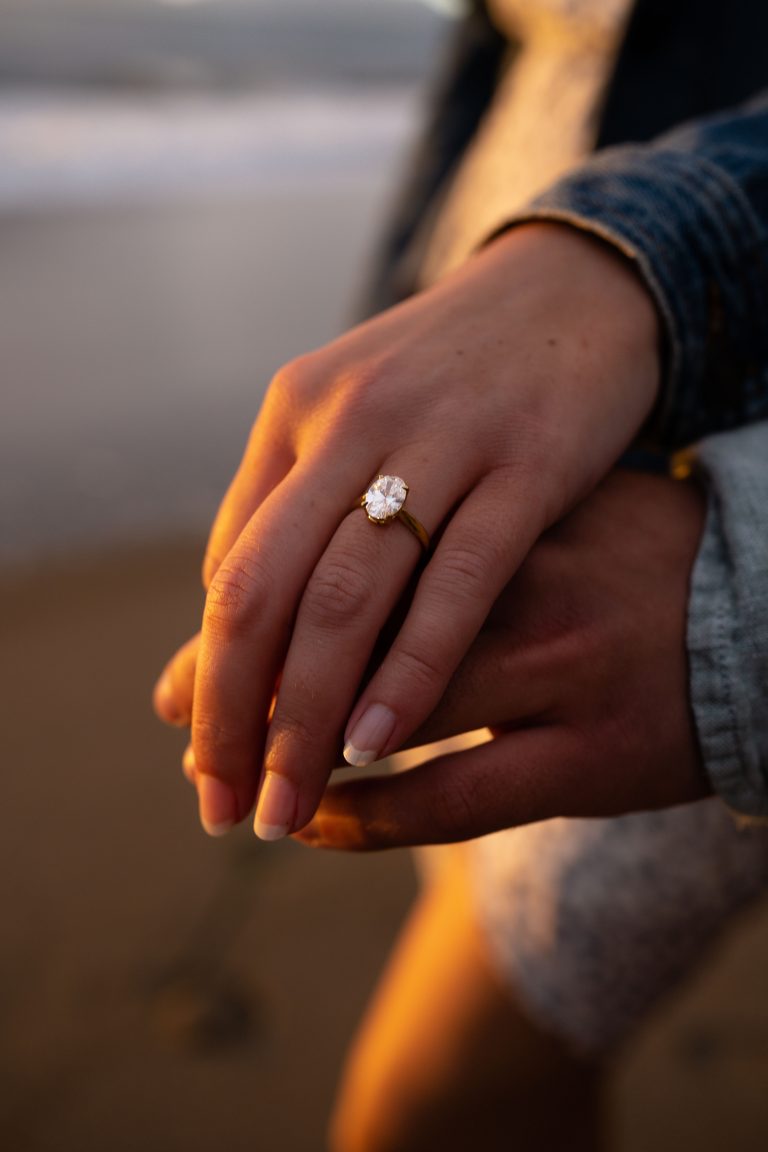
    Lab-grown diamonds have moved from niche alternative to mainstream choice – especially among engaged couples who are thinking differently about value, ethics and what forever actually looks like. Recent industry reports suggest lab-grown stones now make up a significant and growing share of engagement ring purchases globally, driven largely by younger buyers prioritising value and customisation.

    But despite all the conversation online, one question remains surprisingly difficult to answer:

    If they look the same, what are you really paying for?

    To cut through the marketing noise, we spoke to Yazeed, an experienced jeweller currently consulting for Harris Jewellers in Canal Walk and Platandia in the V&A Waterfront, to get an insider’s view on how the industry – and couples – are changing.

    First things first: are lab-grown diamonds actually real?

    Short answer: yes. This is probably the biggest misconception that still exists.

    Lab-grown diamonds are not cubic zirconia or imitation stones. They are chemically, physically and optically diamonds – made from crystallised carbon under controlled conditions rather than formed underground over billions of years. They’re graded using the same quality principles buyers already know: cut, colour, clarity and carat.

    According to Yazeed: “Previous years consumers were of the opinion that lab diamonds are fake due to natural diamond producers spreading false information. With the growth of social media, people became informed as to what constitutes a diamond.”

    That shift in awareness has changed buying behaviour dramatically.

    Why more couples are choosing lab-grown

    When asked how consumer attitudes have evolved over the last 12–18 months, Yazeed didn’t hesitate.

    “The younger generation have been more readily accepting of lab-grown diamonds.”

    His reasoning reflects what’s happening globally: rising living costs, changing priorities and a stronger focus on getting more for your money. Industry data shows that lab-grown diamonds continue to cost substantially less than equivalent natural stones, allowing couples to prioritise size, quality or custom design without dramatically increasing spend.

    And that’s where things get interesting. Because while price is often the headline – it isn’t always the deciding factor.

    Beyond price: what buyers should actually care about

    According to Yazeed, certification matters more than origin. “As long as the lab diamond is independently certified by a world-renowned lab such as GIA or IGI then, just like natural diamonds, consumers should focus on colour, clarity and cut.”

    That advice reflects a growing shift in how jewellers guide clients.

    The conversation isn’t necessarily lab versus natural anymore.

    It’s becoming:

    Which stone gives you the experience, symbolism and practical outcome you want?

    Natural diamonds still carry emotional appeal for buyers who value rarity, geological history and stronger long-term value retention.

    Lab-grown appeals to couples who care more about design freedom, visible quality and stretching a budget further.

    The sustainability conversation isn’t as simple as social media makes it seem

    Few topics create stronger opinions than sustainability. Lab-grown diamonds are often positioned as the more environmentally conscious option because they avoid mining and concerns around land disruption and labour practices.

    Yazeed explains: “It basically comes down to what you as the consumer consider to be better for the environment long term.”

    He points to concerns around mining impact, resource extraction and industry concentration versus lab-grown production models that offer greater scalability and accessibility. That said, sustainability isn’t entirely black and white.

    Lab-grown production still requires energy-intensive processes, while many natural diamond producers have increased transparency and environmental commitments in recent years.

    Translation? Marketing shouldn’t make the decision for you. Your values should.

    So, what would a jeweller recommend?

    If a couple walked in with the same budget and no strong preference?

    Yazeed’s answer was refreshingly honest.

    “At the end of the day it does come down to budget… but bearing in mind the consumer can get a far bigger and better specification lab diamond in terms of colour, clarity and cut compared to natural, the choice still rests with what they feel comfortable buying.”

    And that might be the most useful takeaway of all. Because choosing an engagement ring isn’t a test.

    You don’t get extra points for tradition. You don’t get bonus points for practicality. You’re choosing something deeply personal.

    Some couples want the story of something formed naturally over billions of years.

    Others want the freedom to go bigger, bolder or redirect the savings into a honeymoon, a home deposit or simply life together. Neither choice is wrong.

    The right diamond isn’t the one the internet tells you to buy, It’s the one that feels like your version of forever.

    Expert insight provided by Yazeed, experienced jeweller currently consulting for Harris Jewellers (Canal Walk) and Platandia

    ALSO SEE: Engagement ring care tips to keep your sparkler looking new 

    Engagement ring care tips to keep your sparkler looking new

    Featured image: The Glorious Studio / Pexels

    Choosing wedding bands used to feel fairly straightforward: walk into a jewellery store, choose a classic gold band and leave with a matching set before the afternoon was over. But much like weddings themselves, the process has become far more personal. Today’s couples are approaching wedding bands with a different mindset. Beyond tradition, there’s now a stronger focus on individuality, lifestyle and finding pieces that feel reflective of the relationship itself. For some, that means timeless matching bands. For others, it’s mixed metals, custom engravings or completely different styles altogether.

    There’s no single “right” way to do it anymore – and honestly, that’s what makes the process feel more meaningful. From practical considerations to personal style, here’s a modern guide to choosing wedding bands together.

    Start with lifestyle before aesthetics

    As tempting as it is to fall straight into Pinterest boards and jewellery inspiration videos, the first thing couples should consider is everyday life. A ring may look beautiful in a velvet box, but how does it fit into your actual routine? Someone who works with their hands daily may prioritise durability and comfort, while someone else may lean towards something more delicate or design focused. Because while aesthetics matter, these are pieces meant to be worn long after the wedding photos have been posted and the flowers have wilted.

    Matching bands are no longer the expectation

    One of the biggest shifts in modern wedding jewellery is the move away from perfectly matching rings. Many couples are now choosing bands that complement one another rather than mirror each other exactly. Think different metals within the same design family, varying textures or completely different widths that still feel cohesive together. For some couples, matching bands feel symbolic and sentimental. For others, choosing individual styles feels more authentic to who they are. Neither approach is more romantic than the other.

    Think about how the wedding band works with the engagement ring

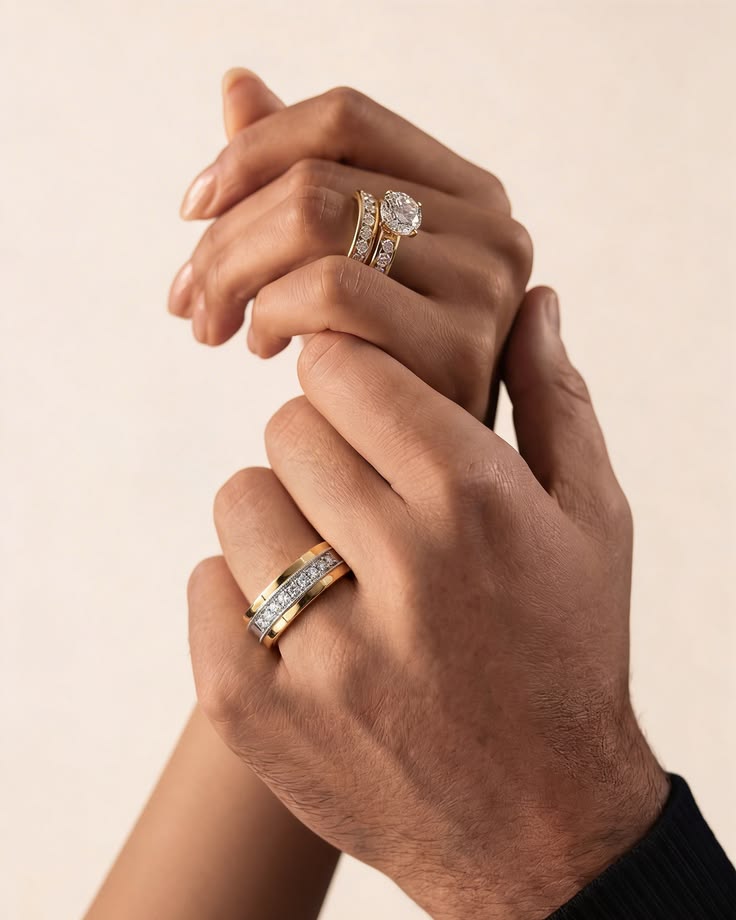
    For brides who wear their engagement ring daily, the wedding band needs to work alongside it rather than compete with it. Some prefer a seamless stacked look, while others intentionally choose contrasting bands to create more dimension and personality. Curved bands, pavé details and mixed-metal combinations continue to grow in popularity for exactly this reason. Trying rings on together also makes a noticeable difference. What works beautifully on its own can feel completely different once paired alongside an engagement ring.

    Metal choice matters more than most people realise

    Gold remains a classic favourite, but modern couples are becoming far more experimental with materials and finishes. Yellow gold continues to dominate thanks to its warm, vintage-inspired appeal, while platinum and white gold offer a cleaner, more contemporary look. Rose gold still offers a softer, romantic feel, while matte finishes, brushed textures and black titanium bands are becoming increasingly popular amongst couples wanting something slightly less traditional. There’s also been a growing interest in heirloom redesigns, incorporating sentimental family jewellery into modern pieces that still carry emotional significance.

    Budget conversations are part of the process

    Wedding bands may seem like a smaller detail compared to venues, florals or fashion, but costs can escalate quickly – especially once customisation enters the picture. Having honest conversations around budget early on makes the entire process far less stressful. For some couples, investing in bespoke craftsmanship or premium metals feels worthwhile. For others, practicality and longevity matter more than luxury branding. At the end of the day, the goal is not to impress people. It’s to choose rings that feel sustainable, personal and true to your relationship.

    Engravings are becoming far more personal

    Classic initials and wedding dates will always have their place, but couples are finding more creative ways to personalise their bands. Coordinates, private phrases, voice-note soundwaves and meaningful lyrics are turning wedding bands into deeply personal keepsakes rather than purely symbolic pieces. And often, it’s those small details that end up meaning the most years later.

    Don’t rush the decision

    Despite how fast-paced wedding planning can feel, choosing wedding bands should never feel rushed. Visit different jewellers. Try on styles you wouldn’t normally consider. Ask questions about maintenance, resizing and durability. And most importantly, choose rings that feel like an honest reflection of both of you – not simply whatever happens to be trending online at the moment.

    Beyond the wedding day

    At its core, choosing wedding bands together is less about tradition and more about intention.

    Some couples will choose timeless matching bands, while others will gravitate towards completely different styles that simply feel right for them individually. There’s no perfect formula anymore — and that’s part of what makes modern weddings feel far more personal than they once did.  The best wedding bands are not necessarily the trendiest or most expensive pieces in the room. They’re the ones that still feel like you years from now: comfortable, meaningful and chosen with care. 

    Because long after the seating charts, floral installations and reception playlists fade into memory, these are the pieces that stay with you every single day. 

    SEE MORE: Alternative engagement ring stones

    Alternative engagement ring stones

    Featured image: Pinterest 

    A kiss on the hand may be quite continental, but diamonds are a girl’s best friend. This saying still rings true today. Diamonds will never go out of style, but trends do. With so many options to choose from, it’s easy to get overwhelmed when choosing an engagement ring. We’ve gathered advice from jewellery experts to help you ring in your engagement in style.

    Here’s what will trend in 2020.

    Coloured stones:

    Modern brides have been leaning towards coloured stones and birthstones as of late. “I think today’s bride is more concerned with being unique, and while she still wants a three stone ring, she is looking for something that is one of a kind. Women today want to stand out!” Kendra Pariseault Jewelry told StyleCaster.

    Coloured stones are an easy way to make a statement and express your personal style. Niel Lane says that morganite stones, the pink to orange-pink variety of the beryl mineral, have especially grow in popularity this year.

    Take this trend further by using a birthstone for a personal touch to an engagement ring. Just be careful to speak to an expert beforehand, as not all birthstones are made equal. Some are not durable enough for every day wear.

    https://www.instagram.com/p/BzvwwqlB-_0/?utm_source=ig_web_copy_link

    Unique shapes:

    Square cut and pear shaped is so played out. For a unique take, brides have been loving star-shaped and floral-shaped engagement rings. We’ve seen Elizabeth Olsen, Katy Perry, and Irina Shayk all step out with floral-shaped rings in the past year.

    This ring can be quite busy so the key is to keep the band simple. While typically centered with a coloured stone, you can simplify this style by going with a traditional diamond.

    https://www.instagram.com/p/BwNeYu5lsZq/?utm_source=ig_web_copy_link

    Throwback designs:

    The more traditional bride will be glad to hear that vintage and art-deco inspired rings are also back in style. Inspired by the past, vintage engagement rings are heirlooms in the making.

    Art-deco is all about clean lines and geometric angles. We love how this hexagonal-shaped engagement ring still feels feminine with the array of smaller diamonds on the perimeter of the main stone. This halo effect is another big engagement ring trend, as it makes the main stone appear much larger. Two birds with one stone.

    https://www.instagram.com/p/B4dALFJlfDD/?utm_source=ig_web_copy_link

    Rose gold:

    Rose gold has been in for years and is going nowhere. The popularity of this tone stems from the fact that it is universally flattering. It is a bold statement yet romantic and feminine at the same time.

    “Brides will be looking more at alternative metals to white gold and platinum next year. The appeal of rose gold comes from its pale pink colour that not only pairs well with trending yellow gold fashion pieces but also looks great with every skin tone, ” said Alicia Davis, VP of Merchandising at Shane Co.

    https://www.instagram.com/p/B4gfj9Kh7Kx/?utm_source=ig_web_copy_link

    Three-stone rings:

    We can thank Meghan Markle for this one. The Duchess of Sussex’s three stone engagement ring sparked the trend a few years ago and it is only rising in popularity.

    “We’ve seen a lot of couples eyeing three-stone engagement rings lately,” Lauren Addison of Lauren Addison Jewelry told StyleCaster. “The two side stones add extra sparkle to a simpler engagement ring style.”

    The three stones are meant to represent the past, the present and the future, giving a beautiful symbolism. The centre diamond is typically hugged by two smaller, equally sized diamonds. For something different, use colourful stones and unique cuts.

    https://www.instagram.com/p/B4ajAg8jb-I/?utm_source=ig_web_copy_link

    Stacking rings:

    Sometimes, more is more. While not a new concept, jewellery stacking has taken the industry by storm. Brides have been loving stackable rings as of late.

    Commonly, the engagement ring and wedding band are designed to pair up. Some brides are taking this a step further and adding more rings to the pile. Eternity rings or embellished bands add an extra style element and bling for glitz lovers. Pairing rings of different styles, like a vintage engagement ring with more contemporary cut embellished bands, is a playful way to create a dynamic and unique finish.

    https://www.instagram.com/p/B4dutVbpBoZ/?utm_source=ig_web_copy_link

    Image: Pexels