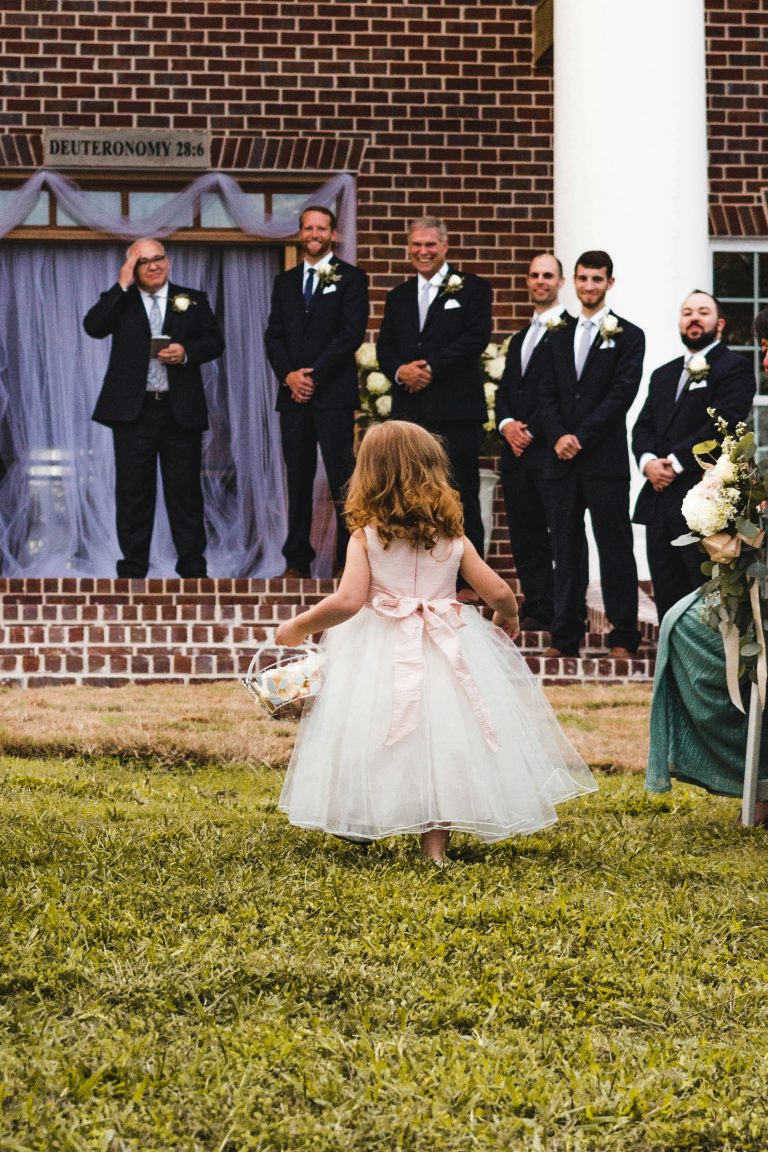
Adding a touch of childlike wonder to weddings for as long as we can remember, the flower girl is not only adorable but a much-loved wedding tradition too. While we often associate the moment with sweetness and innocence, the meaning and origin of the practice are rooted in much older customs.
There are two main ideas linked to this tradition. According to Reader’s Digest, it’s connected to themes of new beginnings and fertility (as many long-standing wedding traditions are), rather than romance.
In ancient Rome, marriages were often arranged and carried significant social purpose, including uniting families and ensuring a continuation of the family line. During these ceremonies, historic accounts describe young attendants accompanying the bride. A young girl would walk ahead of her, tossing grains or herbs to symbolise prosperity, good fortune, and protection.
As the centuries went on, the symbolism evolved with each era. Some medieval customs continued the idea of blessing the path ahead, often using herbs known for their associations with luck or protection. Over time, this slowly shifted into what we recognise today: little girls scattering petals or carrying blooms down the aisle.
Reader’s Digest also notes that having a young girl lead the procession came to represent the transition from childhood to womanhood — one reason why flower girls are often dressed in similar colours or styles to the bride.
Brides shares similar origins, adding that influences from both Roman and Greek traditions likely contributed to the early forms of this custom.
As the tradition developed further, the Elizabethan era embraced children in the wedding party as symbols of hope and innocence. Brides notes that this era strengthened the sentimental meaning behind including little ones.
By the time the Victorian era arrived, the flower girl had taken on a look much closer to the modern version. Petite baskets filled with flowers and delicate floral wreaths became popular, symbolising unending love and natural beauty.
Today, we still include children in our wedding parties, although the meaning has changed dramatically. Most couples no longer associate the role with fertility or symbolism around innocence — they simply enjoy the charm, fun, and family connection that a flower girl brings to the aisle. It’s become a sweet way to involve beloved nieces, nephews, or little family friends in one of life’s most special moments.
ALSO SEE: Flower Availability by Season and Locality: Plan Your Wedding Blooms Wisely
Flower Availability by Season and Locality: Plan Your Wedding Blooms Wisely
Image: Unsplash