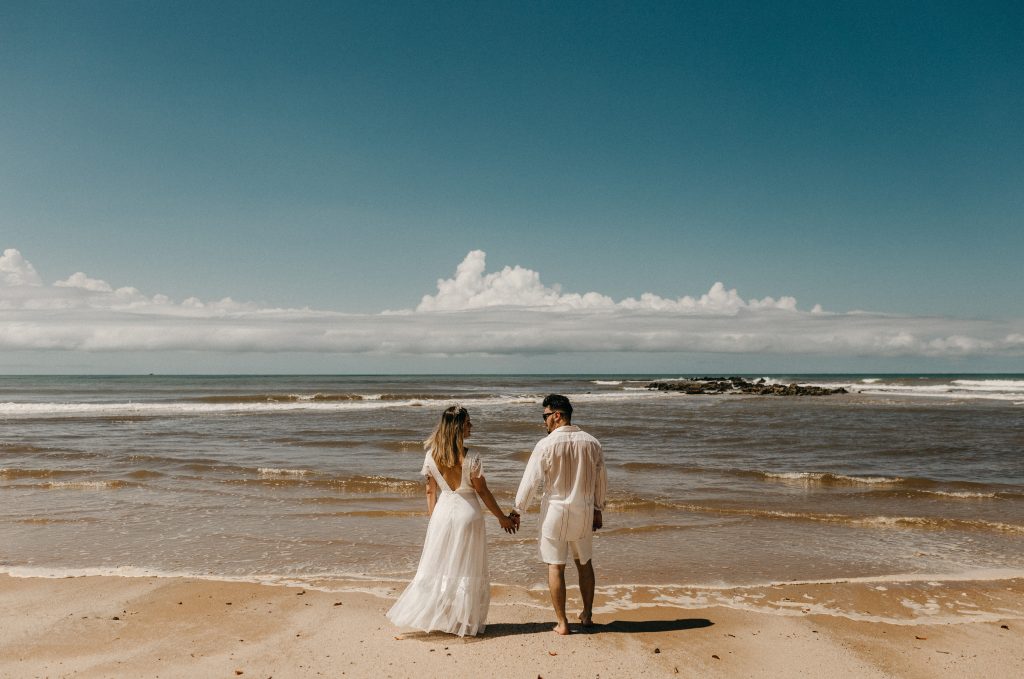
There are few settings as effortlessly romantic as the beach. The sound of crashing waves, golden light and endless ocean views create a naturally breathtaking backdrop that needs little embellishment. But while a seaside ceremony may look effortless, pulling one off successfully requires thoughtful planning.
From changing tides and coastal weather to guest comfort and eco-conscious choices, today’s beach weddings are about balancing style with practicality. Here’s how to create a celebration that’s every bit as memorable as the setting.
1.Choose your beach carefully
Not all beaches are created equal when it comes to weddings. Some offer dramatic scenery but are exposed to strong winds, while others provide calmer waters, easier access and better facilities.
Before falling in love with a location, visit it at the same time of day as your planned ceremony. You’ll get a better feel for lighting, tides, crowds, parking and wind conditions. If you’re using a public beach in South Africa, check municipal permit requirements well in advance, as many beaches require official approval for ceremonies.
2. Let nature set your timeline
Golden hour remains one of the biggest wedding trends for good reason. Scheduling your ceremony shortly before sunset offers softer light for photography, cooler temperatures and a more comfortable experience for guests.
Equally important is checking local tide charts. A ceremony planned at low tide could look very different a few hours later, so work with your planner or venue to ensure the ocean stays where it’s meant to.
3. Have a weather backup you actually love
Every outdoor wedding needs a Plan B, and the coast is no exception.
Rather than treating your backup option as an afterthought, choose an alternative space that feels just as beautiful as your original vision. Whether it’s a glass-fronted venue overlooking the sea or an elegant sailcloth tent, you’ll enjoy the day far more knowing unexpected weather won’t derail your celebration.
4. Dress for the setting
A beach wedding is the perfect excuse to embrace effortless elegance.
Lightweight fabrics such as chiffon, silk, crepe and linen move beautifully in the sea breeze while keeping everyone comfortable. Brides are increasingly opting for streamlined silhouettes, detachable overskirts and relaxed styling, while grooms are swapping heavy tuxedos for linen suits in soft neutrals.
Footwear matters too. Block heels, wedges, embellished sandals or even barefoot ceremonies are all practical alternatives to stilettos disappearing into the sand.
5. Keep your décor simple
One of the greatest advantages of a beach wedding is that nature already provides the wow factor.
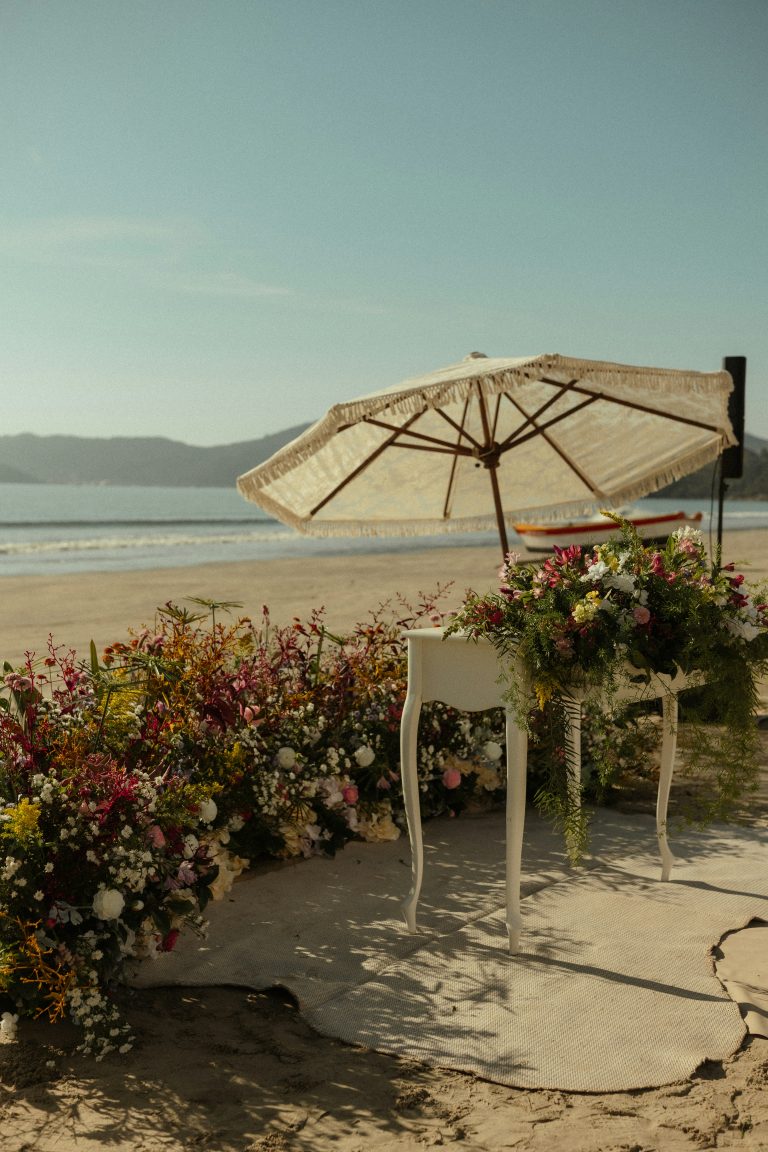
Rather than competing with the scenery, lean into natural textures like linen, timber, rattan, glass and locally sourced florals. Neutral palettes inspired by sand, shells and ocean blues continue to dominate coastal weddings, creating a timeless look that complements the landscape instead of overwhelming it.
6. Prioritise guest comfort
Beautiful views won’t matter if guests are uncomfortable.
Offer chilled water before the ceremony, provide fans or parasols on hot days and consider cosy blankets if temperatures are likely to drop after sunset. If elderly guests or anyone with mobility concerns will be attending, ensure there are accessible pathways or boardwalks to the ceremony space.
Small touches like a shoe station or flip-flops for dancing can make a surprisingly big difference.
7. Think beyond traditional catering
Beach locations often come with logistical limitations, so your menu should suit the environment.
Fresh seasonal ingredients, seafood, grazing tables and lighter dishes work well outdoors, while signature cocktails, mocktails and local wines add a personalised touch at the reception. If alcohol isn’t permitted on the beach itself, host your drinks and reception at a nearby licensed venue with ocean views.
8. Protect the shoreline
Sustainability has become one of the defining themes of modern weddings, and beach celebrations offer plenty of opportunities to tread lightly.
Swap traditional confetti for biodegradable petals, rent décor instead of buying single-use items, source seasonal flowers locally and minimise unnecessary waste wherever possible. The less impact your celebration leaves behind, the more beautiful the coastline remains for future couples.
10. Invest in great sound
The ocean may provide the soundtrack, but it also creates one of the biggest challenges during a ceremony.
Waves and wind can make it surprisingly difficult for guests to hear your vows. A professional sound system with discreet lapel microphones ensures everyone shares the moment without shouting over the surf.
10. Embrace the relaxed atmosphere
The most memorable beach weddings aren’t necessarily the most elaborate.
They’re the ones that embrace the setting – barefoot first dances, sunset portraits, intimate guest lists and meaningful moments that feel authentic to the couple. Recent wedding trends continue to move away from overproduced celebrations in favour of thoughtful, experience-led weddings that prioritise connection over perfection.
The final word
A beach wedding will always come with a little unpredictability, but that’s part of its charm. With thoughtful planning, a flexible mindset and a respect for the natural surroundings, your seaside celebration can be as seamless as it is spectacular. After all, when the backdrop is the ocean, you don’t need much else to make the moment unforgettable.
ALSO SEE: Are destination weddings still worth it in 2026?
Featured image: Alexander Mass / Unsplash